
15 Creative Basement Ceiling Ideas to Transform Your Lower Level
Hey there! If you are staring up at a chaotic mess of exposed pipes, dusty wires, and yellowing insulation, I feel your pain. Most basements look like a scene from a low-budget horror movie until the ceiling gets some love. I remember when I first bought my place—I used to avoid the basement because the ceiling was so depressing. But honestly, it is the one area where you can get really creative without spending a fortune.
IMO, the ceiling is the most underrated part of a basement remodel. It can make a low space feel huge or a cold space feel like a warm den. You don’t have to settle for those sad, sagging drop-ceiling tiles from your elementary school days. Let’s look at fifteen ways I have found to turn that overhead “junk drawer” into a genuine design feature that makes you actually want to hang out downstairs!
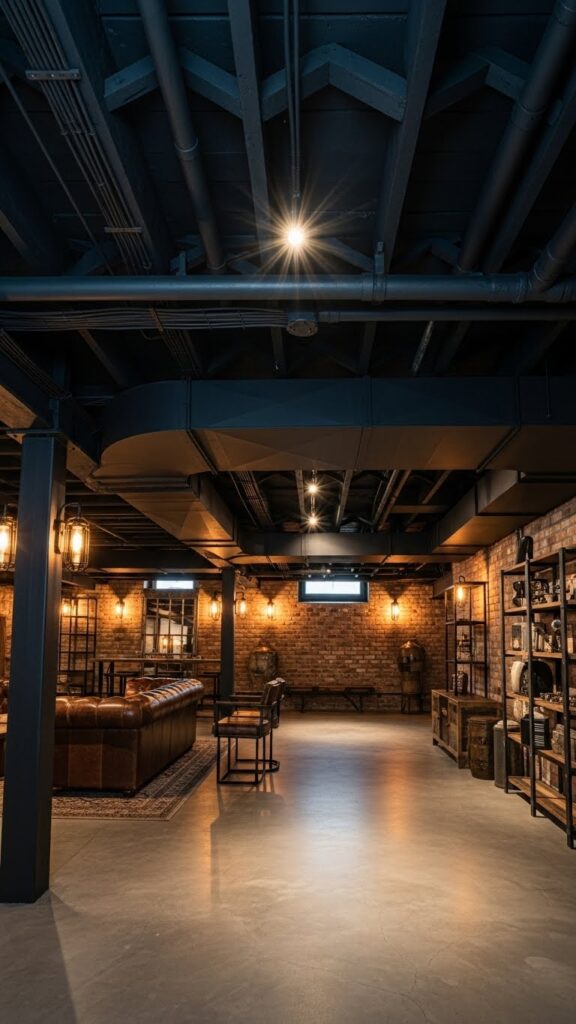
1. Painted Exposed Industrial Look
If you want to keep your height and save a massive amount of labor, painting everything exposed is the ultimate move. I am talking about spraying the joists, pipes, and ductwork one uniform color—usually a deep matte black, charcoal, or even a crisp white. I’ve done this in a few industrial-style dens, and it looks incredible.
It turns the “mess” into a intentional texture. Dark colors help the pipes recede into the shadows, making the ceiling feel higher than it actually is. It’s affordable, allows for easy access to repairs later, and adds that “Brooklyn loft” grit to your home. FYI, use a high-quality dry-fall paint so you don’t end up with black speckles on your floor for the next decade!
2. Classic Shiplap Charm
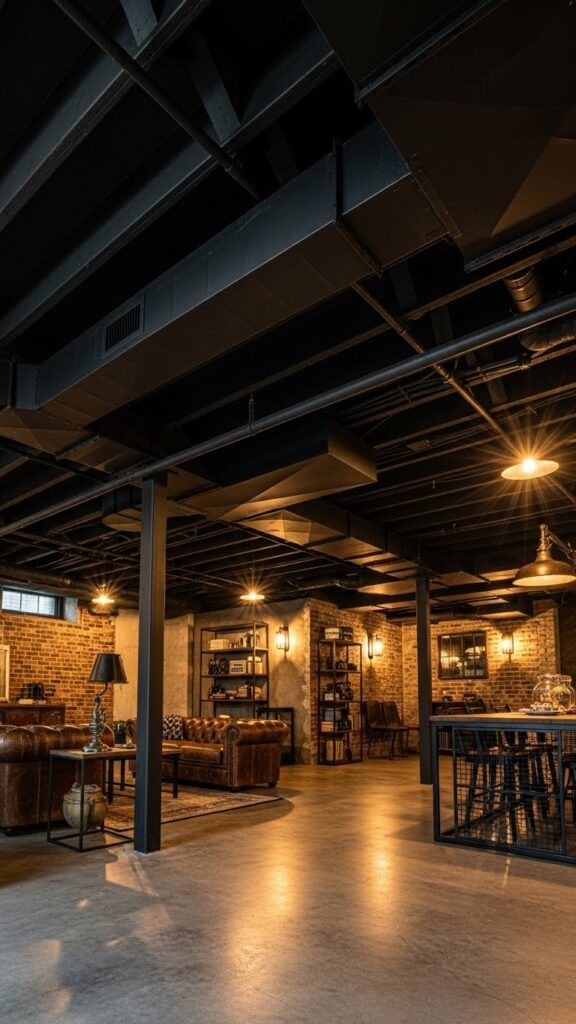
For a clean, farmhouse, or coastal vibe, shiplap is a total winner. Installing horizontal wooden planks across the joists covers everything up while adding a high-end, structured feel. I love seeing this painted in a bright off-white to bounce light around a naturally dark basement.
It feels cozy and permanent, like a real room rather than a basement. You can install it directly to the joists or over drywall if you are double-lining for sound. It hides the imperfections of an old house perfectly. It’s simple, timeless, and makes the space look curated and expensive without needing a massive budget.
3. Corrugated Metal Sheets
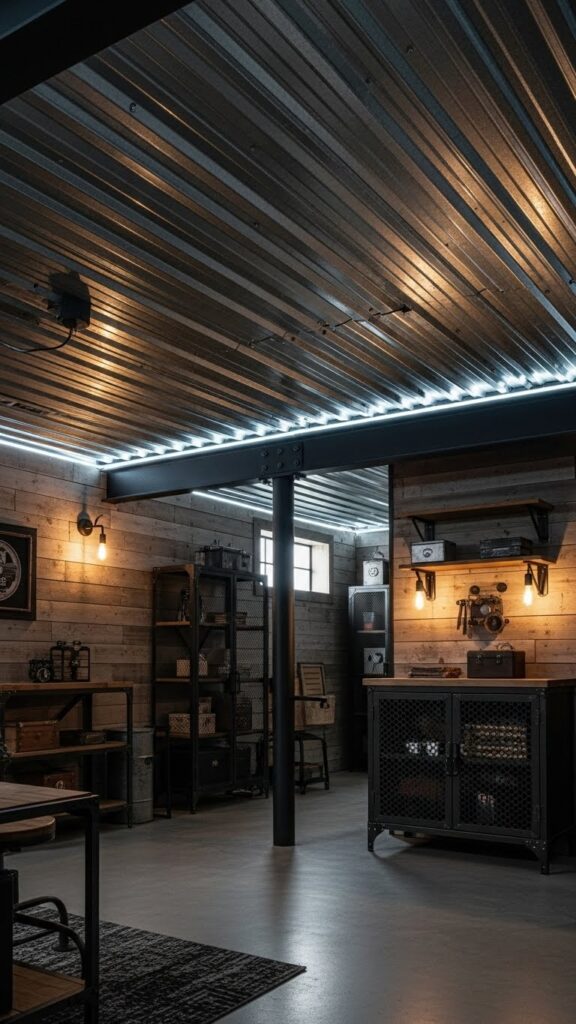
If you want something edgy and indestructible, corrugated metal is the way to go. It reflects light beautifully, which is a huge plus in windowless basements. I have used this in man-caves and workshop spaces, and the industrial shimmer is just cool.
It’s fire-resistant and holds up to moisture better than almost any other material. You can leave it galvanized for a silver look or paint it for a custom finish. It adds a rugged, tactile energy to the room that pairs perfectly with reclaimed wood walls. Plus, it is surprisingly easy to install once you have the hang of cutting the panels.
4. Modern Plywood Panel Grid
For the minimalist and the budget-conscious, high-quality plywood panels are a game changer. You create a grid using thin strips of wood to cover the seams between 4×8 plywood sheets. I love the warm, natural grain of birch or maple plywood. It feels very “architect-designed” and Scandinavian.
You get a clean, flat surface that still feels organic and warm. You can stain the panels or just clear-coat them to keep that light wood look. It’s a very modern solution that hides the chaos above while keeping the aesthetic light and airy. It is easily one of my favorite “hidden gem” ceiling hacks.

5. Corrugated Plastic or Polycarbonate
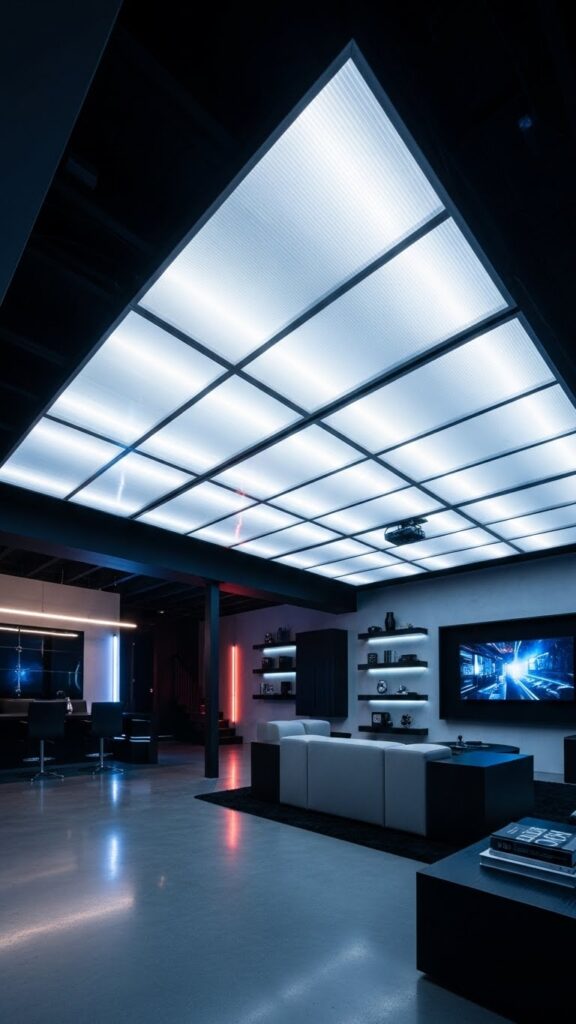
If you want that high-tech, glowing vibe, consider semi-transparent polycarbonate panels. By installing LED strips above these panels, you turn your entire ceiling into one massive light fixture. I’ve seen this done in basement gaming rooms, and it looks like you are inside a spaceship. 🙂
It completely solves the “dark basement” problem by providing bright, diffused light across the whole area. The panels are lightweight and easy to remove if you need to fix a leak later. It’s futuristic, creative, and definitely a conversation starter for any guest who wanders downstairs.
6. Reclaimed Wood Beam Drama
If you have the vertical clearance, nothing beats the look of faux or real reclaimed wood beams. Even if they aren’t structural, adding beams gives the basement a “tavern” or “mountain lodge” feel. I love the history and character that old, distressed wood brings to a new renovation.
You can run these over a painted ceiling to add depth or use them to break up large expanses of drywall. They hide wires perfectly and add a sense of strength to the room. It feels grounded and historic. It is the definition of “cozy luxury” and makes the basement feel like the most expensive floor in the house.
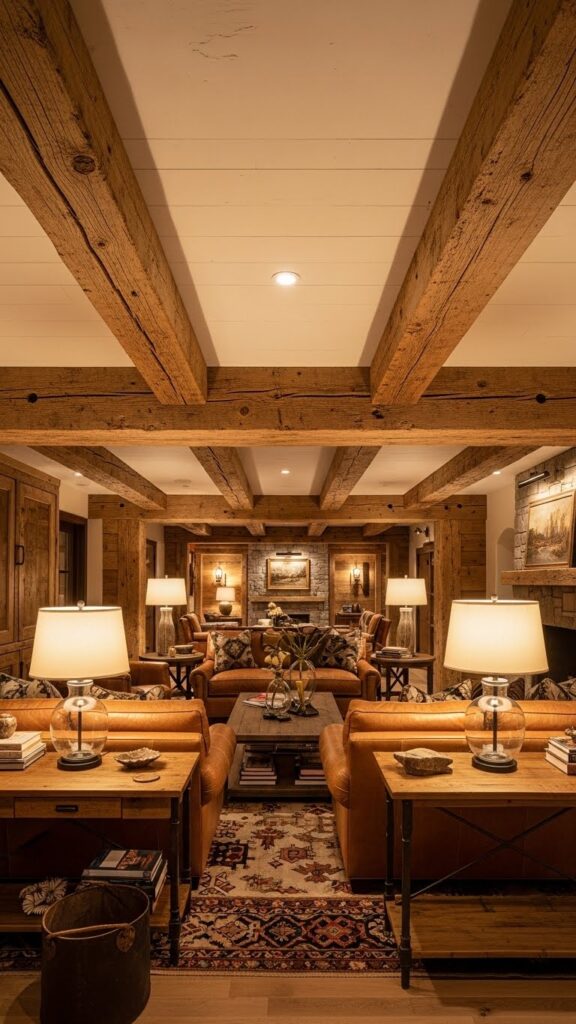
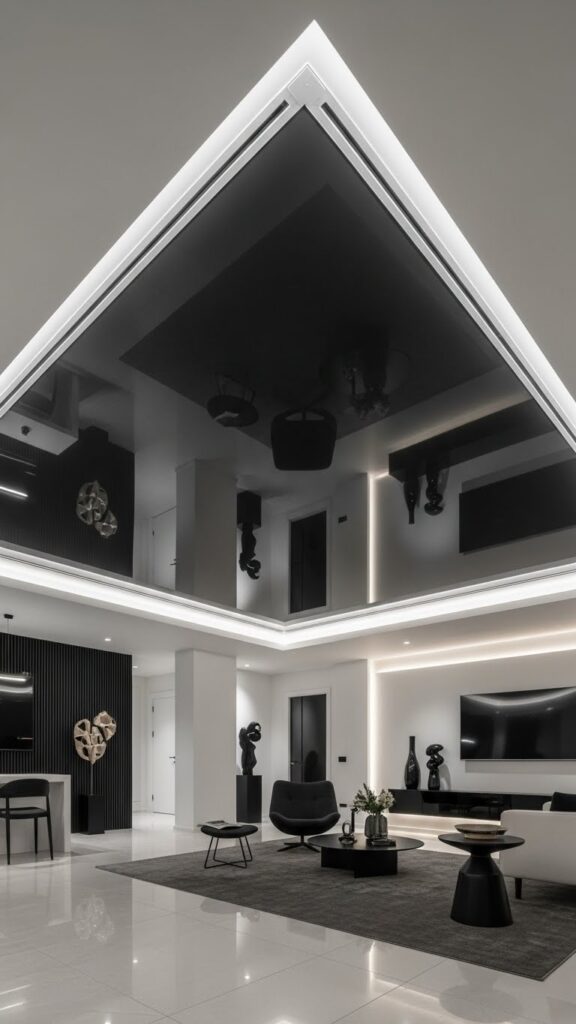
7. Stretch Ceiling Innovation
Stretch ceilings are made from a high-quality PVC membrane that is heated and stretched across a perimeter track. They offer a perfectly smooth, mirror-like finish that is literally impossible to achieve with drywall. I suggest a gloss finish in a small basement to create a reflective surface that doubles the visual height.
It is 100% waterproof, so if there is a leak upstairs, it catches the water instead of letting it ruin your room! It comes in hundreds of colors and even printed designs like sky or star maps. It’s high-tech, fast to install, and gives that sleek, ultra-modern penthouse look to a lower level.
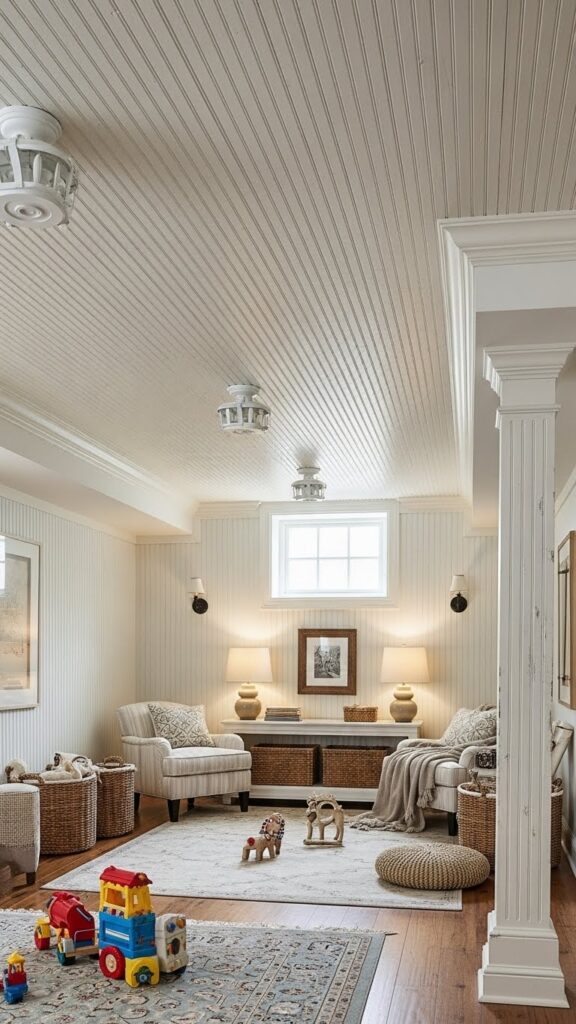
8. Beadboard Panels
Beadboard is like the smaller, more detailed cousin of shiplap. It features thin vertical grooves that add a lot of visual texture without being overwhelming. I think it is perfect for traditional basements or kids’ playrooms. It covers the pipes while adding a touch of classic Americana.
Paint it a soft blue or a creamy white to keep the room feeling bright. It is very durable and holds up well to the bumps and bruises of a busy basement. I love how it looks with crown molding—it adds that final “finished” touch that says, “this is definitely not a cellar anymore.”
9. Tin Ceiling Tiles
For a bit of Victorian or Art Deco flair, tin (or faux tin) ceiling tiles are stunning. They feature intricate stamped patterns that add massive amounts of character. I’ve used copper-toned tiles in a basement bar area, and it totally transformed the space into a high-end speakeasy.
The metallic sheen reflects light in a beautiful, warm way. Modern versions are made of lightweight materials that glue or nail directly to a substrate, making them much easier to install than the old-school metal ones. It’s glamorous, vintage, and feels incredibly unique in a basement setting.

10. Fabric Drape Cozy Vibes
If you are on a strict budget or looking for a temporary fix, high-quality fabric drapes can create a “tent” or “canopy” look. I suggest using light linen or cotton fabrics to soften the ceiling. It hides everything perfectly while making the room feel soft, acoustic, and intimate.
This works best in home theaters or relaxation rooms where you want to dampen sound. It creates a romantic, “boho” atmosphere that is very different from the rest of the house. You can even run string lights behind the fabric for a glowing, magical effect. It is creative, soft, and very affordable.

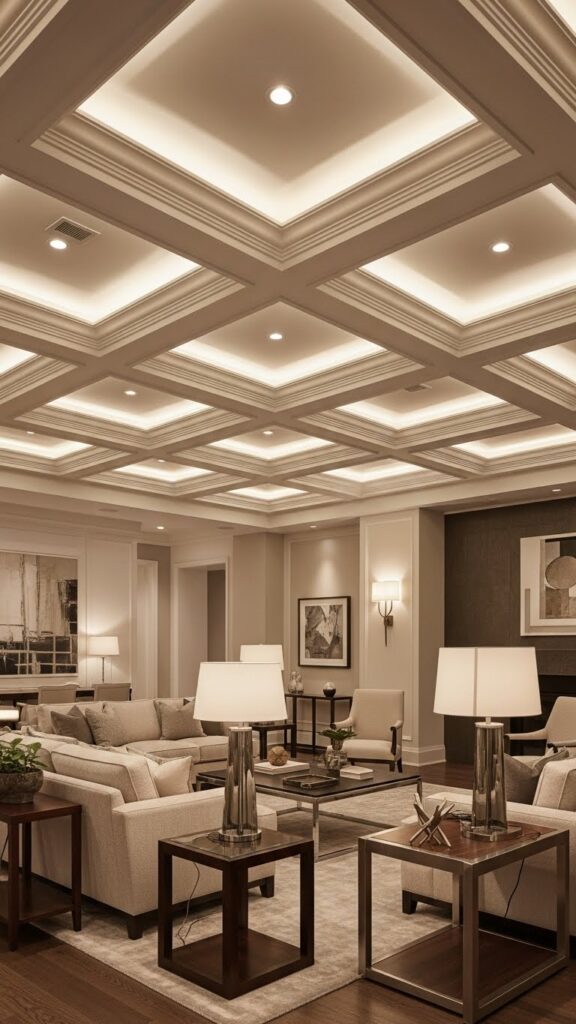
11. Coffered Drywall Elegance
If you want the basement to feel exactly like your upstairs living room, coffered drywall is the way to go. This involves creating a grid of sunken panels outlined by deep beams. It’s the ultimate “finished” look. I love it because it hides large ductwork inside the “beams” of the grid.
It adds a ton of architectural value and looks incredibly formal. It is best for basements with higher ceilings, as the grid adds some thickness. When paired with high-end pot lights, it creates layers of light and shadow that make the ceiling feel deeply dimensional and sophisticated.
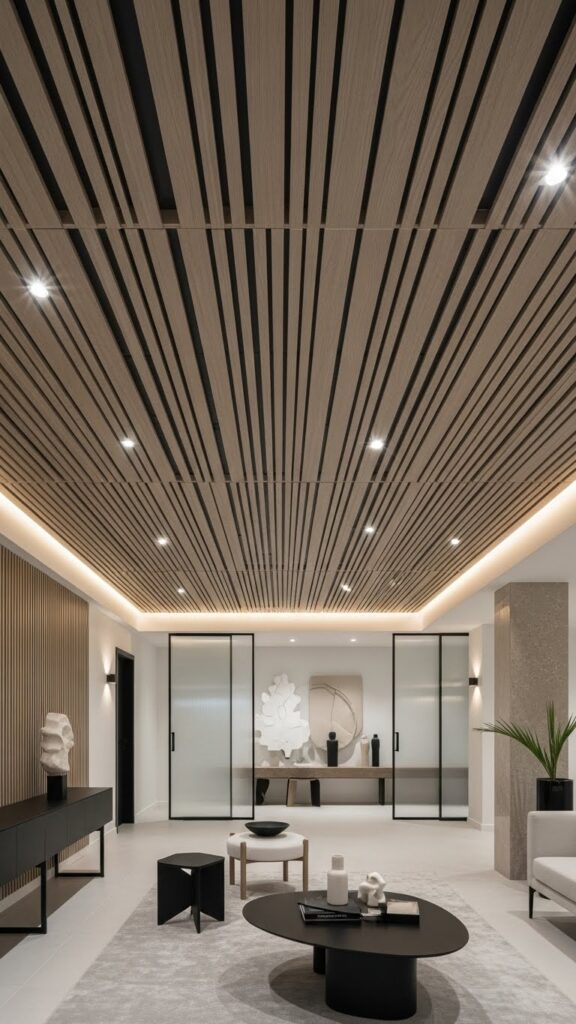
12. PVC Slat System
Modern PVC slats give you the look of expensive wood with none of the maintenance or moisture issues. These come in systems that snap together, hiding all the fasteners. I find the grey or light oak finishes look amazing in a modern, mid-century modern styled basement.
It provides great linear texture that helps elongate a room. Because it’s PVC, it won’t warp or rot in a basement environment. It feels very clean and high-end, like something you would see in a luxury office or a modern spa. It is practical, stylish, and very current.
13. Stained Concrete Style
If you have a concrete sub-floor above your basement, you can grind and stain the underside of the concrete for a raw, brutalist look. I have seen this in minimalist, industrial homes, and the result is stunningly honest. It’s not for everyone, but if you love modern architecture, it is peak design.
It requires no maintenance and won’t ever need replacing. It celebrates the structure of the house. Pair it with soft rugs and warm furniture to balance out the “hard” look of the concrete. It is permanent, unique, and feels very solid.

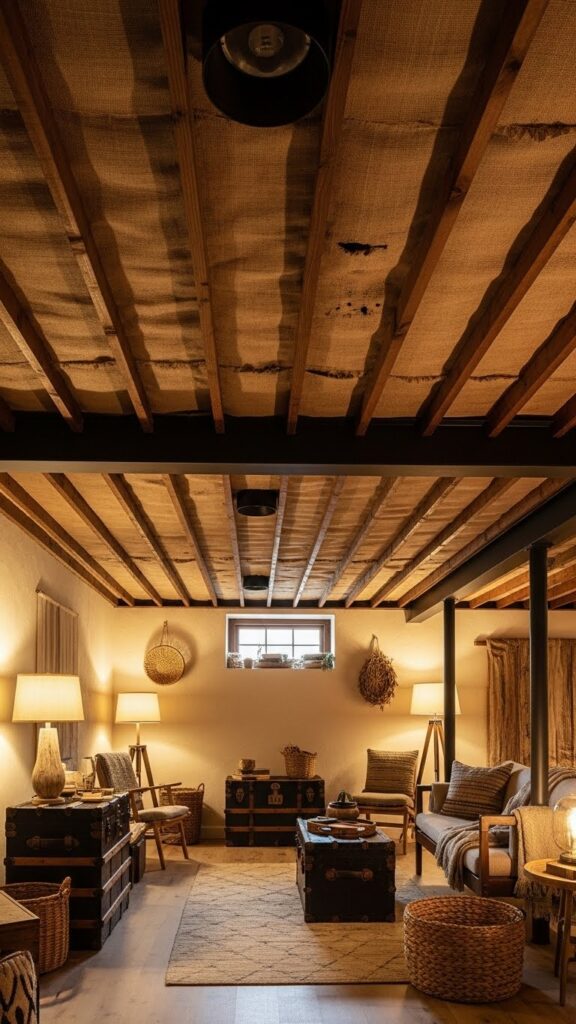
14. Burlap and Wood Slat Mix
For a tactile, organic, and rustic look, you can cover the bays between your joists with burlap fabric and then run stained wood slats over the joists. I love this because the burlap provides a natural texture that also acts as a sound absorber.
It keeps the room feeling warm and grounded. The wood slats provide the structure and rhythm. It’s a very affordable DIY project that results in a look you definitely won’t find in your neighbor’s house. It’s earthy, cozy, and very creative.
15. Drop-Ceiling Upgrades
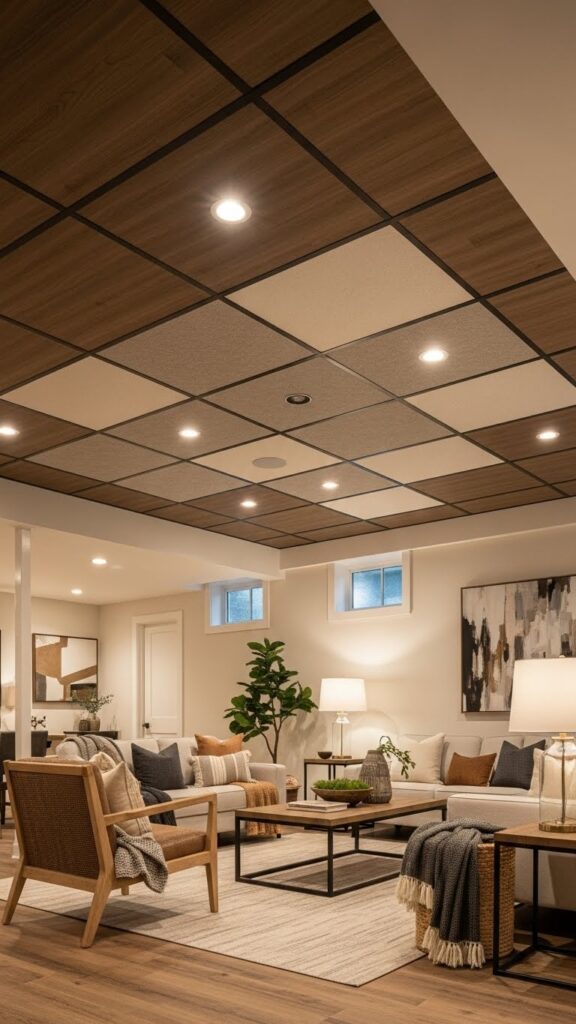
Don’t dismiss drop-ceilings entirely! Modern drop-ceilings offer wood-look planks, high-end acoustic tiles, and even coffered-effect panels. I suggest using a “no-grid” or hidden-grid system to keep the clean look while maintaining the benefit of easy access to pipes and wires.
It is the most practical choice for a basement because leaks will happen eventually, and being able to pop out a tile is a life-saver. With the new designs available, it doesn’t have to look industrial or cheap. It’s the ultimate blend of function and modern design.
Conclusion
Your basement ceiling doesn’t have to be a dark cloud hanging over your renovation. Whether you choose the rugged industrial look of painted pipes or the high-end elegance of coffered drywall, the goal is to make the space feel like a natural part of your home.
Based on my experience, the best choice is the one that fits your budget but also pushes your creative boundaries a bit. Don’t be afraid to try something bold downstairs! After all, the basement is the best place to experiment. Go ahead, look up, and start dreaming about what that messy ceiling could become!
FAQs
- How much height do I lose with a drop ceiling?
A standard drop ceiling system usually requires about 3 to 4 inches of clearance to allow you to tilt the tiles into place. If you are really tight on space, consider a direct-attach system or a painted exposed look to keep every inch of vertical height.
- Can I drywall my basement ceiling?
Yes, you can, but I always suggest making sure your plumbing and electrical are in perfect condition first. Once you drywall, accessing those systems becomes much harder and messy. IMO, if your house is older, a removable option like shiplap or drop tiles is often the smarter long-term move.
- What is the best ceiling for soundproofing a basement?
Drywall with resilient channels or specific “acoustic” drop tiles provide the best noise reduction between floors. Using mass-loaded vinyl or insulation between the joists before finishing the ceiling will also make a huge difference in silencing the sound of footsteps from above.
- Is it expensive to paint an exposed basement ceiling?
It is actually one of the most cost-effective options! You save on materials like drywall or tiles. Most of the cost is in the labor of cleaning the dust and the high volume of paint needed to cover all the odd angles of the pipes and joists. 🙂
- How do I deal with low-hanging ductwork?
You can “soffit” the ductwork, which means building a small wooden frame around it to cover it with drywall or wood while keeping the rest of the ceiling higher. This creates different levels in the ceiling that can actually look like an intentional design feature rather than a nuisance!