15 Sage Green Christmas Tree Ideas for a Soft, Serene Holiday
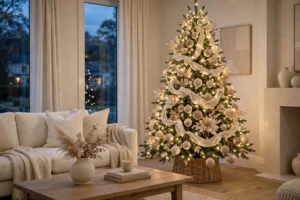
A sage green christmas tree is the antidote to holiday visual noise — soft, muted greens paired with cream, white and warm light for a tree that feels like a deep breath. No glitter overload, no colour clash: just a calm, serene tree that makes the whole room feel slower. These are the fifteen ideas I would give my best friend if she wanted that soft, airy holiday look.
Quick Answer: What Is the Sage Green Christmas Tree Style?
The sage green christmas tree style is a soft, serene take on holiday decorating built on muted sage-green branches, white ceramic ornaments, cream velvet ribbon, eucalyptus garland and warm white lights. It borrows the calm palette of Scandinavian decorating — airy, textural, and restful — and trades traditional red-and-gold for a neutral christmas tree look that feels grown-up, gentle, and quietly luxurious.
Why Sage Green Feels Like a Deep Breath
I will tell you the truth: last December I took down my old red-and-gold tree on a whim and rebuilt it in sage and cream, half expecting to miss the drama. I did not miss it for a single second. Walking into the living room felt like stepping into a spa — the muted green branches, the matte white ornaments, that soft glow. My sister sat on my sofa for ten minutes just staring at it, and then said, “This tree makes me feel calm.” That is the whole pitch. These sage green christmas tree decorating ideas are for anyone whose December is already loud enough — the soft green christmas tree aesthetic is Christmas at a whisper, and it is gorgeous.
1. Muted Green Christmas Tree with White Ornaments
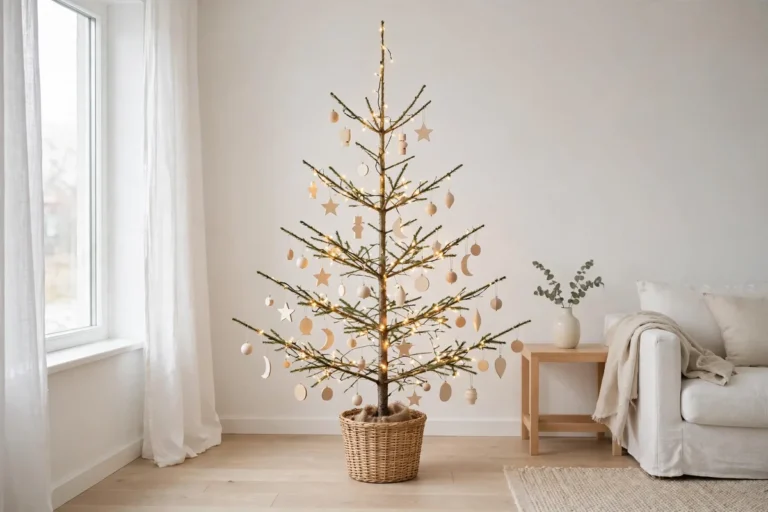
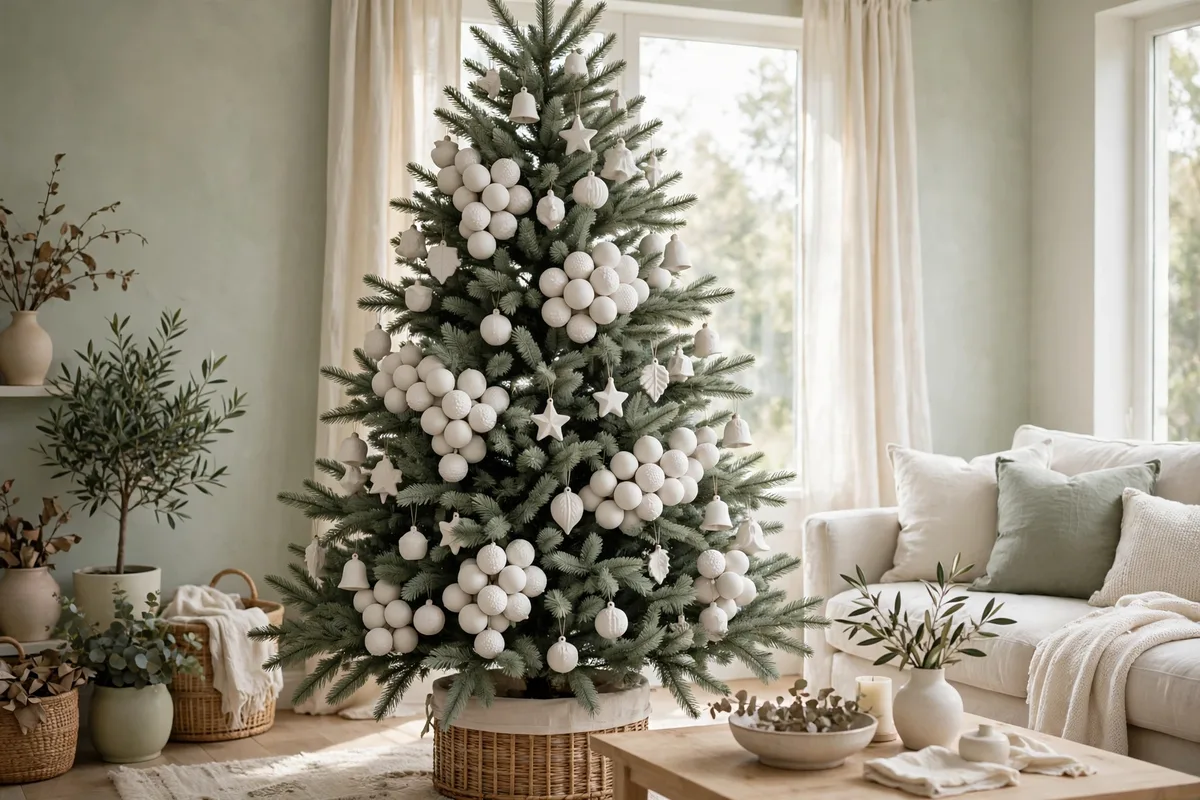
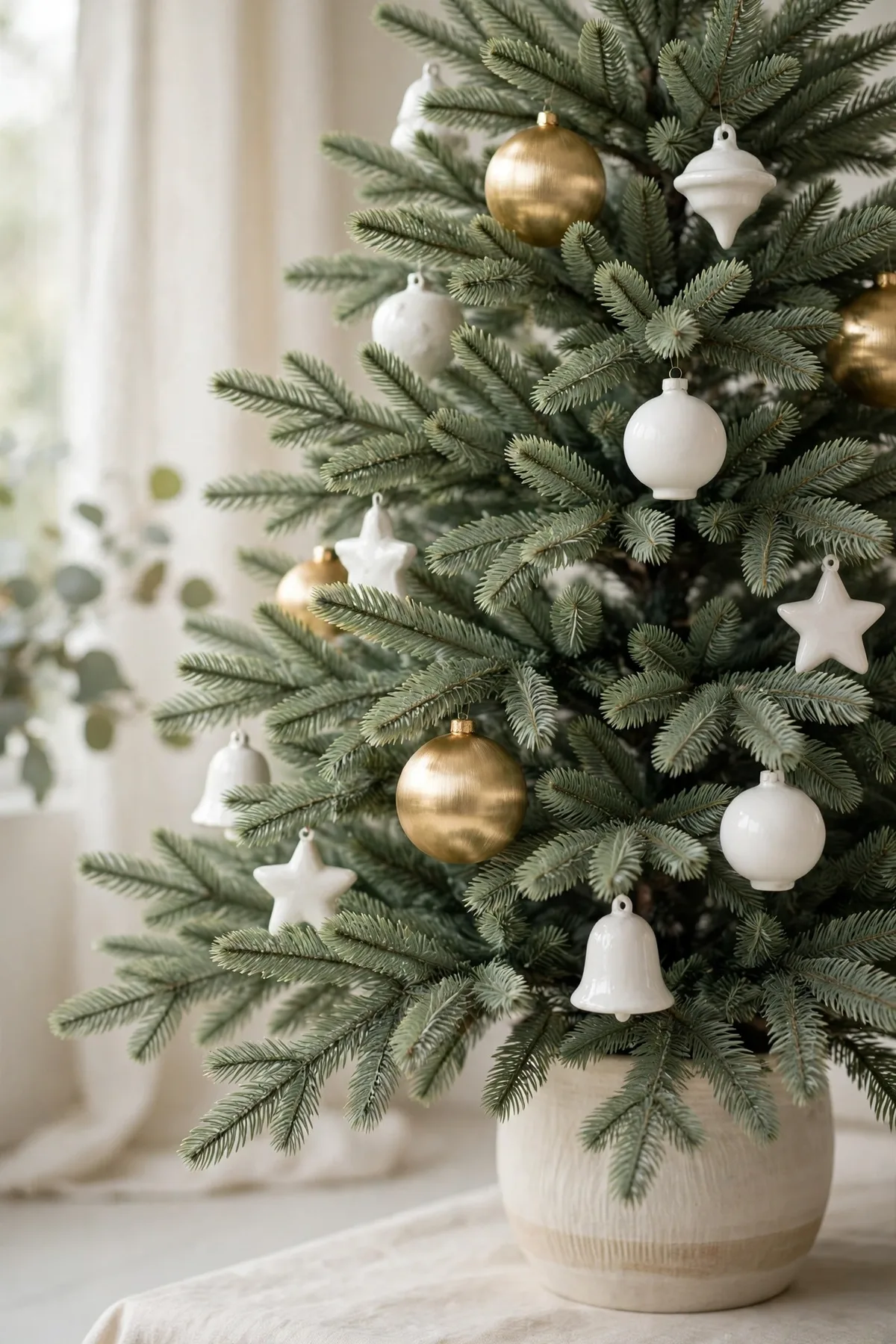
Start where every good sage tree starts: a muted green christmas tree with white ornaments as the entire foundation. The tree itself should read soft — either a true sage-green artificial tree (they exist now, in “sage” and “eucalyptus” finishes) or a standard green tree toned down with a whisper of flocking spray. Against that muted backdrop, white ceramic ornaments do all the talking: matte, handmade-looking balls, finials and drops in chalky white.
Cluster the ornaments rather than spacing them evenly — groups of three at different depths, tucked into the branch layers so some peek out and some hide. Aim for 12 to 18 larger pieces plus a scattering of small ones; on a muted tree, fewer and bigger always beats many and small. This is the opposite energy of the jewel-toned emerald look — where emerald goes rich and moody, sage goes soft and weightless, and the white ceramics keep it luminous instead of flat.
2. Cream Velvet Ribbon Cascades for a Sage Green Christmas Tree
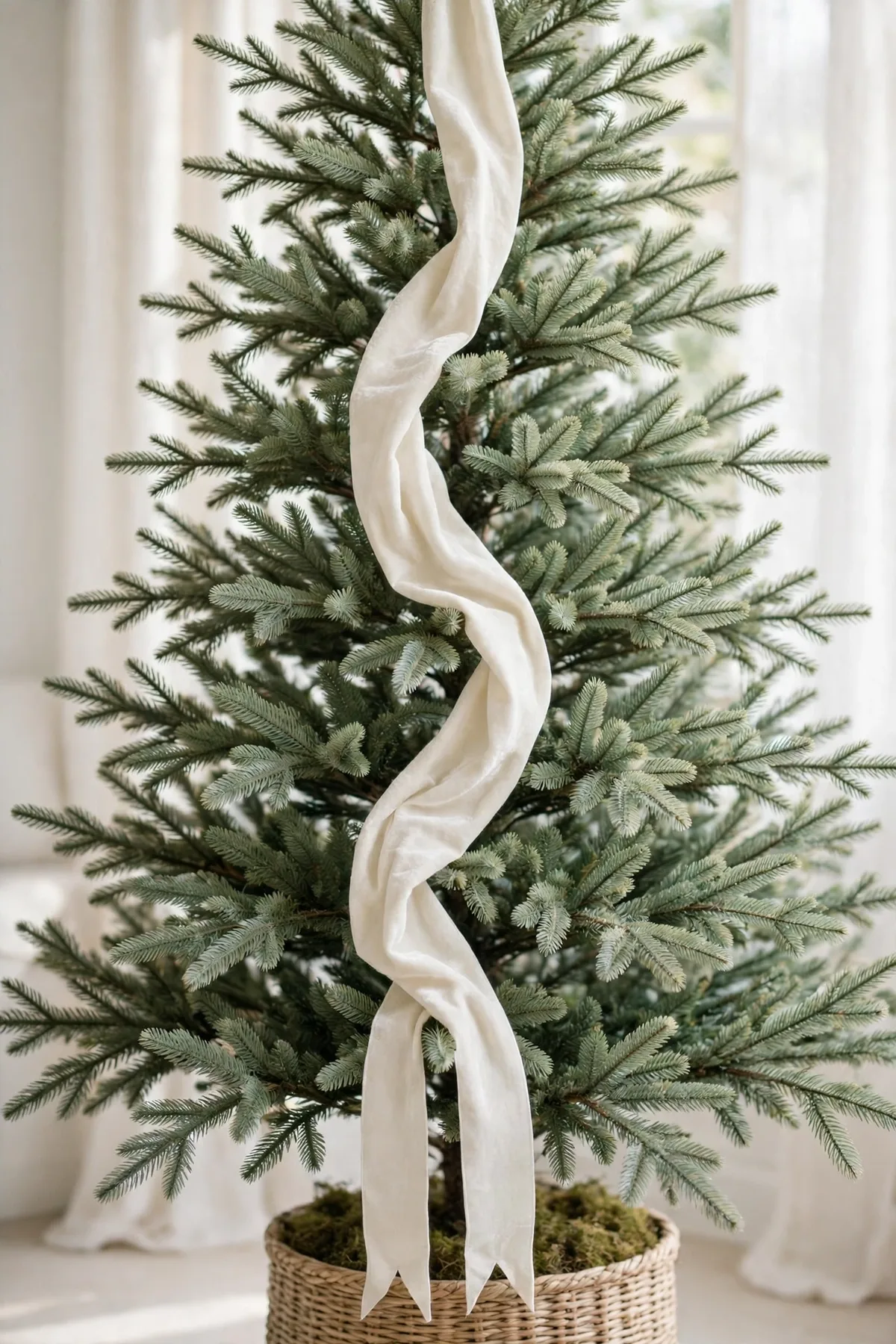
If there is one material that belongs on a sage green christmas tree, it is cream velvet ribbon. The pile of the velvet drinks in the light instead of reflecting it, which is exactly why it looks so serene against muted green branches. Buy the wide stuff — 4 inches, wired edge — in a warm cream or ivory, and let it fall in loose vertical cascades from the top of the tree to the base.
The technique matters more than the ribbon: tuck the ribbon deep into the branches in three or four vertical waterfalls, letting it billow slightly outward at intervals, and cut the ends in a fishtail. Never spiral it around the tree — spirals read formal and fussy, while vertical draping reads soft and modern. I learned this from a florist on YouTube years ago and it changed every tree I have decorated since; the ribbon becomes part of the tree’s shape rather than decoration sitting on top of it.
3. Draped Eucalyptus Garland
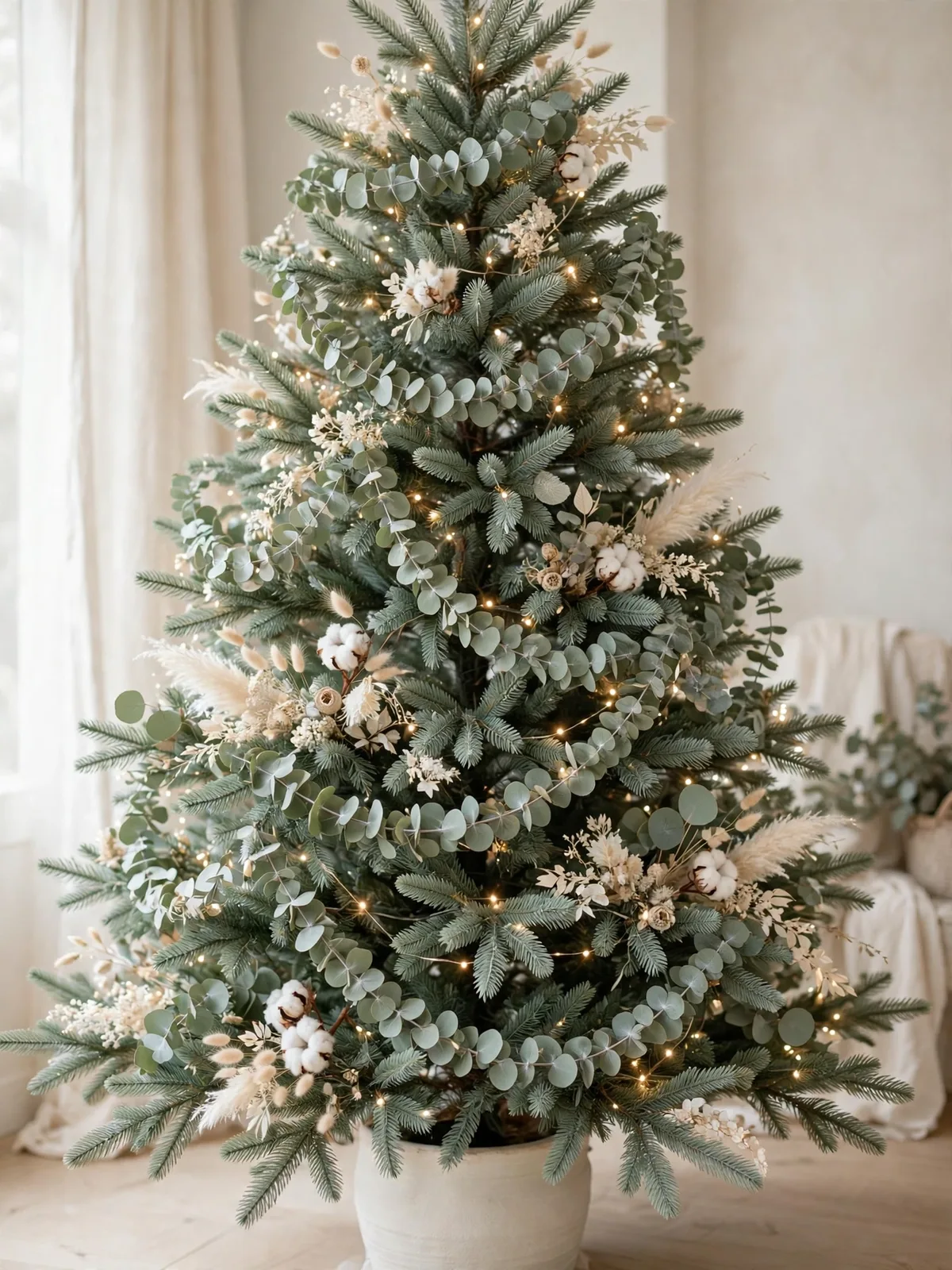
Real or faux, eucalyptus garland is the sage tree’s best friend — it is practically the same colour family, so it melts into the branches while adding a completely different leaf texture. Silver-dollar eucalyptus works best: the round, silvery leaves catch the fairy lights beautifully and release that clean, spa-like scent if you use the fresh kind.
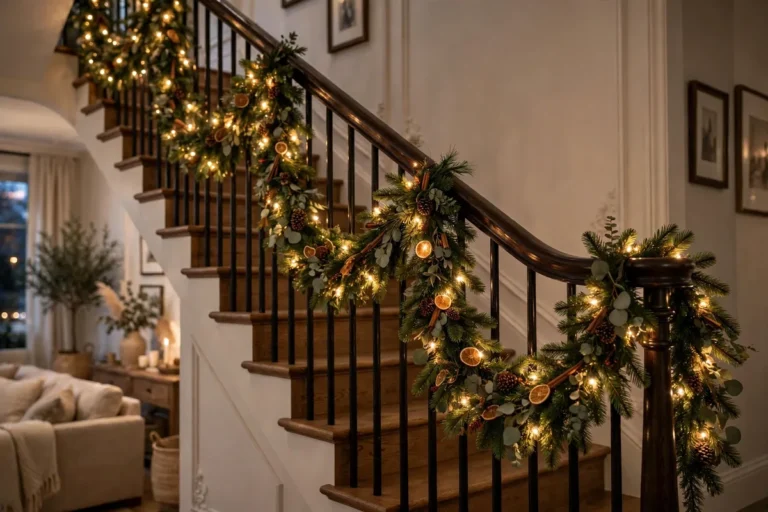
Weave two strands through the tree in loose swags, dipping and rising like a garland on a mantel, and tuck individual sprigs into any branch gaps that look sparse. If you go fresh, mist it lightly every few days and it will last the whole season; if you go faux (and honestly, the good faux eucalyptus is indistinguishable now), you have a garland you will reuse for a decade. Either way, the layered greens are what give the tree its depth without a single bright colour.
4. Dried Floral Picks and Pampas Plumes
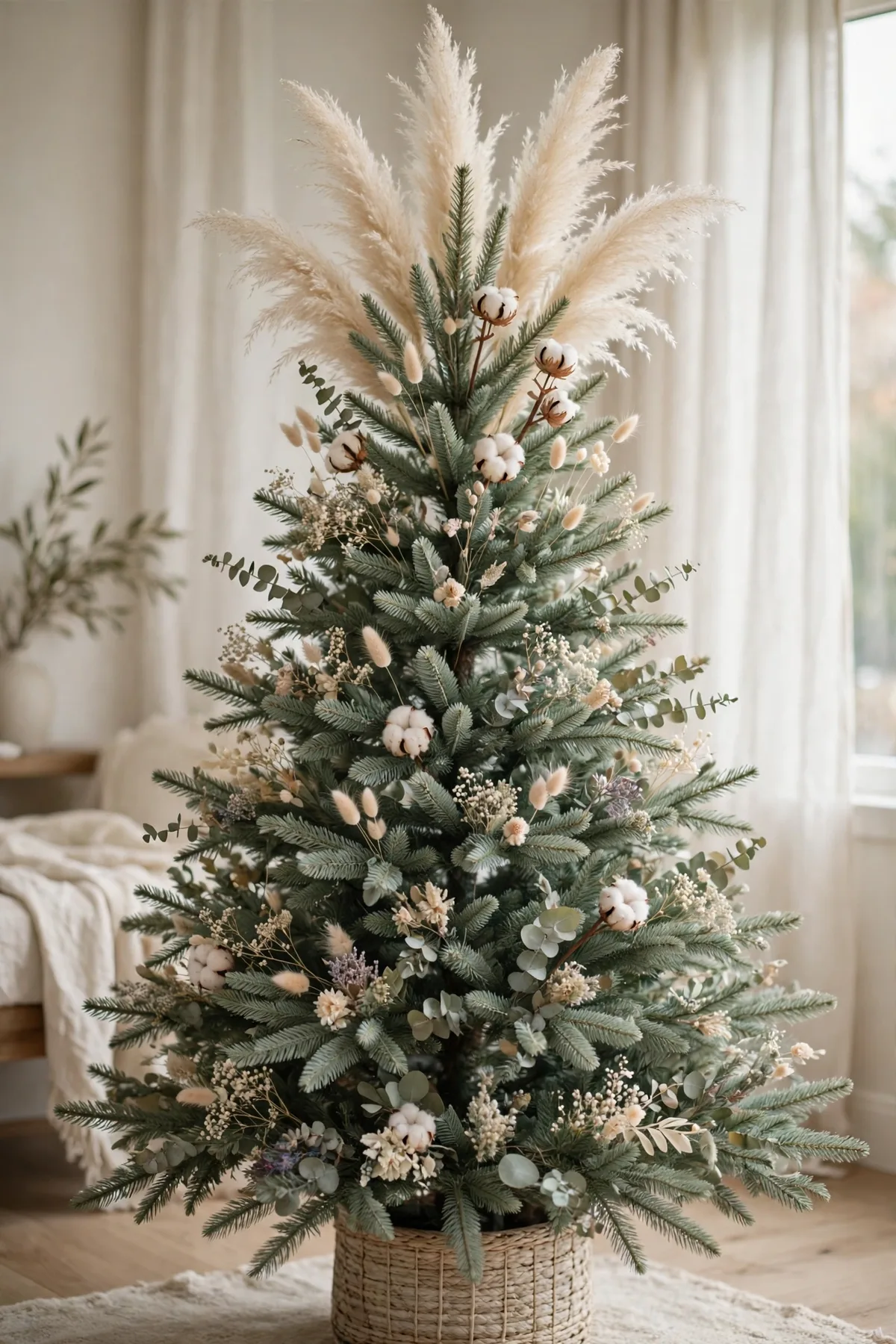
For movement and airiness, nothing beats dried floral picks pushed into the top third of the tree. Pampas grass plumes, bunny-tail grass, dried lavender and bleached ruscus add height, softness and a feathery texture that ornaments alone can never give. They are the reason sage trees photograph so beautifully — those wispy plumes catch backlight like a halo.
Use 8 to 12 picks, angled outward and upward, clustered near the top and along one side rather than dotted evenly around. Dried stems are light, so push them firmly into the branch crotches and they will stay put. This is one of the easiest rustic christmas touches to add to a modern tree — a handful of pampas from the craft store, and suddenly the tree has that gathered, organic feeling money cannot quite buy.
5. A Sage Green Christmas Tree with a Soft Flocked Finish
A whisper of flocking takes a sage green christmas tree from pretty to ethereal. The snow-dusted tips blur the edges of the branches and make the whole tree look like it is glowing from within — especially once the warm lights go on. You can buy pre-flocked sage trees now, or DIY it on a plain green tree with a can of flocking spray.
If you spray it yourself, do it outside on a dry day, work from the top down in light passes, and let each coat dry before adding more — restraint is everything; you want a dusting, not a snowstorm. I over-flocked my first attempt and the tree looked like it had been through a blizzard; the second attempt, done slowly over two afternoons, was perfect. For more on getting flocking right, these flocked tree ideas cover the technique in detail.
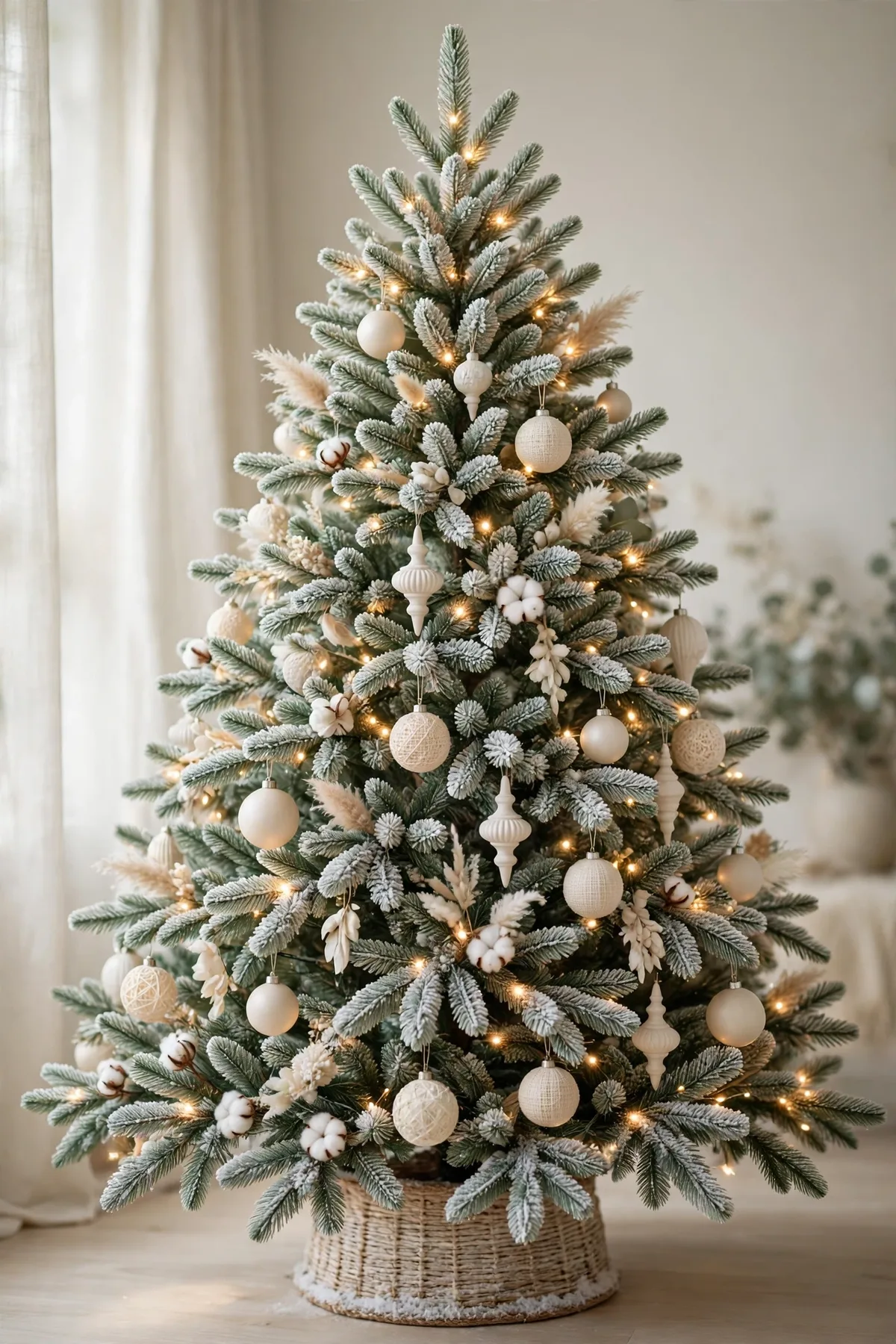
6. Warm White Fairy Light Glow
Lighting is where the serenity is made or broken. On a sage tree, use warm white lights only — no multicolour, no cool blue-white — and use more than you think you need. The old rule of 100 lights per foot of tree is the minimum here; the muted palette needs that warm glow to feel magical rather than flat. The lights are what turn a neutral christmas tree into a hearth-like presence in the room.
Weave the lights in and out of the branches starting at the top, pushing some strands deep toward the trunk so the glow comes from inside the tree, not just its surface. Put them on a timer so the tree lights itself at dusk — my tree clicks on at 4:30 every December afternoon, and my daughter has fallen asleep on the sofa under it more times than I can count. That glow is the whole point of the palette.
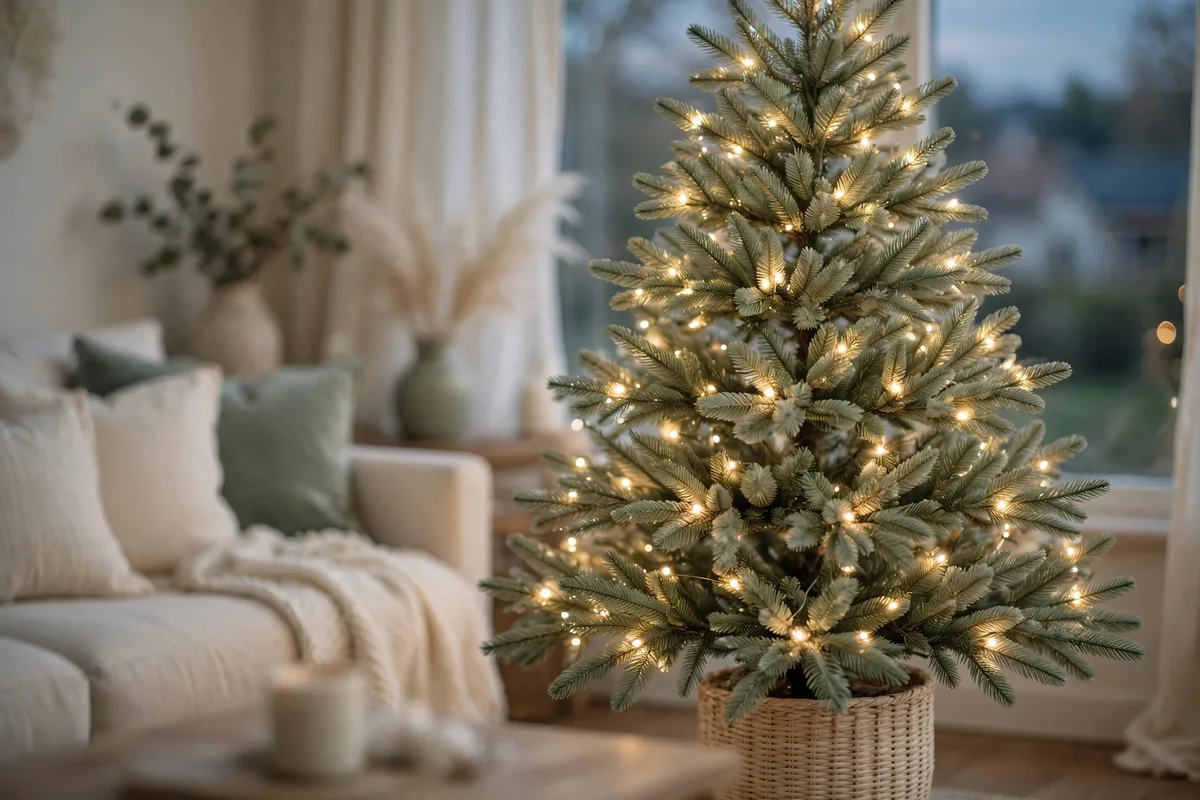
7. Sage and Cream Christmas Decor: A Matching Wreath
A tree never looks intentional alone — echo it. Hang a sage and cream christmas decor wreath on the wall or mantel beside the tree, built from the same ingredients: eucalyptus, white berries, a cream velvet bow. The repetition is what makes the room feel designed rather than decorated, and it takes ten minutes if you buy the wreath base ready-made.
Style it at the same height as the tree’s midpoint so the two pieces talk to each other across the room. A big loopy cream bow at the wreath’s base ties it directly to the ribbon cascades on the tree. If your mantel needs the full treatment, a little christmas mantel styling know-how helps — the wreath plus a eucalyptus garland along the mantel shelf is genuinely all you need.
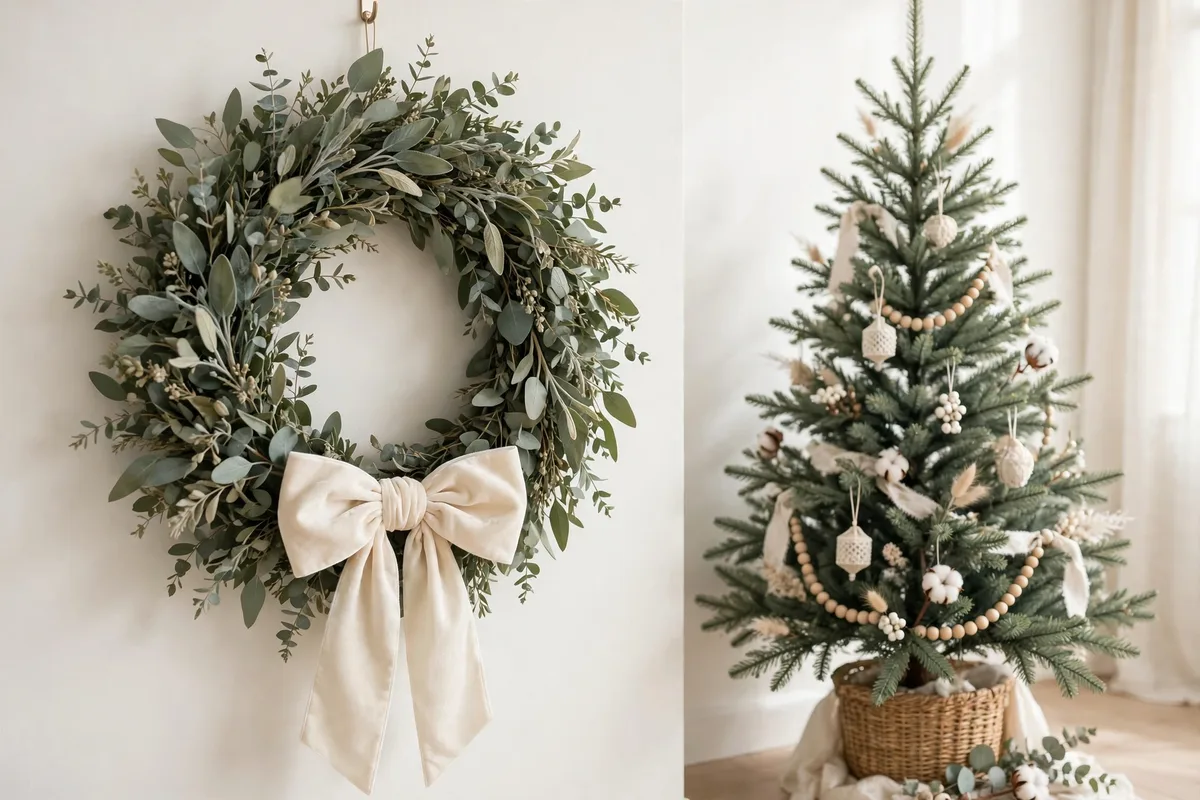
8. A Linen Tree Skirt in Oatmeal
The base of the tree deserves the same softness as the branches. A linen tree skirt in oatmeal or natural flax grounds the whole composition — the nubby, imperfect texture of linen is the perfect counterpoint to smooth ceramic ornaments, and the pale tone keeps the floor feeling light. Skip the shiny satin skirts here; anything reflective fights the matte serenity of the look.
Layer it like a stylist: linen skirt flat on the floor, a folded cream throw half-tucked under one side, gifts wrapped in kraft paper and cream ribbon on top. This is textbook scandi christmas style — natural fibres, pale tones, nothing shouting. The base of the tree gets photographed almost as much as the top, so give it the same care.
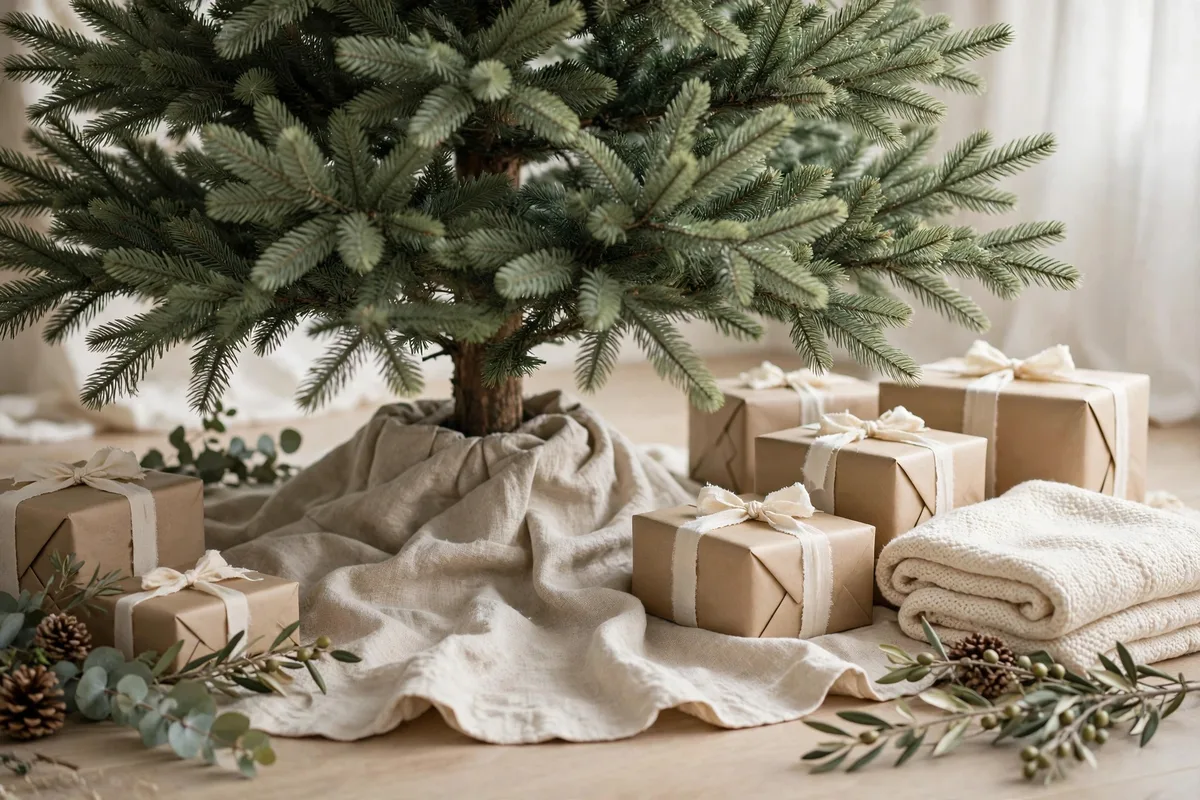
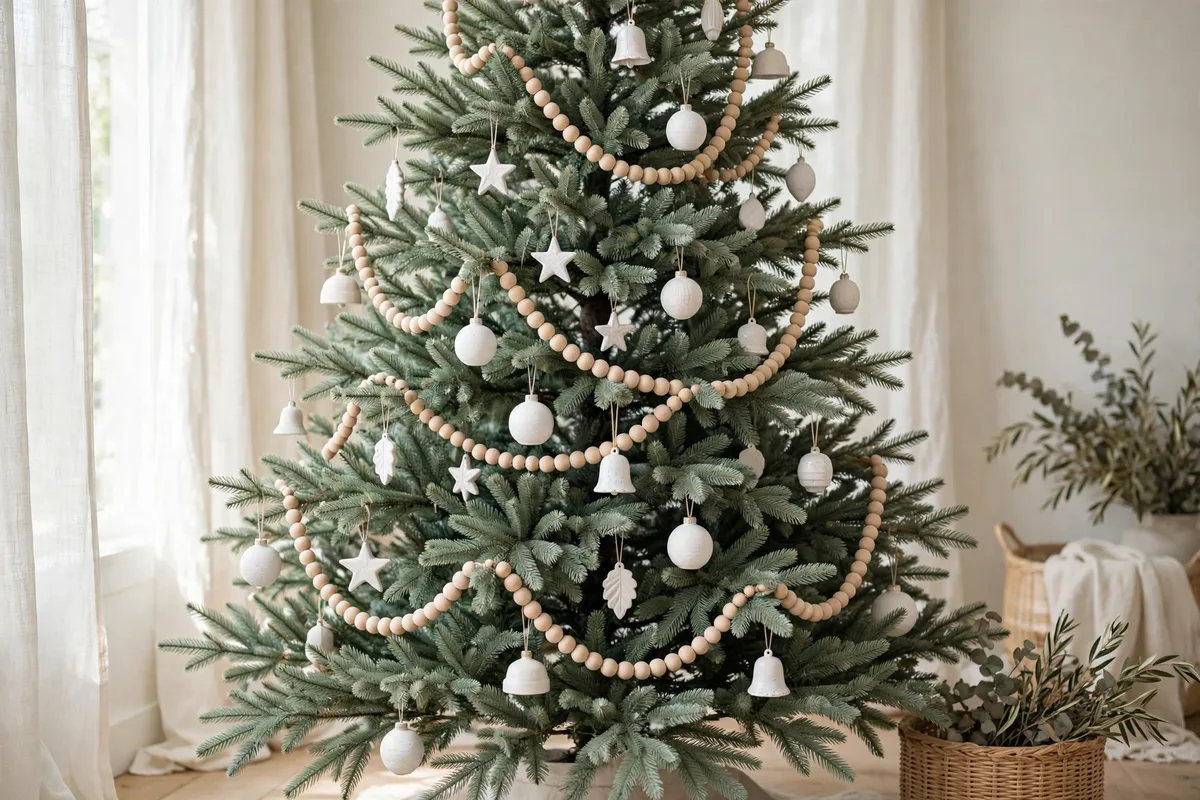
9. Wooden Bead Garland Strands
Wooden bead garland is the quiet texture a sage tree is waiting for. Natural wood or whitewashed beads — strung on jute, draped in long loose loops — add an organic, almost bohemian softness that keeps the tree from feeling too polished. It is the handmade-looking element that makes the whole scheme feel collected rather than store-bought.
Drape two or three strands in generous swags, letting them hang lower between the anchor points so they create soft curves across the branches. This is also the most budget friendly decorating move on this list — a long bead garland costs very little, and one strand styles the tree, the mantel and a wreath if you buy generously. Mine has been reused for four Christmases and looks better every year.
10. Sea-Glass Tone Ornaments
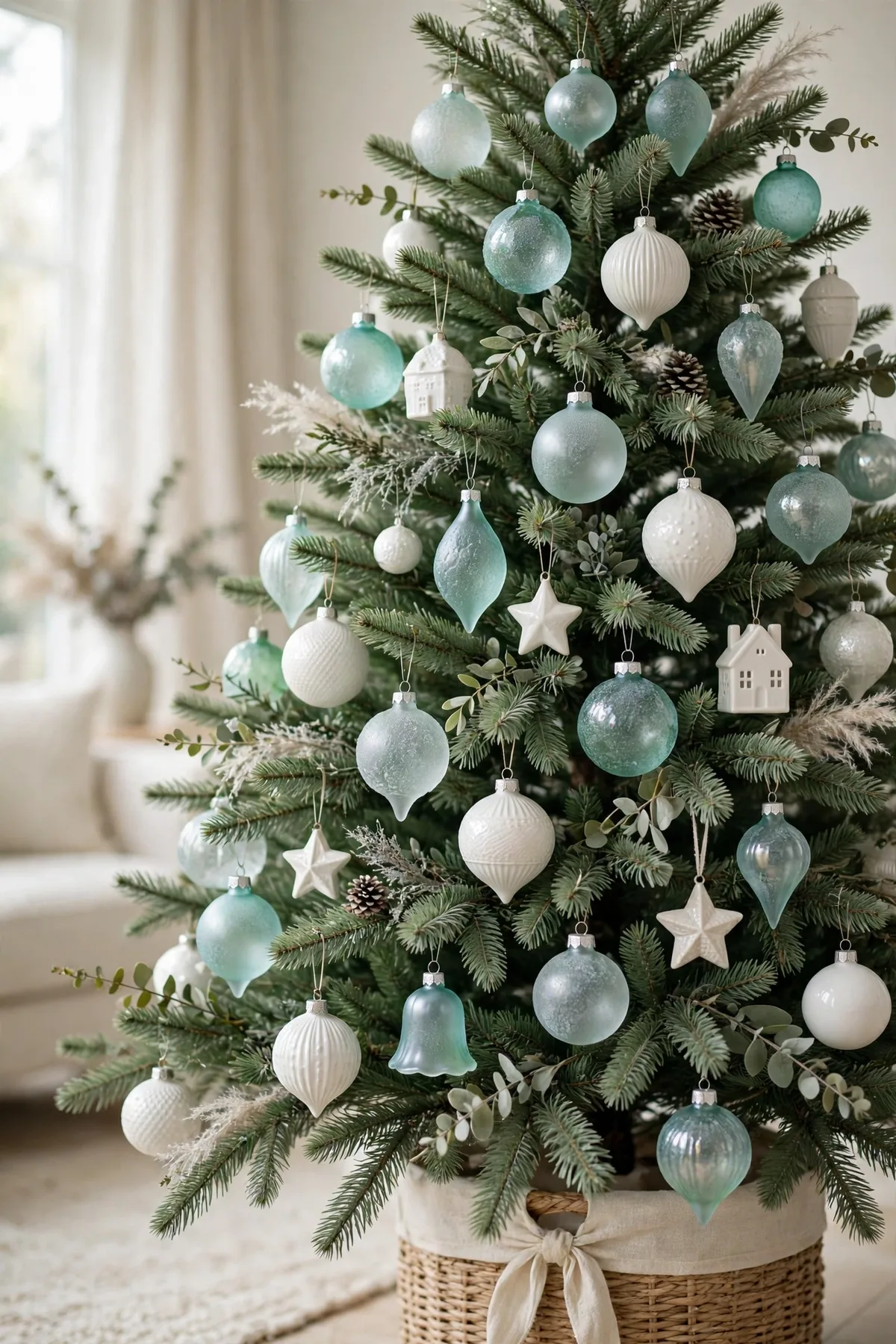
Extend the sage story with ornaments in sea-glass tones — aqua, seafoam, pale celadon — the colours that sit right next to sage on the colour wheel. They deepen the palette without introducing a single loud note, and the frosted, translucent finish of sea-glass ornaments glows beautifully when the fairy lights hit them.
Mix them about one-to-three with your white ceramics so the white still dominates and the sea-glass reads as an accent. If you love the watery end of the palette, the cool blue palettes in our blue Christmas guide show how far you can take it — but on a sage tree, restraint keeps it serene. Five or six sea-glass pieces on a 7-foot tree is plenty.
11. A Dried Flower Tree Topper
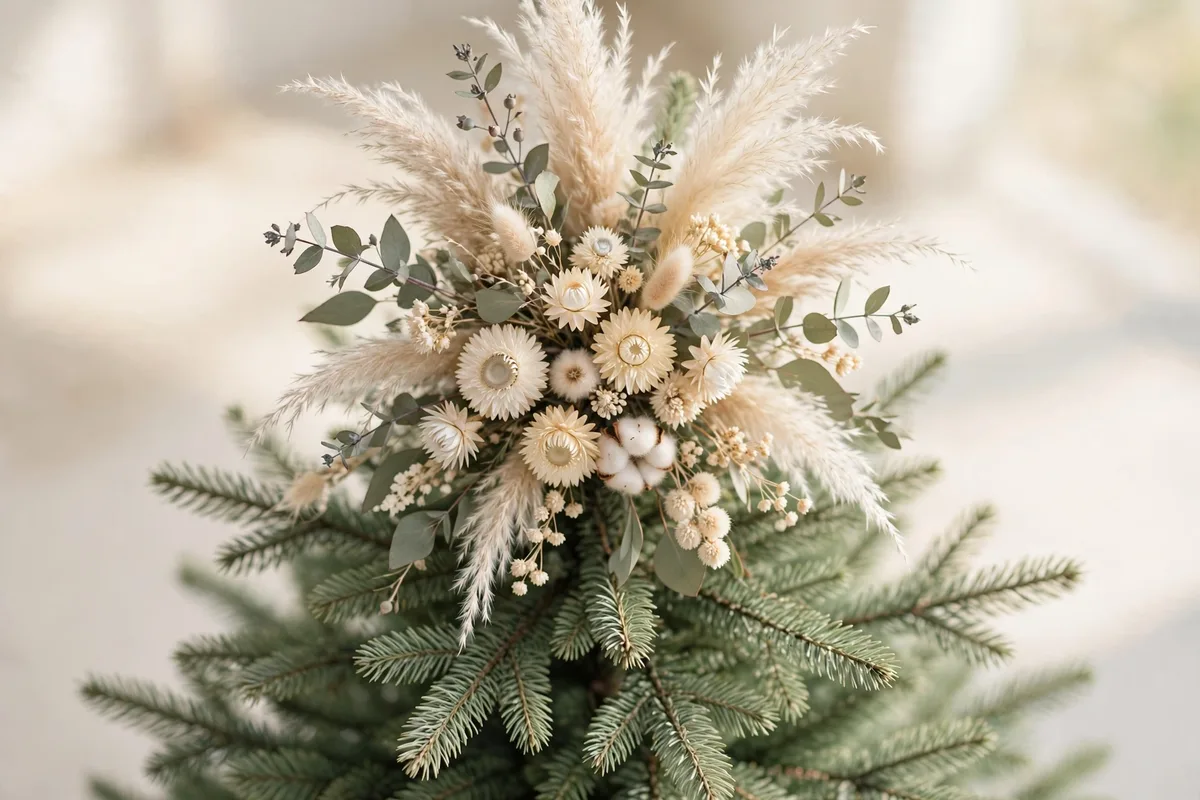
Skip the star and crown your sage tree with dried flowers instead. A loose bouquet topper — pampas plumes, dried eucalyptus, bleached fern and a few cream strawflowers wired together — continues the tree’s organic story right to the very top. It is unexpected, it is soft, and guests always ask about it.
Build it on a single sturdy stem: wire your dried elements to a 12-inch florist stake, then push the stake firmly into the top of the tree and secure it to the trunk tip with florist wire. Fan the elements outward so the topper reads as a continuation of the branches, not a hat sitting on top. If dried flowers feel too fiddly, a big cream linen bow is the serene runner-up.
12. The Small-Space Sage Green Christmas Tree
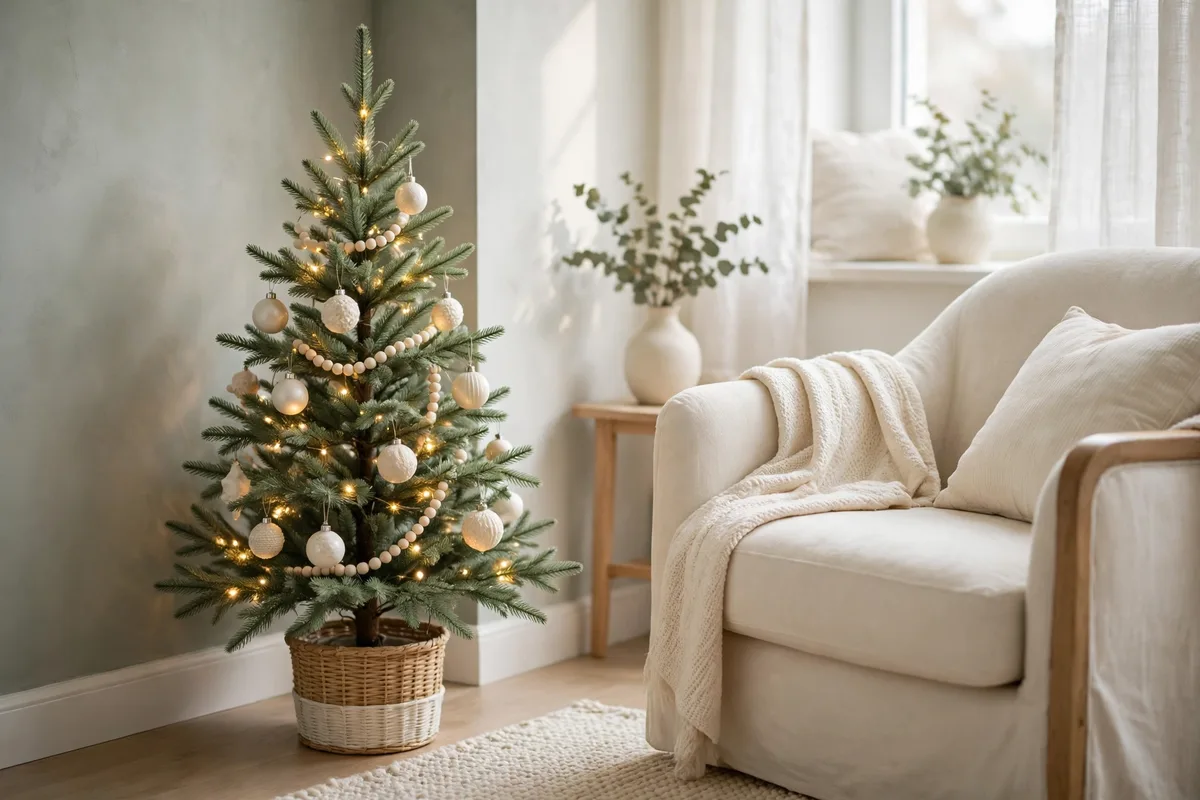
The soft green christmas tree aesthetic might be at its best in small spaces, where its calm palette makes a room feel bigger instead of busier. A slim pencil tree or a 4-foot tabletop tree in sage tucks into a corner, beside an armchair, or even on a sturdy sideboard — and because the palette is so quiet, it never overwhelms the room.
Style it with the same logic scaled down: warm lights, a handful of white ceramics, one ribbon cascade, two or three pampas picks. My first apartment tree was a sad little 4-footer I nearly apologised for; decorated in cream and green with nothing shiny, it looked intentional and chic, and I loved it more than the big tree I have now. Small tree, soft palette, big serenity.
13. Brushed Gold, Used Sparingly
A sage tree can take a whisper of metal — the key word being whisper. Five or six brushed-gold ornaments, or a single strand of brushed-gold bead garland, add a warm glint that makes the muted greens look richer by contrast. Brushed, satin or antique finishes only; polished gold is too loud for this palette and will shout over everything else.
Place the gold pieces deep in the tree rather than on the branch tips, so they glimmer through the greenery instead of sitting on it. This restraint is what separates the sage look from the classic red green tradition — where the classic tree layers on shine, the serene tree edits it away, and the little gold that remains feels like jewellery.
14. A Cosy Reading Corner Around the Tree
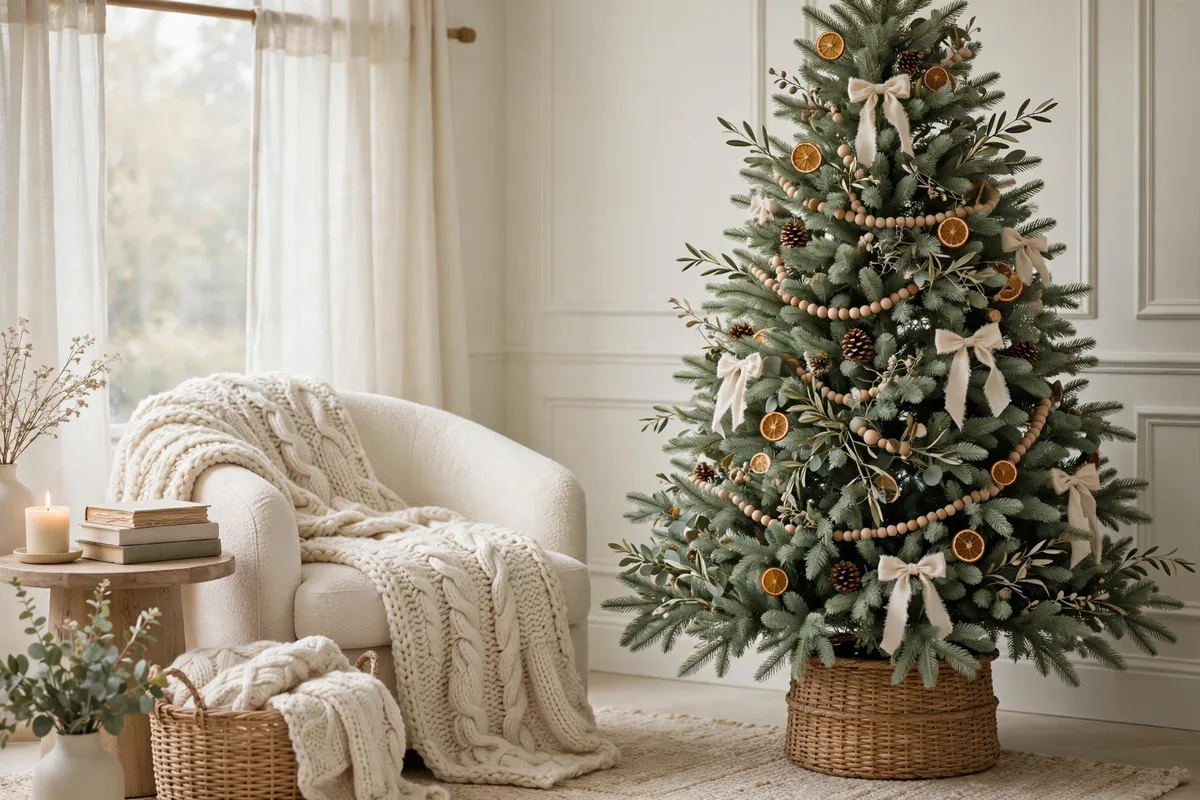
Do not let the tree stand alone in an empty corner — build a moment around it. An armchair angled toward the tree, a chunky cream throw, a small side table with a candle and a stack of books, a woven basket holding extra throws: suddenly the tree is part of a vignette, and the vignette is where everyone ends up sitting. The tree becomes the backdrop to December evenings, not just a decoration.
Keep the textiles in the same family — creams, oatmeals, soft whites — so the corner reads as one calm composition with the tree. A little living room styling intention goes a long way here: pull the chair close enough that the tree lights fall across the pages of your book, and you have built the cosiest seat in the house.
15. A Tabletop Mini in Sage
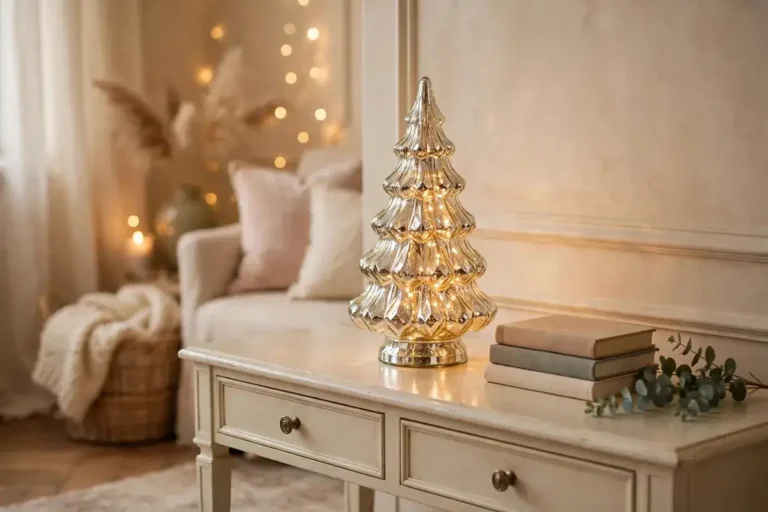
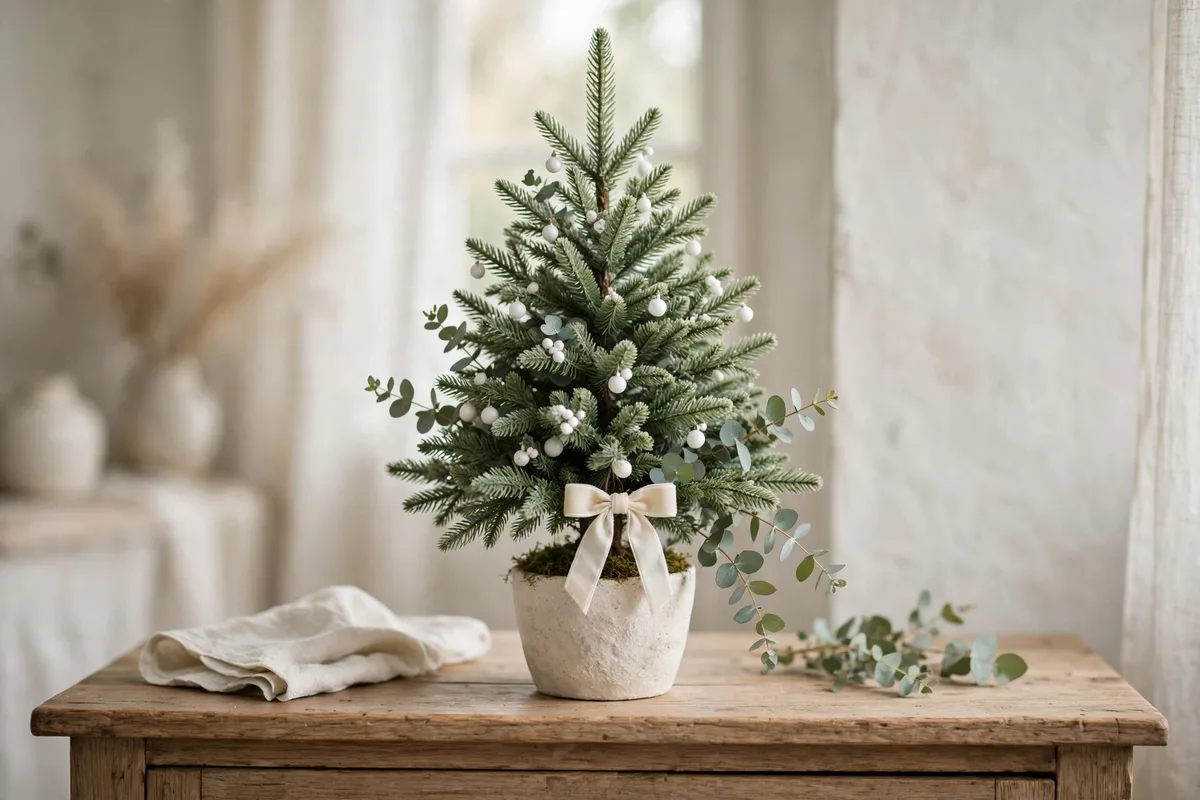
Finish the house with a tabletop mini — a 2-foot sage tree for the dresser, the sideboard, or the dining table. Decorate it with the exact same logic as the big tree, scaled down: warm lights, three or four white ceramics, a snippet of eucalyptus, one tiny velvet bow. The repetition of the palette in miniature is what makes the whole house feel considered.
A mini tree also makes the sweetest hostess gift or guest-room welcome: set it on the bedside table with a wrapped chocolate and a handwritten tag. It takes fifteen minutes to style, costs almost nothing, and it carries the serene sage story into rooms the big tree never reaches.
You May Also Like
- Scandinavian Christmas Decor Ideas — calm Nordic holiday styling
- Blue Christmas Decor Ideas — cool coastal festive palettes
- Emerald Green Christmas Tree Ideas — rich jewel-toned tree looks
Our Cozy Conclusion
A sage green christmas tree works because it edits — it takes the noise out of December and leaves only the glow. You do not need to replace everything at once: start with warm white lights and a handful of white ceramic ornaments, add cream velvet ribbon and a strand of eucalyptus, and let the serenity build year by year like mine did. This Christmas, give yourself the soft version — muted greens, cream textures, one calm glowing tree, and a whole season that feels like a deep breath.
FAQs
*What colours go with a sage green Christmas tree?*
Cream, ivory, warm white, oatmeal, soft beige and pale wood tones are the natural partners — everything matte and muted. For accents, brushed gold, sea-glass aqua or dried-flower neutrals work beautifully. Avoid anything high-shine or primary-bright; the serenity comes from keeping every colour soft.
*Can you make a regular green tree look sage green?*
Yes — a light dusting of flocking spray mutes a standard green tree toward sage remarkably well, and weaving in silver-dollar eucalyptus garland shifts the overall colour reading even further. Work in thin passes and step back often; you want to soften the green, not bury it in white.
*What should I look for when buying a sage green Christmas tree?*
Look for artificial trees marketed as “sage,” “eucalyptus,” “dusty green” or “muted green” with realistic PE branch tips — the two-tone tips read far more natural than flat PVC. A slim or pencil profile suits the airy aesthetic best, and pre-lit warm white options save an entire decorating step.
*Do warm white or cool white lights suit a sage tree better?*
Warm white, without question. Cool white lights turn sage branches slightly grey and clinical, while warm white deepens the green and makes creams glow golden. It is the single biggest factor in whether the tree feels cosy-serene or flat — always choose warm.
*How do you keep a neutral Christmas tree from looking boring?*
Texture, not colour, is the answer: velvet ribbon, ceramic ornaments, eucalyptus, dried florals, wooden beads and linen each add a different surface for light to play on. Layer at least four textures and vary ornament sizes, and a neutral tree looks rich and collected rather than plain.
*Is sage green Christmas decor still in style for 2026?*
Yes — the soft, neutral holiday palette has been growing for several seasons and shows no sign of fading, driven by the wider calm-home and Scandinavian-inspired decorating movements. Sage sits between timeless neutral and gentle colour, so unlike bolder trend colours it will not date your decorations next year.