15 Genius Small Entryway & Mudroom Organization Ideas for Winter Coats and Boots
Small entryway winter organization is about giving every coat, boot, and scarf a landing spot: a bench with hidden shoe cubbies, a wall peg rail for coats, and a wet boot tray by the door. Even without a closet, a narrow hallway can become a hardworking mudroom with hooks, baskets, and vertical storage.
Introduction
Every November, the same thing happens in my house: the coats arrive. Heavy parkas, snow boots, scarves, hats, gloves — and suddenly my little entryway looks like a sporting goods store exploded. For years I just shoved everything into a hall closet and pretended the door would stay shut. It never did. Last fall I finally gave my entryway the mudroom treatment — bench, hooks, boot tray, the works — in a space barely four feet wide. Now winter gear has a home, guests are not tripping over boots, and I can actually find my gloves. Here are the fifteen small entryway and mudroom organization ideas that made the biggest difference, all renter-friendly and small-space approved.
1. Build a DIY Mudroom Bench with Hooks
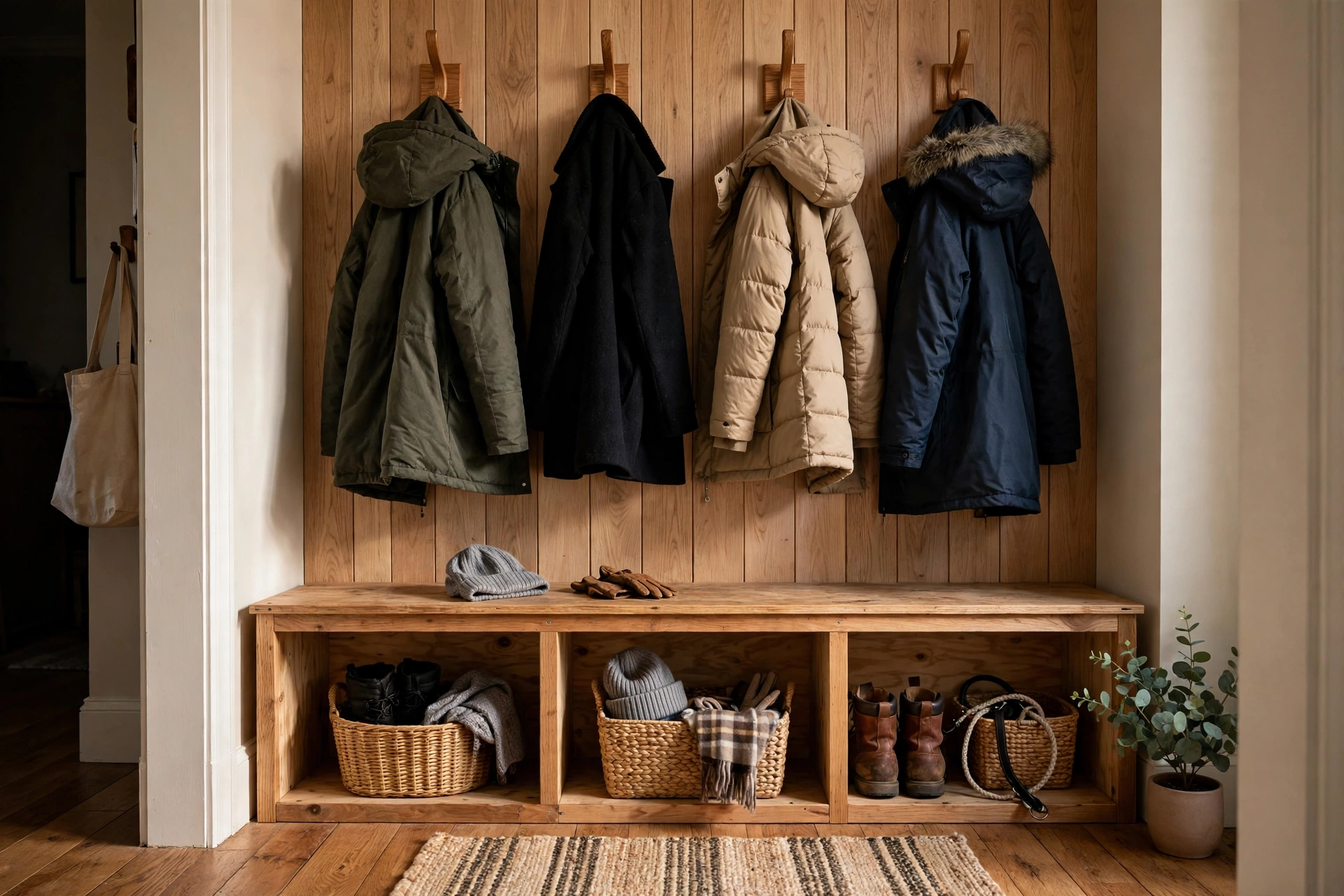
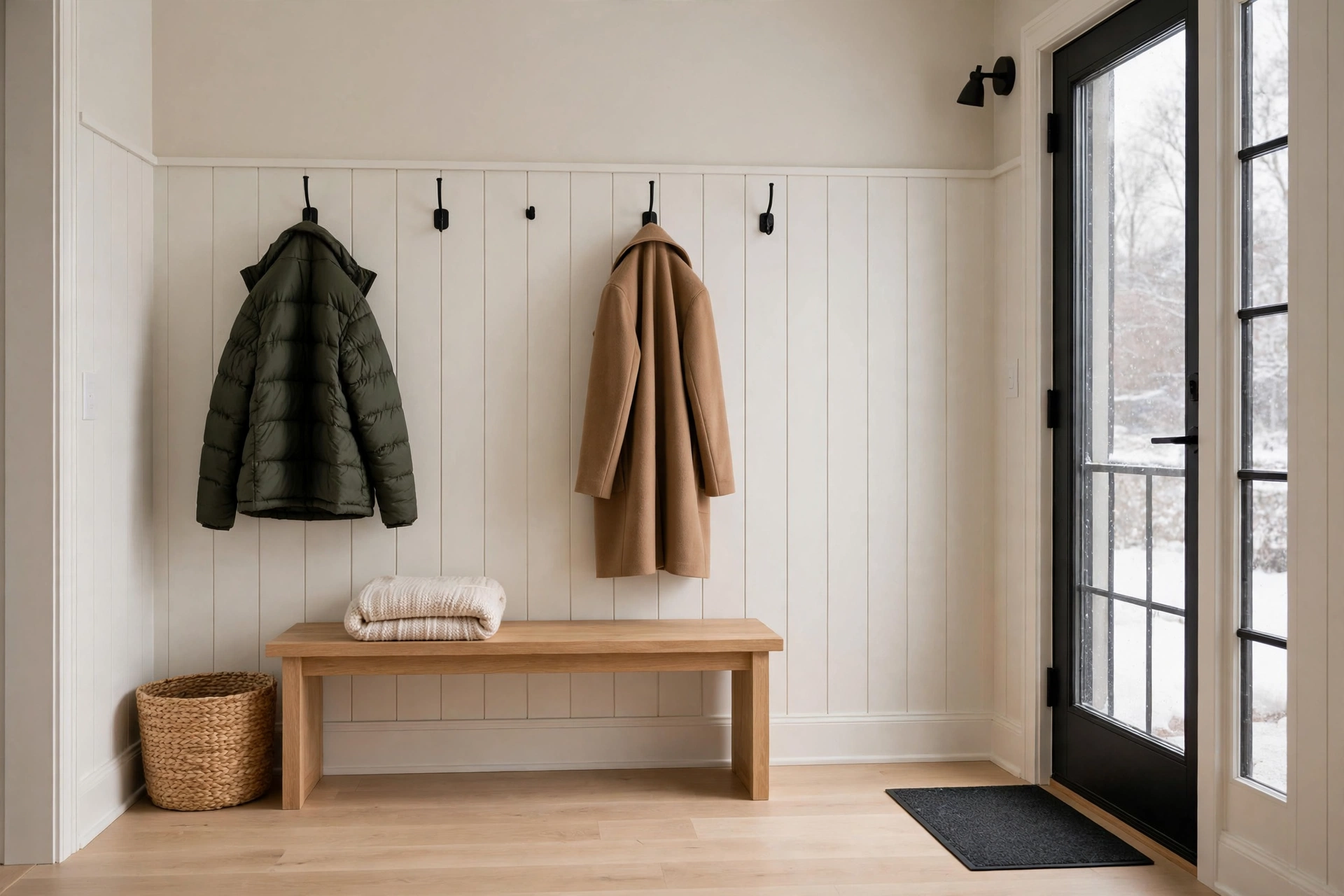
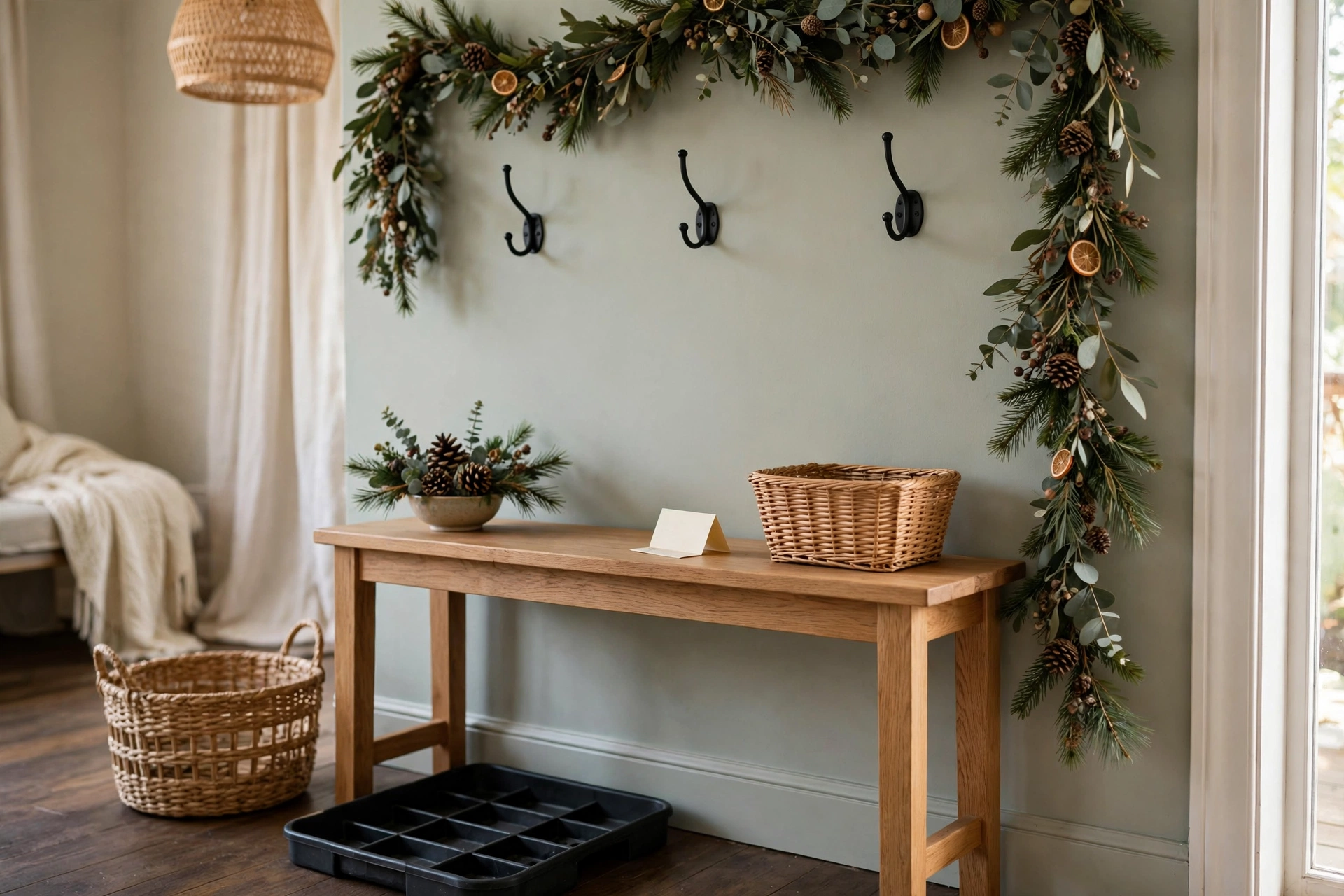
A diy mudroom bench with hooks is the single highest-impact upgrade for a small entryway. The bench gives you a seat for pulling on snow boots, the cubbies or baskets underneath swallow shoes, and a row of sturdy hooks above holds coats, scarves, and bags. One piece of furniture, three jobs done.
I built mine from two cube storage units topped with a pine board — total cost under eighty dollars — and mounted a simple oak peg rail above it. It took a Saturday afternoon and it is the most-used furniture in my house from November to March. Anchor it to the wall if you have kids climbing on it, and choose hooks rated for heavy winter coats, not the decorative kind.
2. Add a Wet Boot Tray by the Front Door
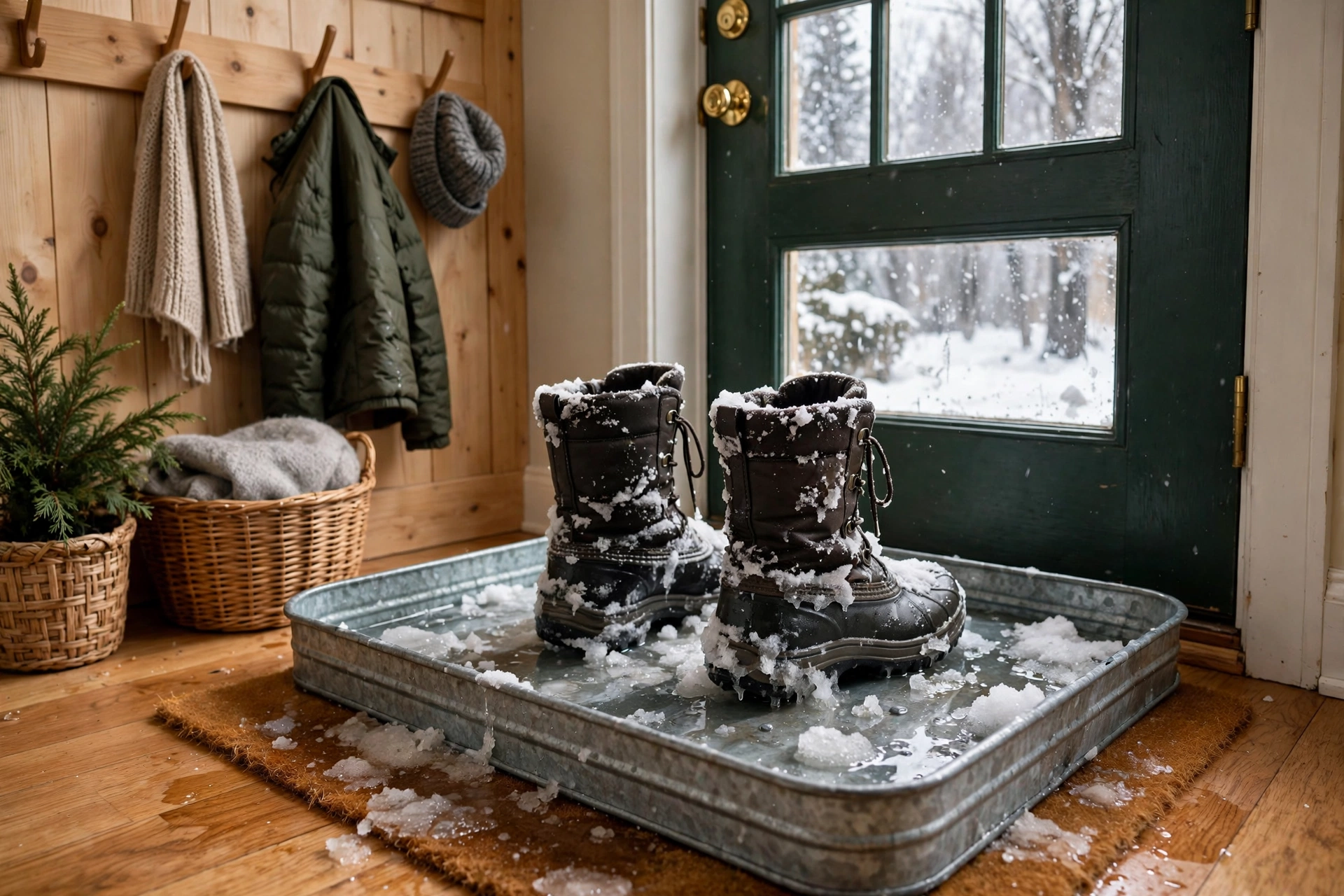
A wet boot tray is the unglamorous hero of winter organization. Snow-covered boots drip, and without a tray that meltwater spreads across your floors, warps wood, and leaves salt stains. A large galvanized or rubber tray with a raised grid keeps boots contained and lets air circulate so they dry faster.
Mine sits right inside the door and holds four pairs — the whole family's daily boots live there all winter, never migrating into the living room. Empty and wipe it weekly; road salt is corrosive if it sits. For narrow entries, a long slim tray works better than a square one, and a coir mat underneath catches the rest.
3. Mount a Wall Peg Rail for Coats
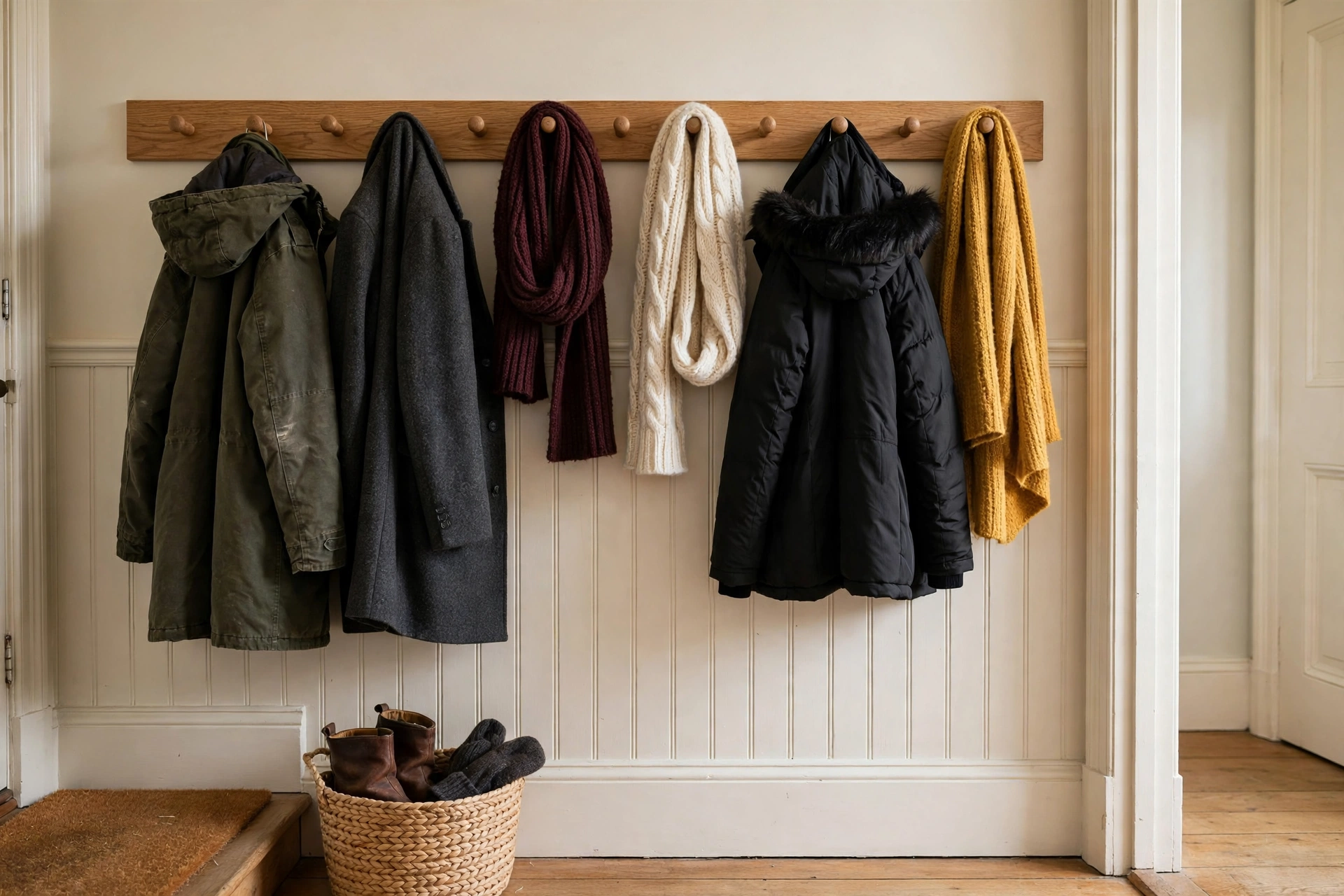
A wall peg rail is the prettiest way to solve no closet winter coat storage ideas. Unlike individual hooks, a continuous Shaker-style rail distributes weight across studs, so it can hold genuinely heavy parkas without pulling out of the wall. It also looks intentional and charming rather than improvised.
I mounted a six-peg oak rail at 66 inches high — tall enough for long coats to clear the bench below — and it holds my coat, my partner's, plus two guest coats without strain. Stagger a second shorter rail below for kids' coats and backpacks. Paint it the wall color for a built-in look, or contrast it in black for a modern farmhouse feel.
4. Use a Bench with Hidden Shoe Cubbies
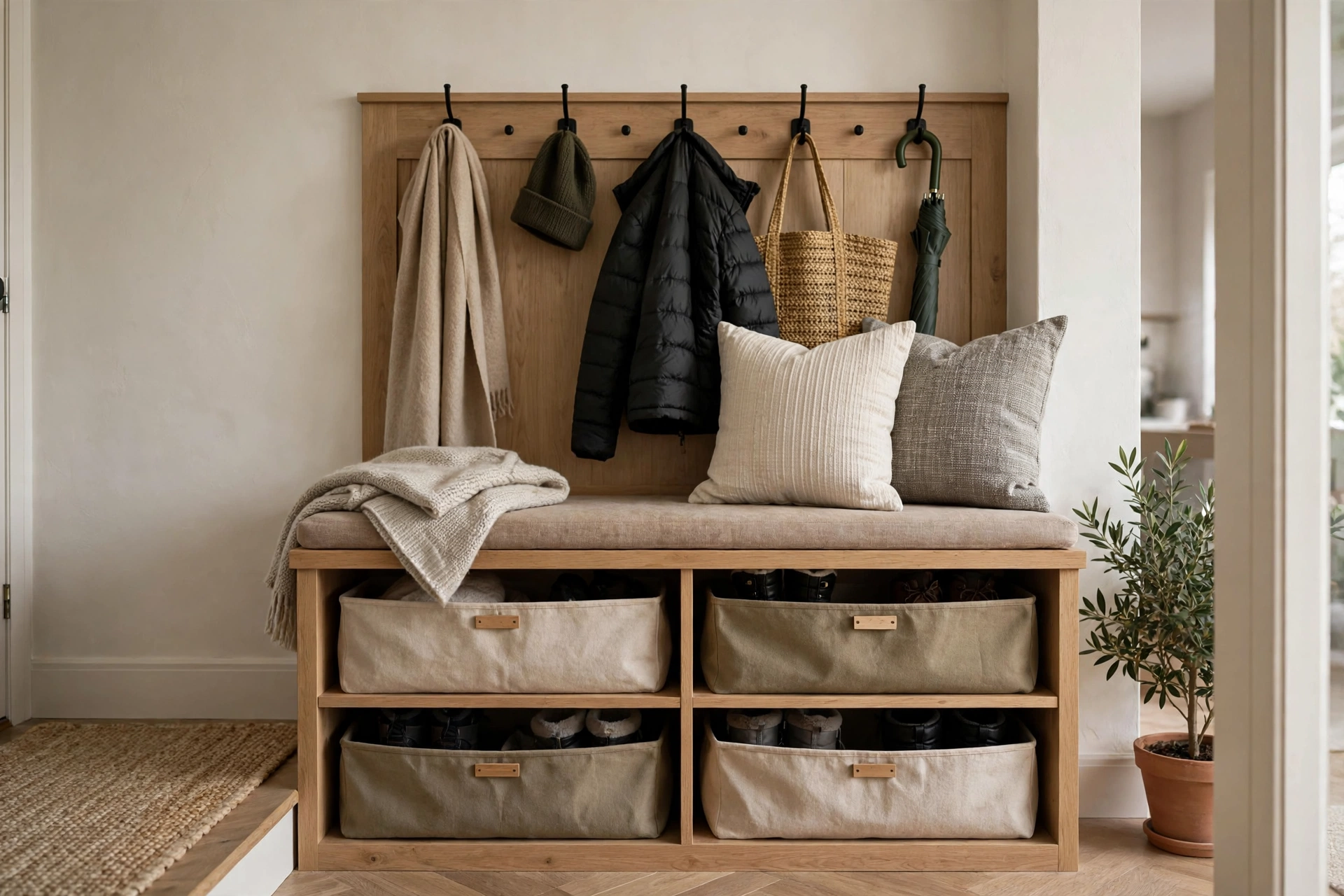
A bench with hidden shoe cubbies keeps the visual chaos of winter footwear out of sight, which matters enormously in a small space. Open shelves show every muddy boot; cubbies with fabric bins or doors hide them. Each family member gets one cubby — when it is full, something has to go back to the closet.
I assigned cubbies with little brass label holders, which sounds fussy but ended winter arguments about whose boots were blocking the door. Canvas bins pull out like drawers for easy cleaning. Measure your tallest winter boots before buying — some cubbies are too short for knee-high snow boots, and discovering that in January is miserable.
5. Create an Apartment Entryway Coat and Shoe Station
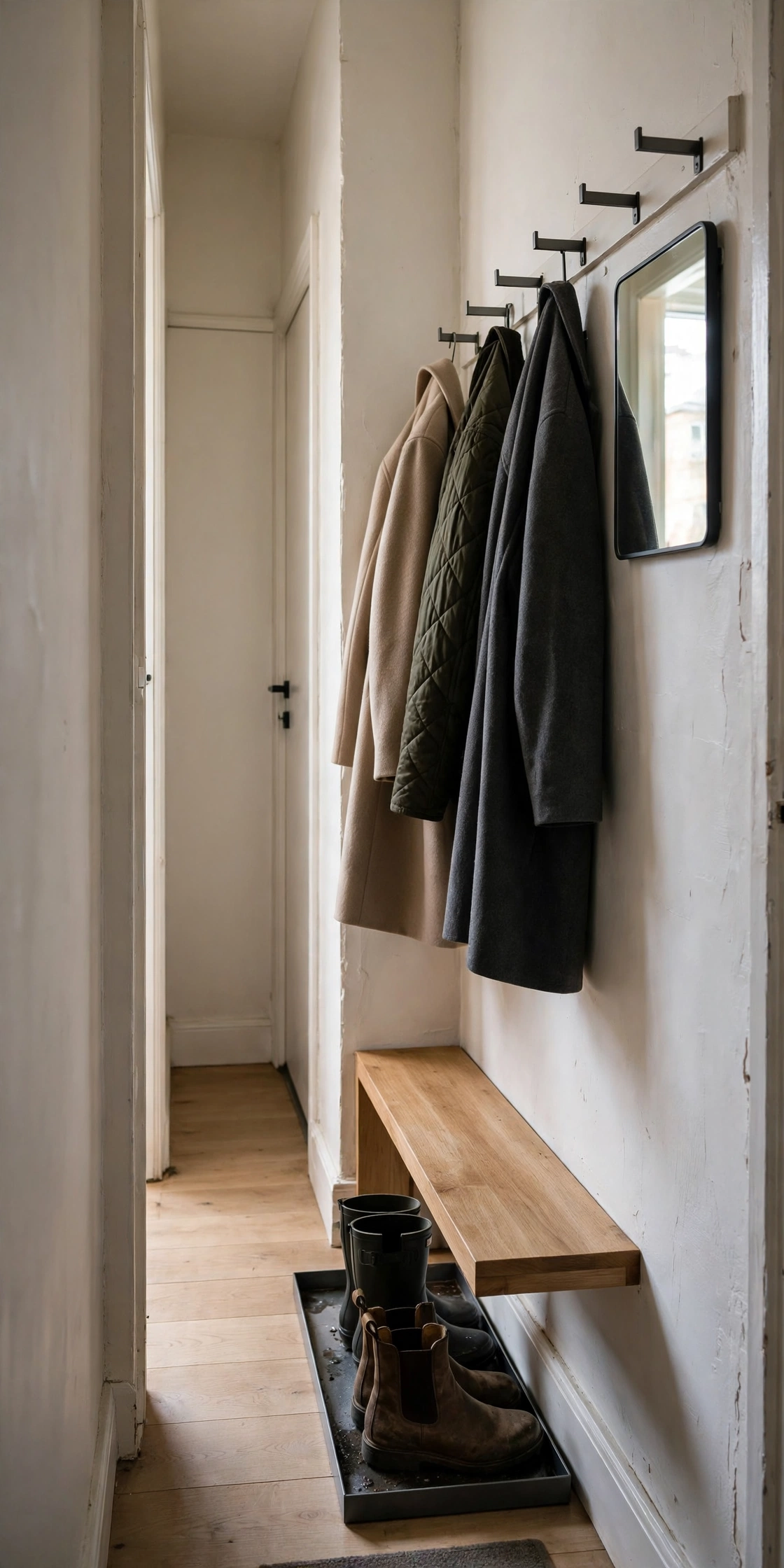
Apartment entryway coat and shoe storage has to work without a dedicated mudroom, so think in vertical stations: a narrow console or bench (no deeper than 14 inches), hooks above, a boot tray below, and a basket for the small stuff. Everything within arm's reach of the door, nothing protruding into the walkway.
My apartment entry is a hallway barely three feet wide, and this station setup transformed it. The key was going shallow — a 12-inch-deep bench, flat-profile hooks, a slim tray. I also hung a small mirror above the hooks, which bounces light and makes the narrow hall feel twice as wide. Guests now hang their own coats instead of piling them on my couch.
6. Try a Narrow Hallway Mudroom Makeover
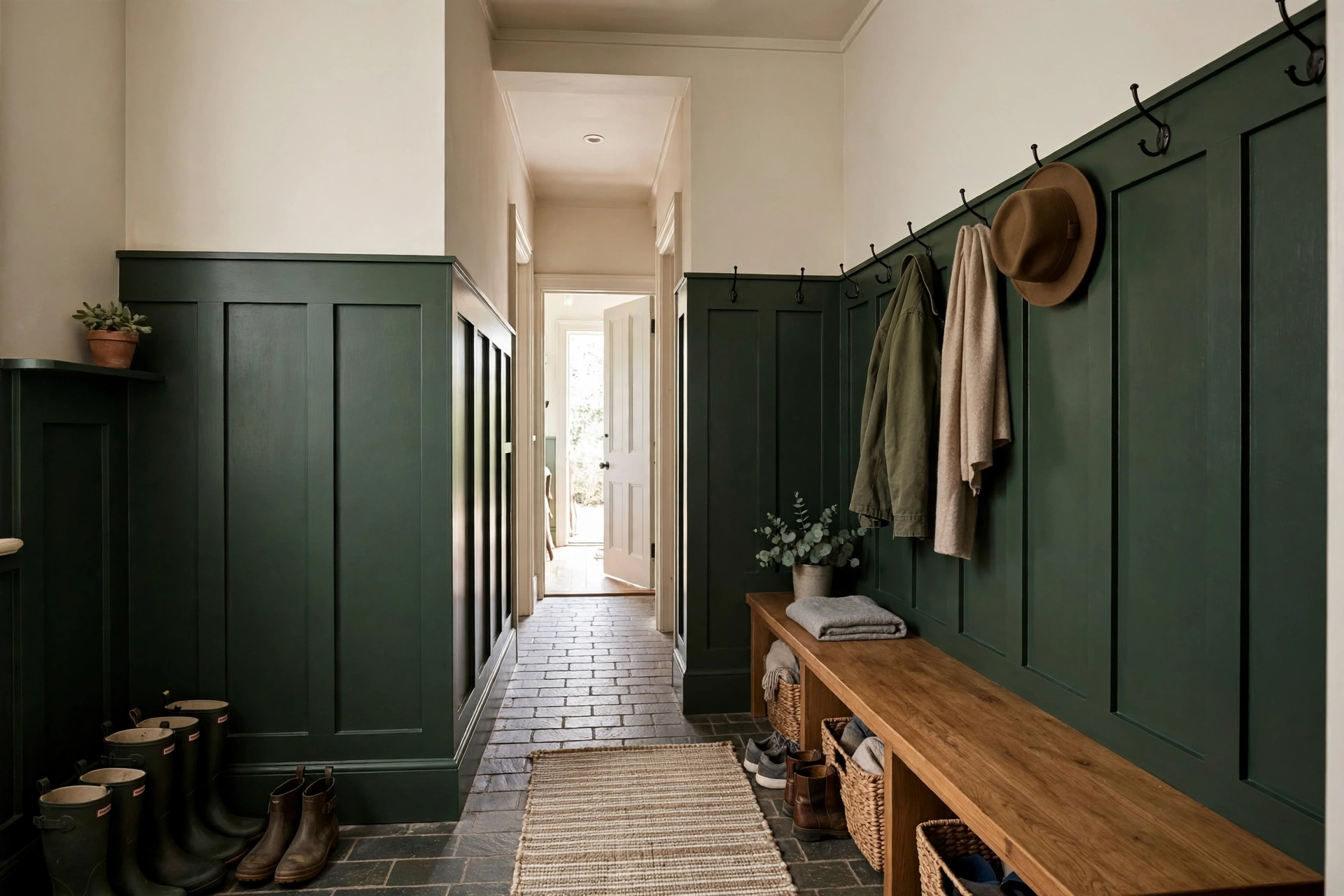
A narrow hallway mudroom makeover is about treating the hall like a room, not a passage. Define the zone with a runner rug, add board-and-batten or a painted lower wall for durability, then layer in bench, hooks, and storage. Suddenly the hallway has a job instead of just being walked through.
I painted the lower third of my hallway a deep wipeable green, added simple battens, and the whole space felt custom. The darker lower wall hides scuffs from boots and bags — a genuine functional win, not just looks. Keep the upper wall light so the narrow space does not close in. Total cost was paint plus trim, under a hundred dollars.
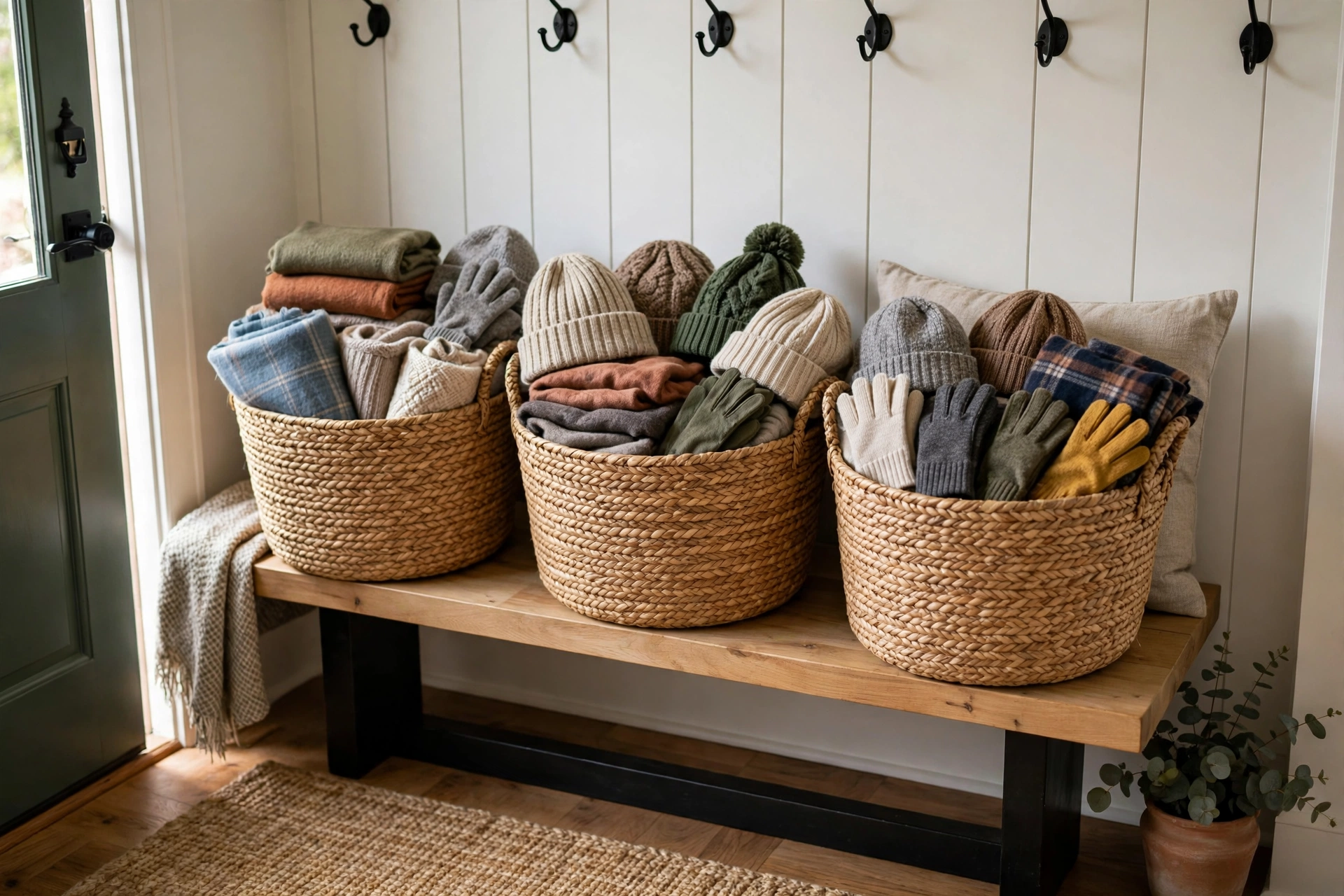
7. Corral Scarves and Hats in Aesthetic Woven Baskets
Aesthetic woven basket storage in the entryway solves the small-item explosion: gloves, hats, scarves, dog leashes, reusable bags. Without a corral, these migrate to every surface in the house. One large basket per category, labeled or not, keeps them findable and looks beautiful doing it.
I use three seagrass baskets on the bench: one for my winter accessories, one for my partner's, one for guests. The guest basket is the detail visitors always notice — no more awkward "where do I put my scarf" dance. Woven textures also warm up the hard surfaces of an entryway. Choose baskets with handles so they can be carried to the living room on movie nights.
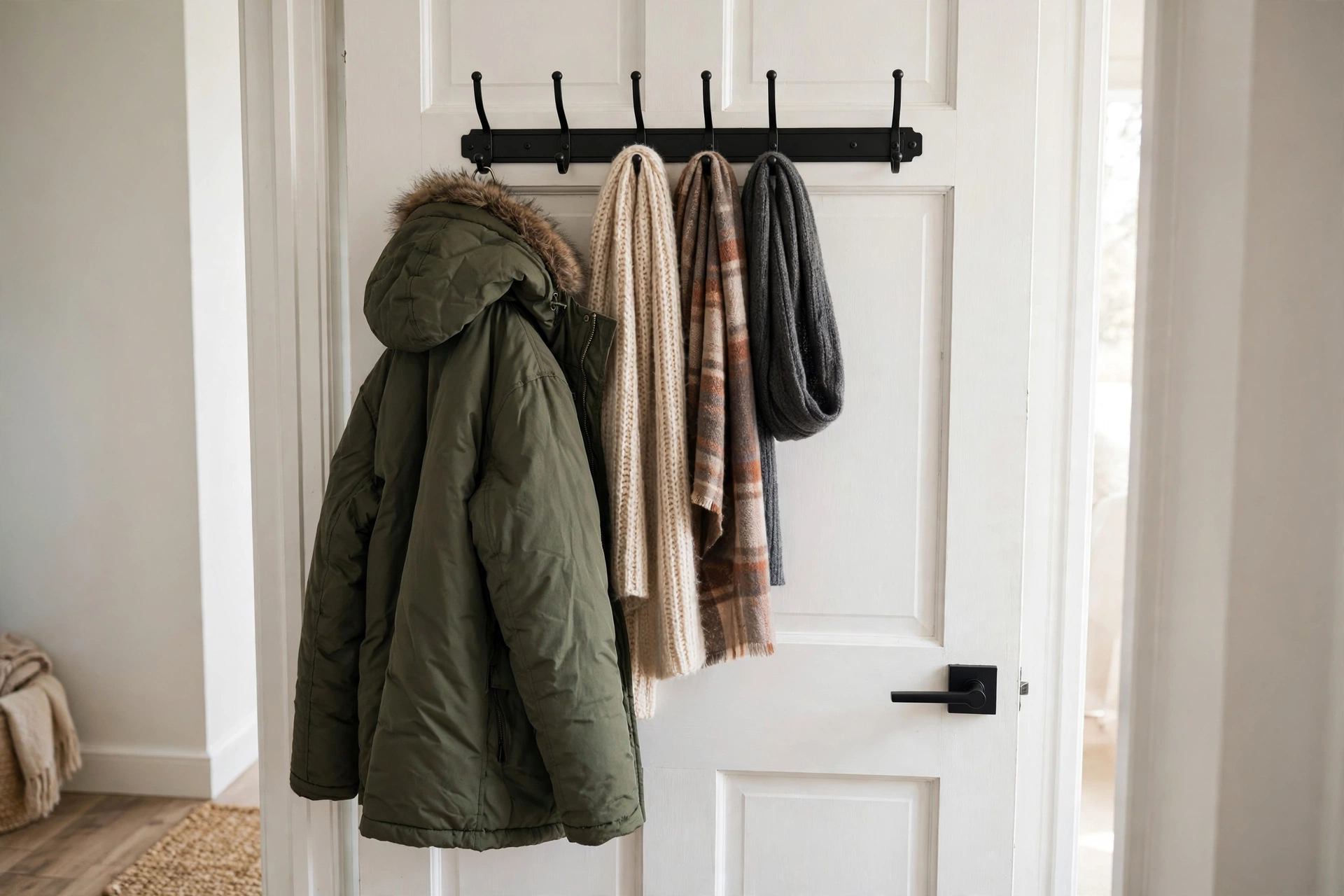
8. Install an Over-the-Door Coat Rack for Rentals
An over-the-door coat rack is the renter's answer to no coat closet. Modern versions hook over any standard interior door without screws or damage, and the best ones hold surprising weight. Hang it on the inside of a coat closet door, the bedroom door, or even the front door itself for grab-and-go outerwear.
I put one on my bedroom door for my everyday parka and work bag, which freed two peg-rail spots for guests. Look for racks with at least five hooks and rubber-coated backs so they do not scratch the door. It is not the prettiest solution on this list, but for renters it is the fastest — five seconds to install, zero holes to fill later.
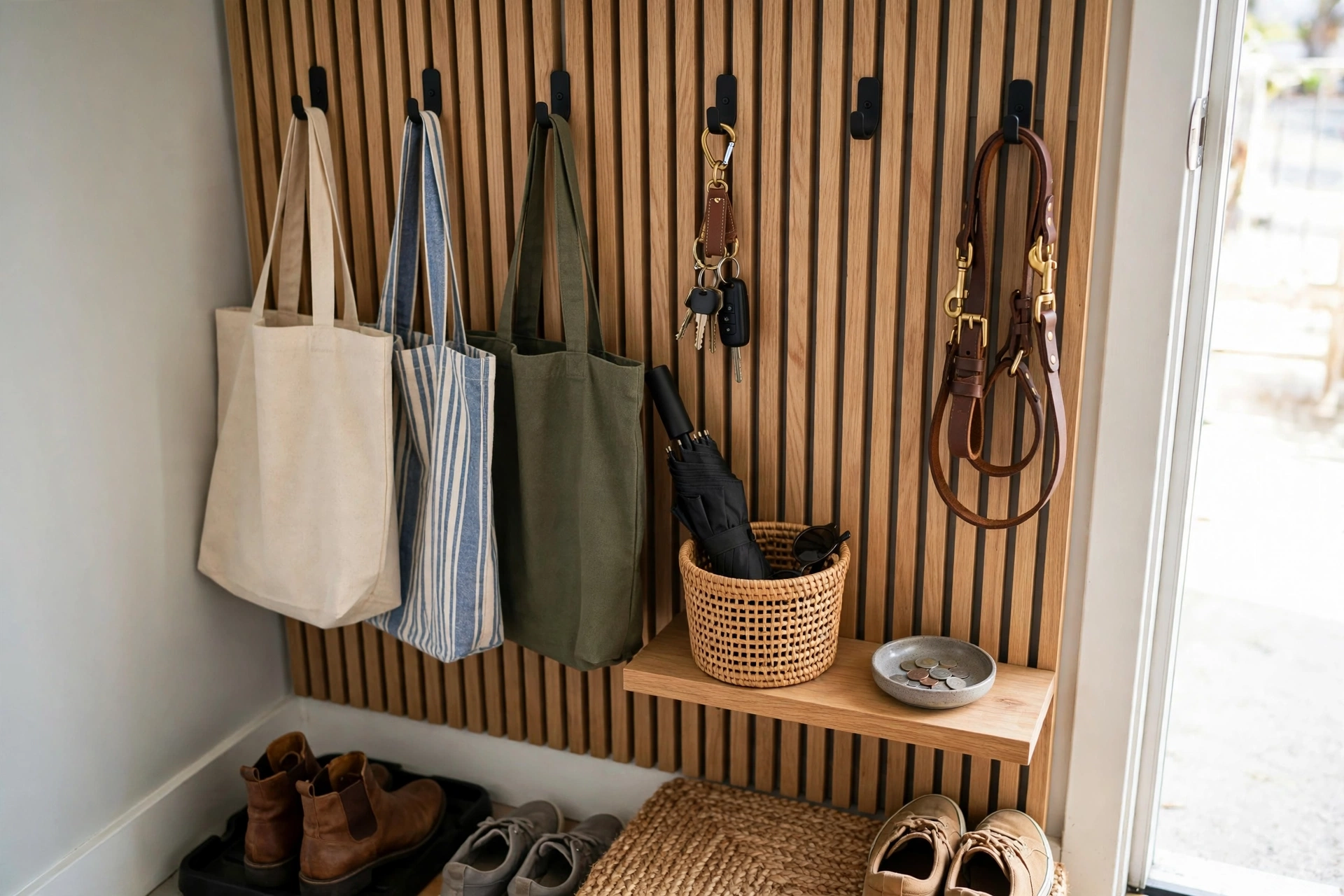
9. Use Command Hook Hacks for Extra Hanging Space
Command hook hacks are the secret weapon for squeezing more storage from an entryway: inside cabinet doors for dog leashes, on the side of the bench for reusable bags, under a shelf for keys. They hold real weight now — the large ones handle winter coats — and they remove cleanly.
My favorite hack is a row of large Command hooks inside the front closet door for umbrellas and the dustpan I use for entryway salt. Another: hooks on the side of a tall bookcase near the door for guest tote bags. In winter I add two extra-large hooks just for wet scarves that need to air-dry before going in a basket. Think of every vertical surface as potential storage.
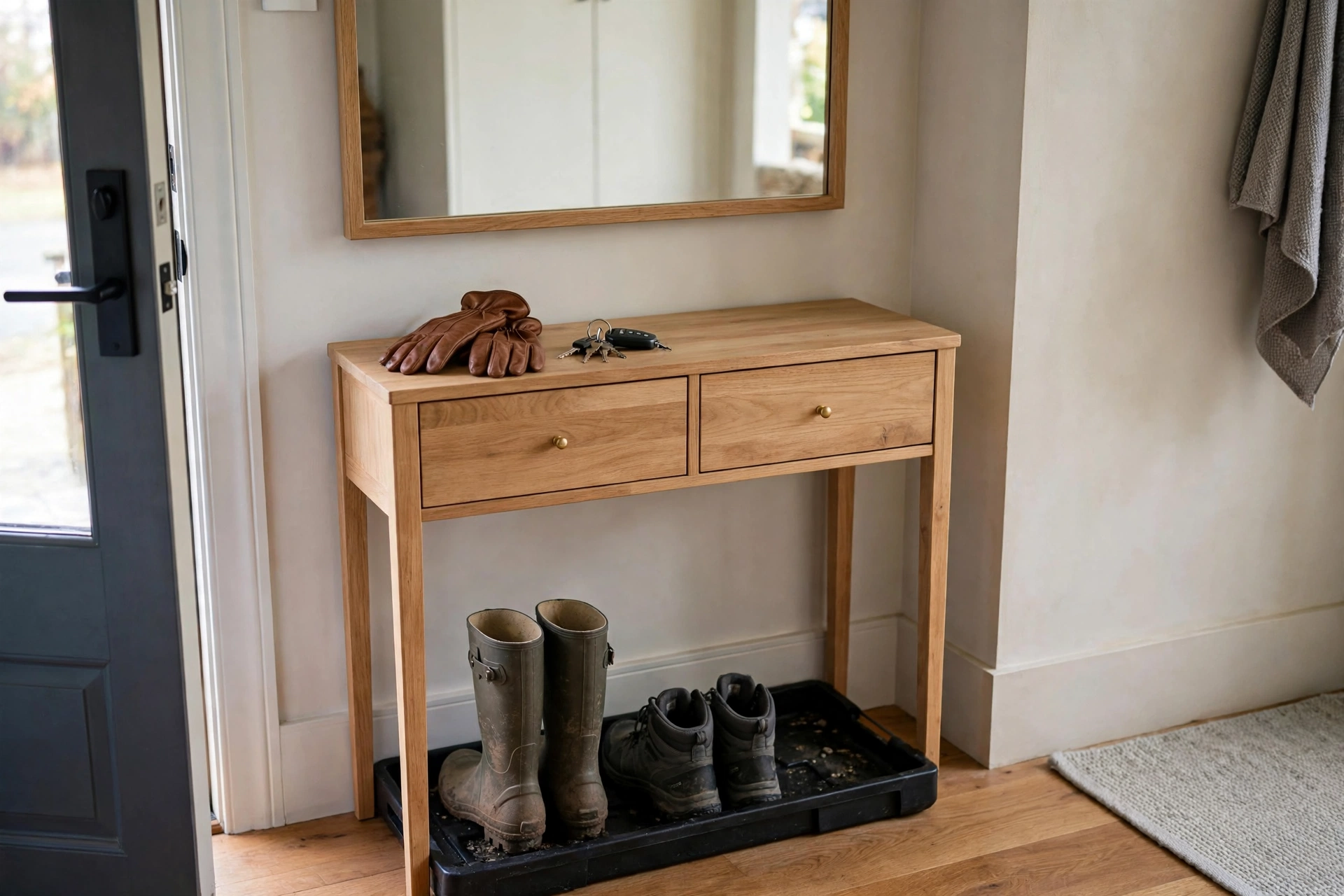
10. Add a Slim Console with Drawers for the Small Stuff
A slim console table with drawers gives winter's small essentials a home: gloves, lip balm, hand warmers, spare keys, sunglasses, the mail you grab on the way in. Without drawers these live in a pile; with drawers they vanish. Choose one no deeper than 12 inches so it does not eat the walkway.
Mine has two shallow drawers — top for my everyday carry, bottom for the winter kit (gloves, hat, hand warmers, ice scraper). Above it hangs the mirror, below it sits the boot tray. It is the command center of my entryway. A thrifted console plus new knobs looks custom for almost nothing.
11. Define the Zone with a Washable Runner Rug
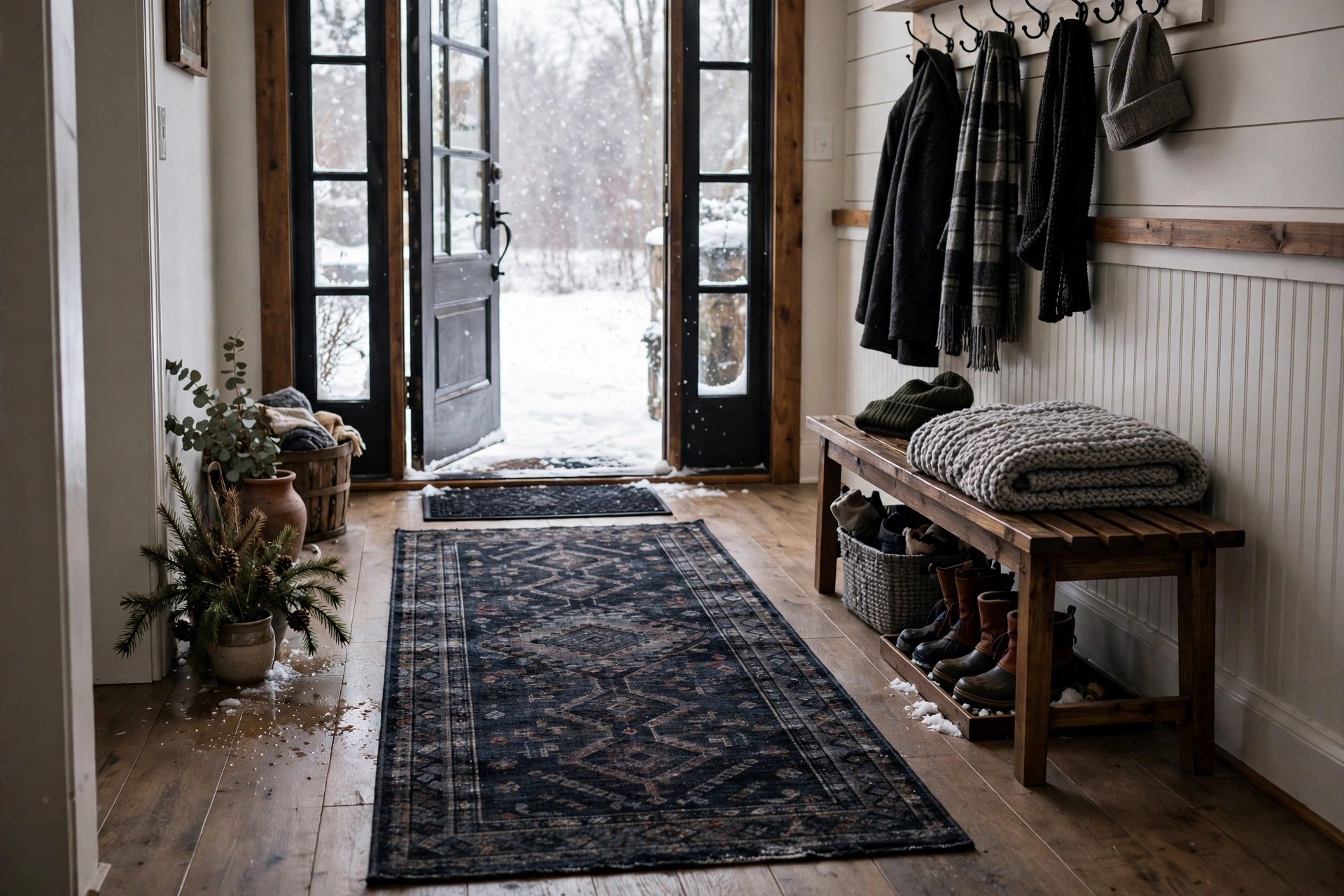
A washable runner rug does three jobs in a winter entryway: it defines the mudroom zone visually, catches dirt and meltwater before it spreads, and adds warmth underfoot. In winter, "washable" is non-negotiable — road salt and slush will destroy a delicate rug in weeks.
I run a low-pile washable runner from the door past the bench, and I machine-wash it monthly through winter. Dark patterns hide the in-between cleans. The runner also signals to guests exactly where to take their boots off, which solves the awkward hover. Measure twice — the runner should span the full working zone, not just decorate the middle.
12. Go Vertical: Tall Cabinets for Out-of-Season Gear
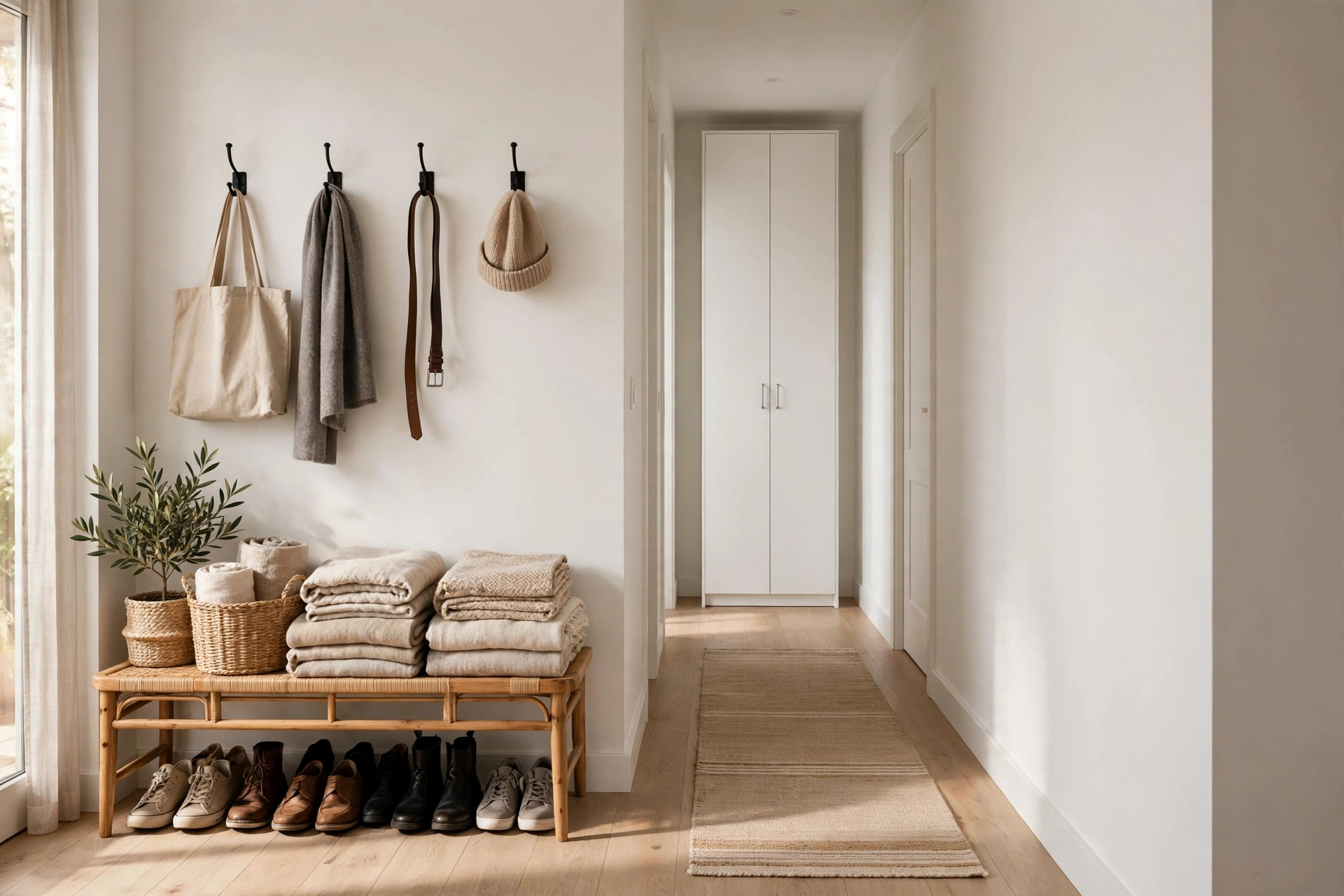
When floor space is gone, go vertical. A tall narrow cabinet — even 18 inches wide — swallows out-of-season gear, cleaning supplies, and the overflow that does not fit the daily station. Winter's daily coats stay on hooks; everything else goes behind doors.
I added a tall Billy-style bookcase with doors at the end of my hallway for off-season shoes, umbrellas, and the vacuum. It looks like built-in millwork because I trimmed it out with baseboard. The rule that keeps it working: the cabinet is for storage, never for today's coat. Daily gear lives on hooks where you can grab it with one hand.
13. Create a Clutter-Free Foyer with the One-In-One-Out Rule
A clutter-free foyer in winter requires a rule, because gear multiplies. Mine: one in, one out — when new winter boots come home, an old pair goes to the closet or donation. Same for coats, scarves, hats. Without the rule, the entryway slowly fills until the bench is buried and the system collapses.
I do a five-minute foyer reset every Sunday night: boots back on the tray, scarves in baskets, everything else to its home. It sounds rigid but it is the only thing that has ever kept my small entryway functional past December. Winter is long; systems beat willpower every time.
14. Add Warm Lighting to the Entryway
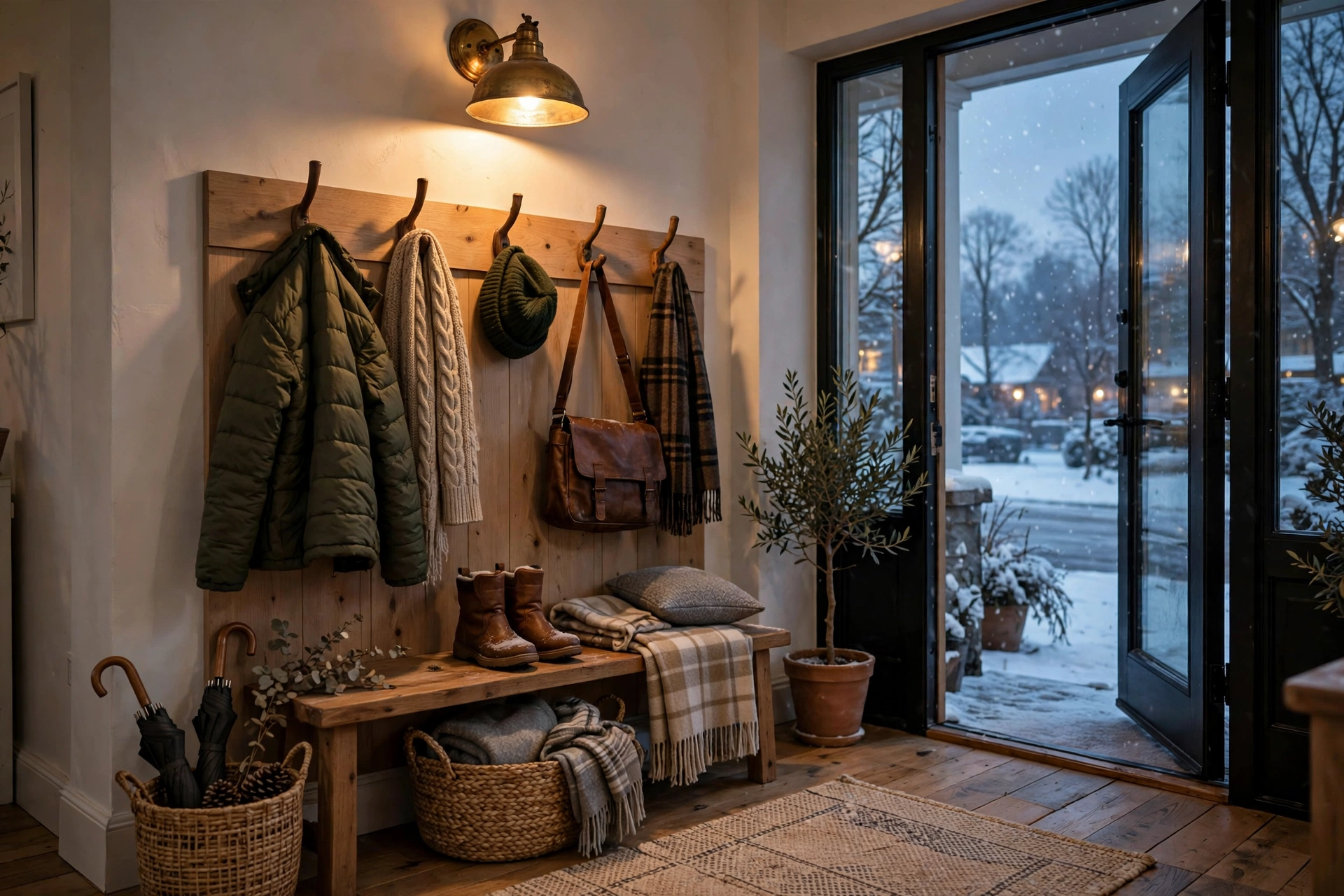
Entryways are often the darkest spot in the house, and in winter you come home to darkness daily. A warm plug-in sconce, a small lamp on the console, or battery-operated picture lights over the hooks changes the entire feeling — you walk into glow instead of gloom. It also makes the space safer when you are juggling bags and boots.
I added a $25 plug-in brass sconce above my peg rail with a warm amber bulb, and my entryway went from cave to welcome. Put it on a timer so it is lit when you get home. In the darkest months, this little light is genuinely the first thing that makes me exhale when I walk in.
15. Prep a Guest-Ready Winter Entryway
When family guests arrive for the holidays, your entryway needs surge capacity: empty two hooks, clear one cubby, put out the guest basket, and lay an extra boot tray. A small handwritten note — "make yourself at home, hot cocoa in the kitchen" — turns an organized entry into a welcoming one.
I do this the morning guests arrive and it takes ten minutes. The cleared hooks say "we expected you" louder than any greeting. Keep a spare phone charger and the wifi password on a little card by the console too. Winter hosting is stressful enough; an entryway that absorbs the chaos instead of adding to it is a gift to everyone, including you.
Conclusion
A small entryway does not need to be big to work like a mudroom — it just needs every inch assigned a job. Bench for sitting, hooks for coats, tray for boots, baskets for the small stuff, and a rule to keep it all honest. Do it now, before the first real snowfall, and this winter your front door will be the calmest spot in the house instead of the most chaotic. Future you, juggling groceries and a wet parka in January, says thank you.
FAQs
1. How do I organize a small entryway with no closet for winter?
Build a vertical station: bench with cubbies, wall peg rail for coats, boot tray below, baskets for accessories. Go shallow (12-14 inches deep), use every wall, and keep daily gear on hooks where you can grab it one-handed.
2. What is the best way to store winter boots by the front door?
A large boot tray with a raised grid — it contains meltwater, lets boots air-dry, and protects floors from road salt. Empty and wipe it weekly, and keep only daily-worn boots there; the rest belong in a closet.
3. How can renters create a mudroom without drilling?
Use over-the-door coat racks, Command hooks (the large ones hold coats), freestanding benches with cubbies, and tension rods. A washable runner and baskets complete the look with zero holes in the walls.
4. How do I keep a small mudroom from getting cluttered in winter?
Enforce one-in-one-out for coats and boots, do a five-minute Sunday reset, and give every category a container. Clutter happens when items have no home — baskets, cubbies, and labeled spots prevent it.
5. What should go in a winter entryway basket for guests?
Keep a dedicated guest basket with nothing in it most of the time — empty space is the gift. When guests arrive, it holds their scarves, hats, and gloves so they are not piled on your furniture.
6. How wide should a hallway be for a mudroom bench?
You need about 36 inches of clear walkway after the bench. A 12-14 inch deep bench works in hallways as narrow as 4 feet; anything narrower, use wall hooks and a slim tray instead of a bench.