
12 Wedding Table Setting Ideas That Feel Thoughtful, Elegant, and Truly Memorable
Wedding table settings are one of those details guests may not consciously analyze, yet they absolutely feel them. The moment someone walks into a reception space, their eyes naturally land on the tables. Before the food arrives and before the music starts, the table setting quietly communicates the mood of the celebration. It signals whether the wedding is formal or relaxed, romantic or modern, intimate or grand.
Many couples treat table settings as a checklist item, but that approach often leads to forgettable results. Plates and glasses alone do not create an experience. A wedding table setting is where design meets emotion. Guests sit there for hours, talking, eating, and making memories. The textures, colors, and small details all shape how comfortable and connected they feel throughout the celebration.
These 12 wedding table setting ideas focus on creating tables that feel intentional, welcoming, and adaptable. Each idea explains the logic behind the look, shows how it works in real weddings, and explores how it can shift in style without losing its charm.
Classic White Table Setting with Layered Neutrals
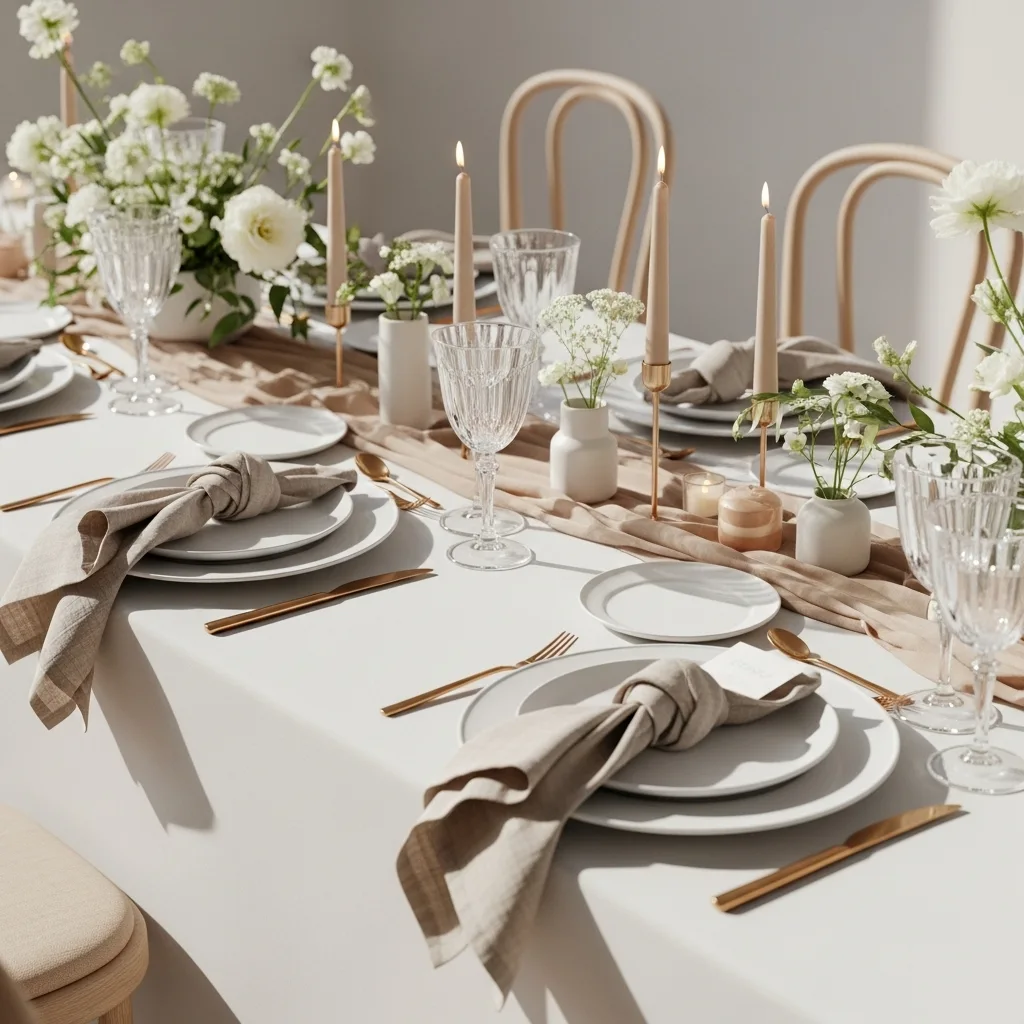
A classic white table setting works because it feels clean and timeless, but it becomes truly elegant when layered properly. Instead of relying on one flat white tone, layering soft neutrals like ivory, cream, and warm beige adds depth without overwhelming the table. The result feels refined rather than sterile.
A common example includes a white tablecloth paired with neutral linen napkins, subtle chargers, and clear glassware. Floral arrangements stay soft and understated, allowing the layers to do the visual work. The table feels calm, balanced, and polished.
This style offers incredible flexibility. It works in formal ballrooms, garden weddings, and minimalist venues. You can lean luxurious with gold accents or keep it relaxed with natural textures, all while keeping the same neutral base.
Romantic Candlelit Wedding Table Setting
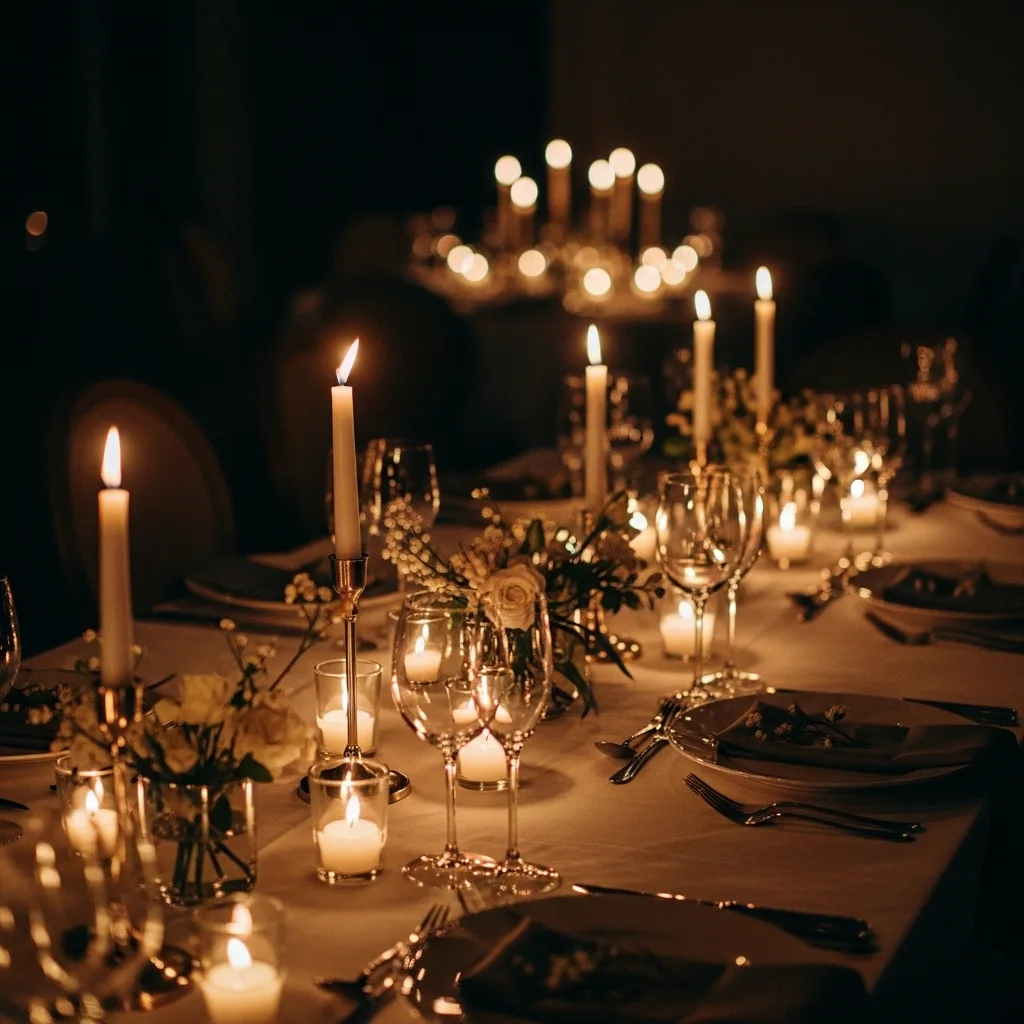
Candlelight instantly changes how a space feels. A candle-focused wedding table setting adds warmth and intimacy that overhead lighting simply cannot replicate. The glow softens faces, enhances florals, and makes conversations feel more personal.
A typical setup mixes tall taper candles with low votives spread evenly across the table. The varying heights add movement while keeping sightlines open. Florals usually stay low and simple so candles remain the focus.
This idea adapts beautifully to different styles. White candles feel classic, colored candles add personality, and metallic holders bring elegance. It works especially well for evening weddings where atmosphere matters most.
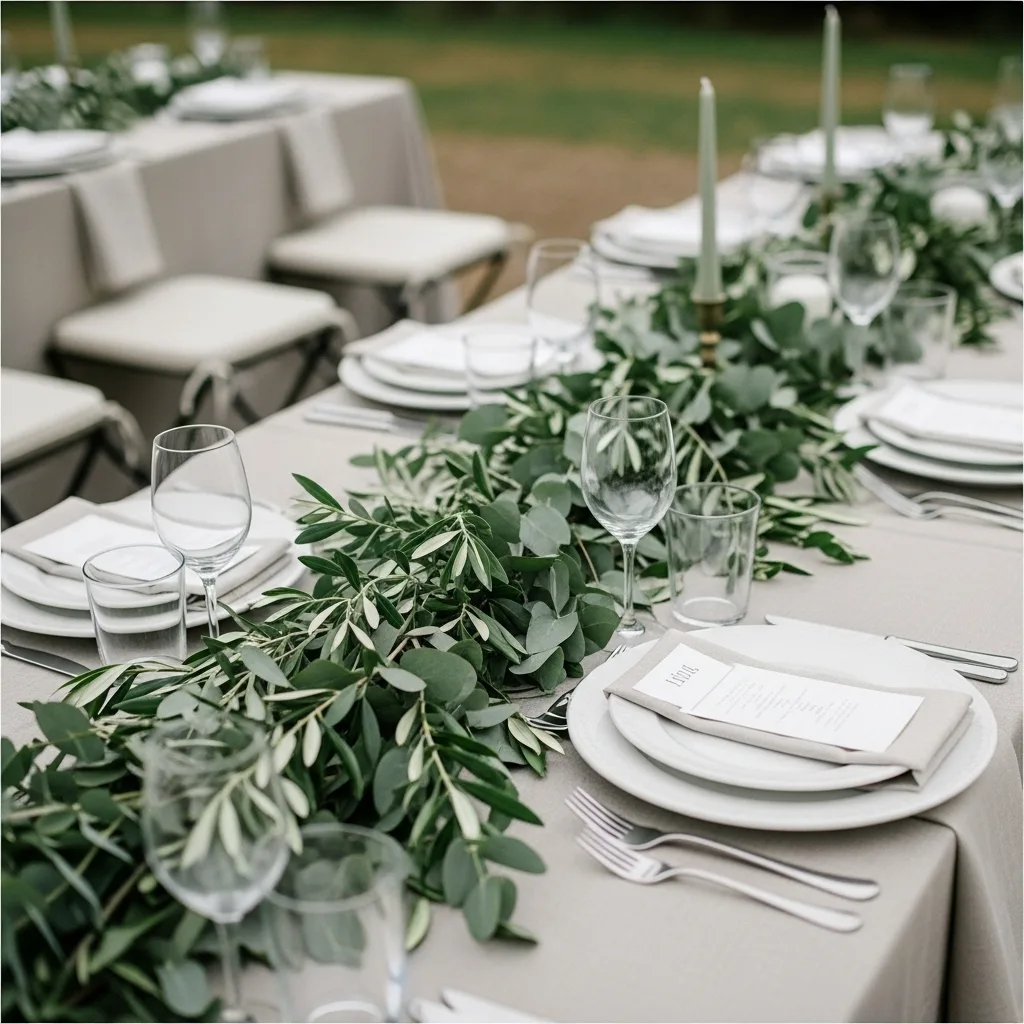
Greenery-Focused Table Setting
Greenery brings freshness and life to wedding tables without feeling heavy or overdesigned. It connects the celebration to nature and creates a relaxed, organic atmosphere that guests immediately respond to.
An example setup includes eucalyptus or olive branches running down long tables, paired with simple plates and neutral linens. The greenery becomes the centerpiece, removing the need for large floral arrangements.
This style is extremely versatile. It works for rustic, modern, and outdoor weddings alike. You can dress it up with candles and refined tableware or keep it casual with wooden accents and simple glassware.
Modern Minimal Wedding Table Setting
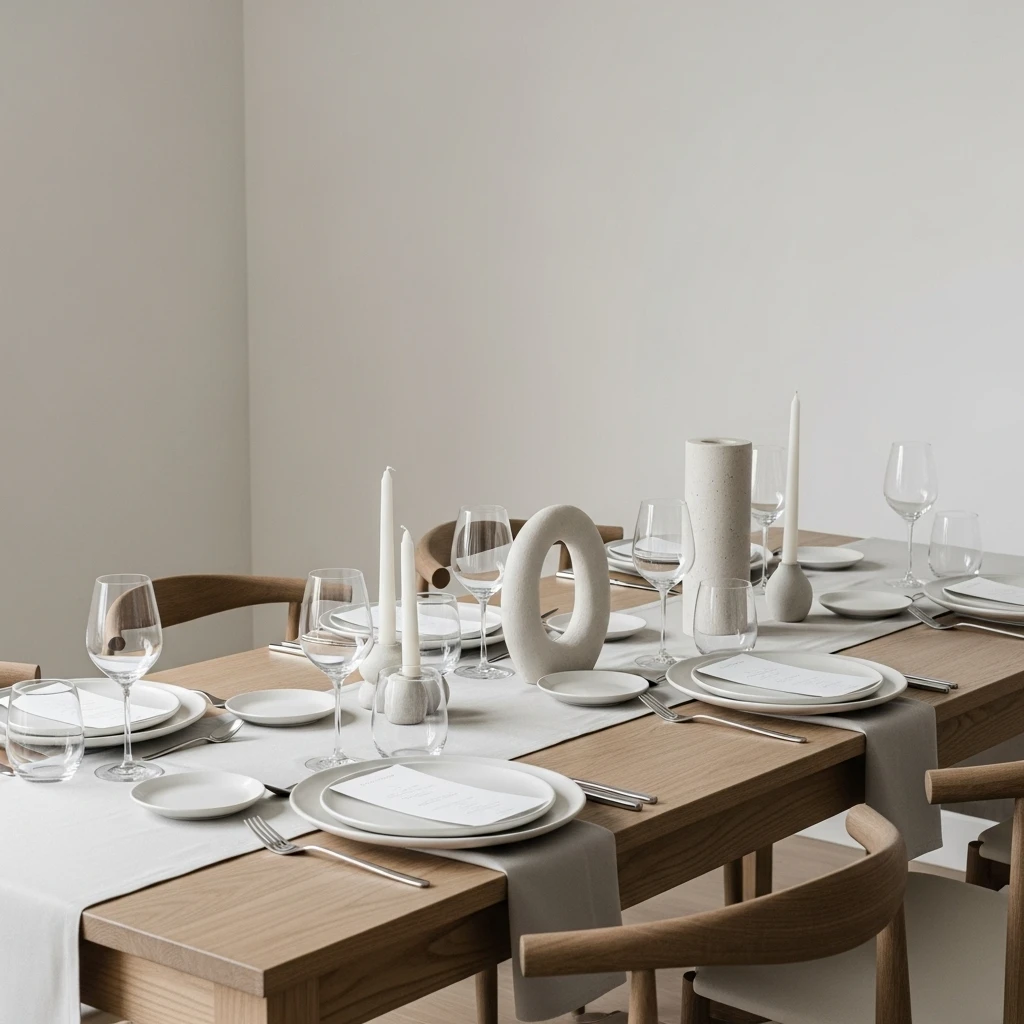
Minimalist table settings rely on intention rather than abundance. Every element is chosen carefully, and nothing feels extra. This creates a calm, modern atmosphere that allows guests to focus on the experience rather than visual clutter.
A common setup includes solid-color linens or bare tables, clean-lined plates, and minimal centerpieces. Negative space plays a role, making the table feel open and balanced.
This style works best in contemporary venues but adapts easily. Subtle metallics add warmth, while monochrome palettes keep things sharp. The simplicity makes the design feel confident and refined.
Rustic Farmhouse Wedding Table Setting
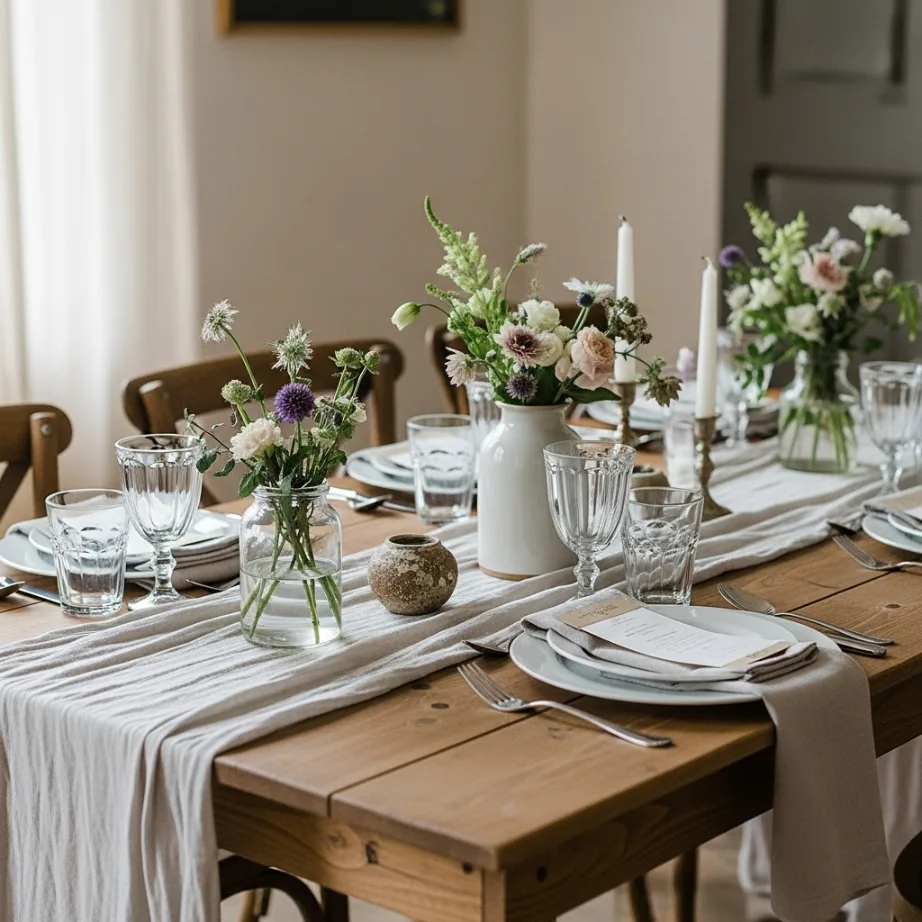
Rustic farmhouse table settings feel welcoming and human. They prioritize comfort and authenticity over perfection, which helps guests relax and enjoy the moment.
A typical example includes wooden tables, linen runners, mismatched glassware, and simple floral arrangements in jars or ceramic vessels. Natural textures do the heavy lifting.
This style is flexible. It can lean casual with wildflowers or become more refined with neutral florals and structured layouts. When done thoughtfully, rustic never feels messy.
Elegant Gold and White Table Setting
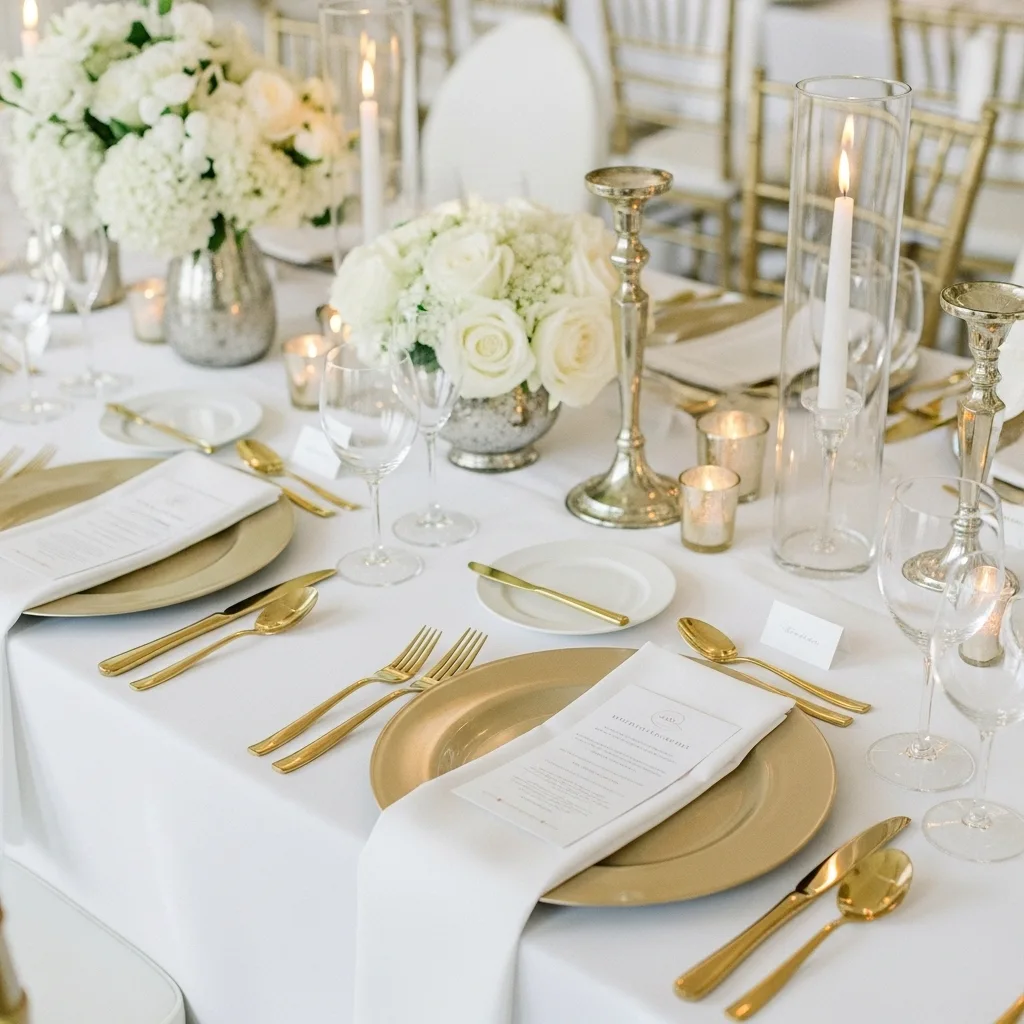
Gold accents instantly elevate a table when used with restraint. Paired with white, gold feels luxurious without being flashy. The balance between shine and simplicity is what makes this setting work.
A common setup includes white linens, gold flatware, and subtle metallic details like chargers or candle holders. The table remains light while the gold adds depth.
This style suits formal and evening weddings beautifully. You can adjust the look by choosing brushed gold for softness or polished gold for drama, depending on the venue.
Floral-Centered Wedding Table Setting
Florals naturally draw attention and emotion, making them perfect focal points for wedding tables. When florals lead the design, everything else supports them.
Examples include lush centerpieces, floral runners, or small arrangements placed thoughtfully at each table. The flowers create movement and romance without overcrowding the space.
This idea is highly adaptable. Soft florals feel romantic, bold blooms feel dramatic, and neutral arrangements feel timeless. Florals can be tailored to any wedding style.
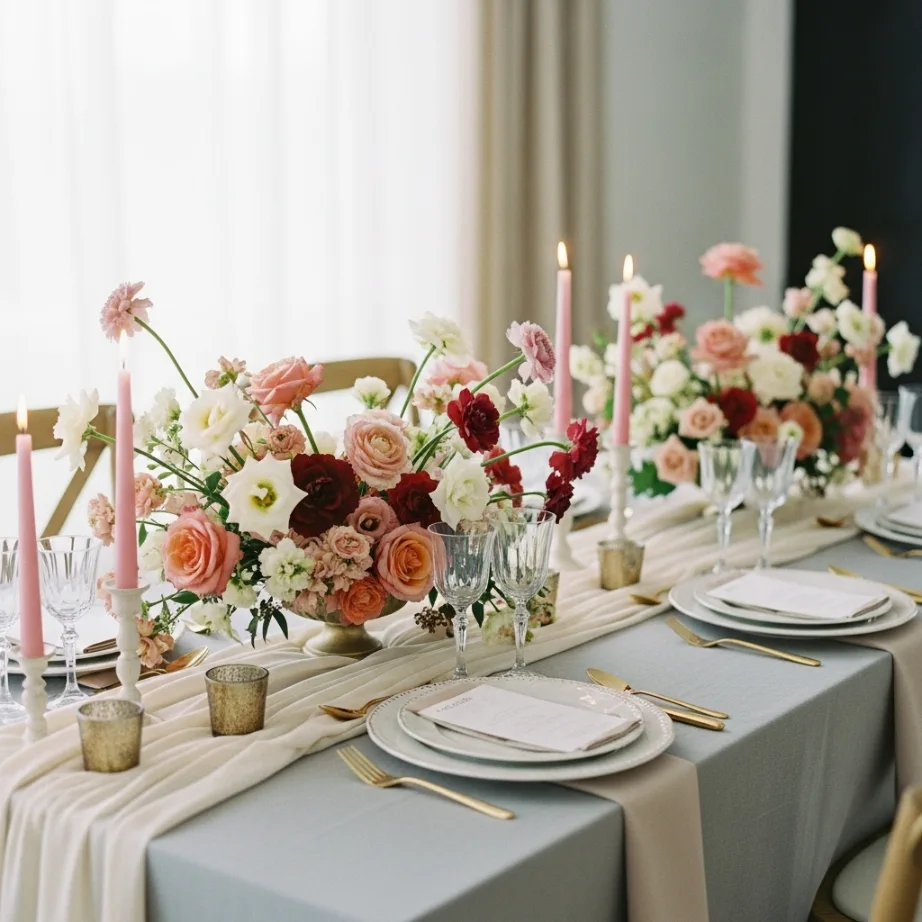
Boho-Inspired Wedding Table Setting
Boho table settings feel creative, relaxed, and layered. They combine textures, earthy tones, and imperfect details that feel collected rather than staged.
A typical boho setup includes textured runners, neutral ceramics, dried florals, and natural materials like rattan or wood. Nothing matches perfectly, and that is the charm.
This style is very flexible. You can elevate it with metallic touches or keep it casual with raw textures. It works best when it feels personal and unforced.
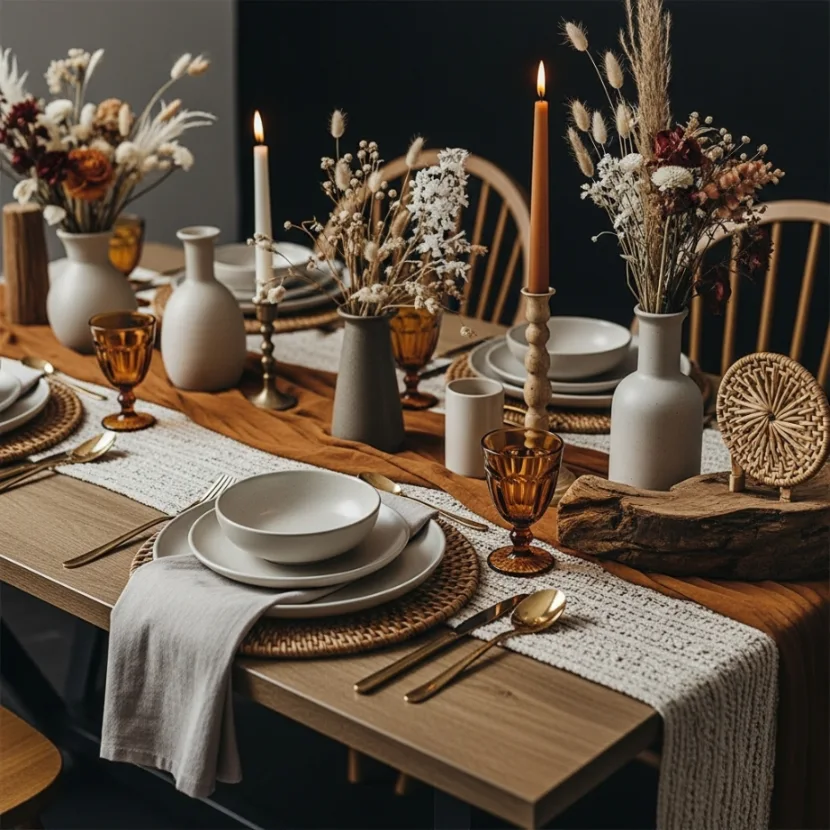
Seasonal Wedding Table Setting
Designing table settings around the season creates a natural sense of harmony. Seasonal elements make the wedding feel grounded and relevant.
For example, spring tables may feature soft florals and light linens, while autumn tables lean into warm tones and textured materials. Nature provides the palette.
This approach reduces design pressure. Instead of forcing trends, you work with what already feels right for the time of year.
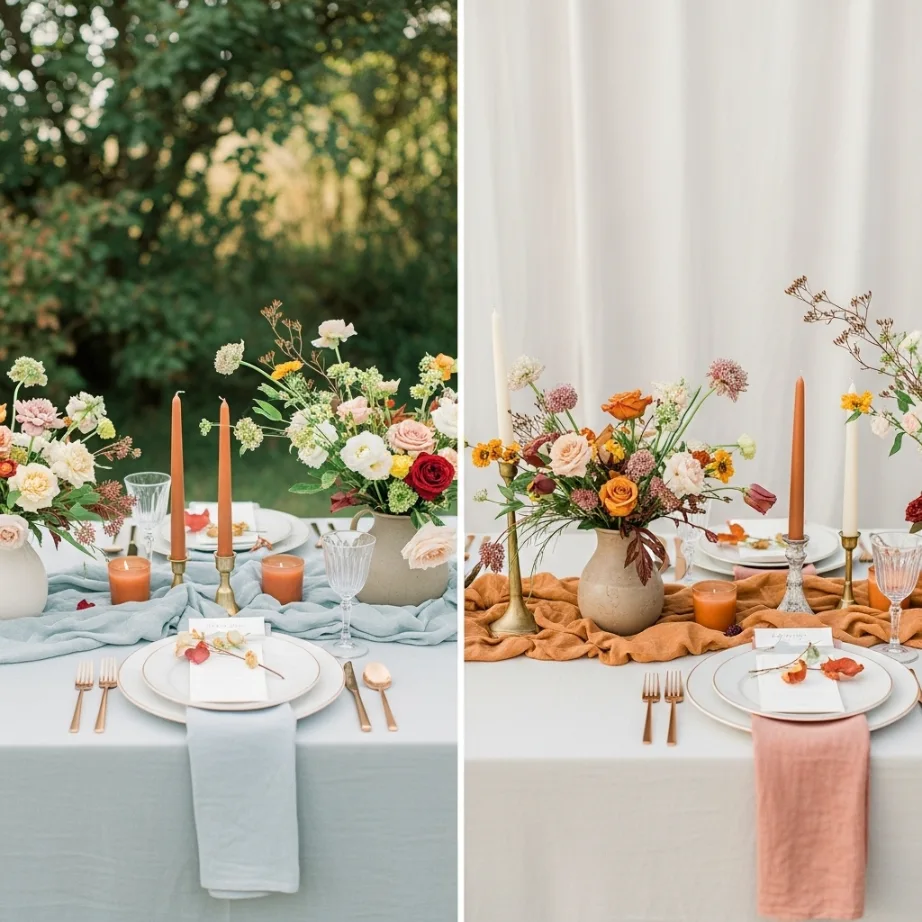
Long Banquet-Style Table Setting
Banquet tables encourage connection. They create a communal atmosphere that feels warm and inclusive, especially for large gatherings.
A typical setup includes long tables with runners, flowing greenery or florals, and evenly spaced place settings. The repetition creates rhythm and elegance.
This style adapts easily. You can keep it intimate with candles or grand with tall arrangements. Banquet tables suit many wedding sizes and styles.
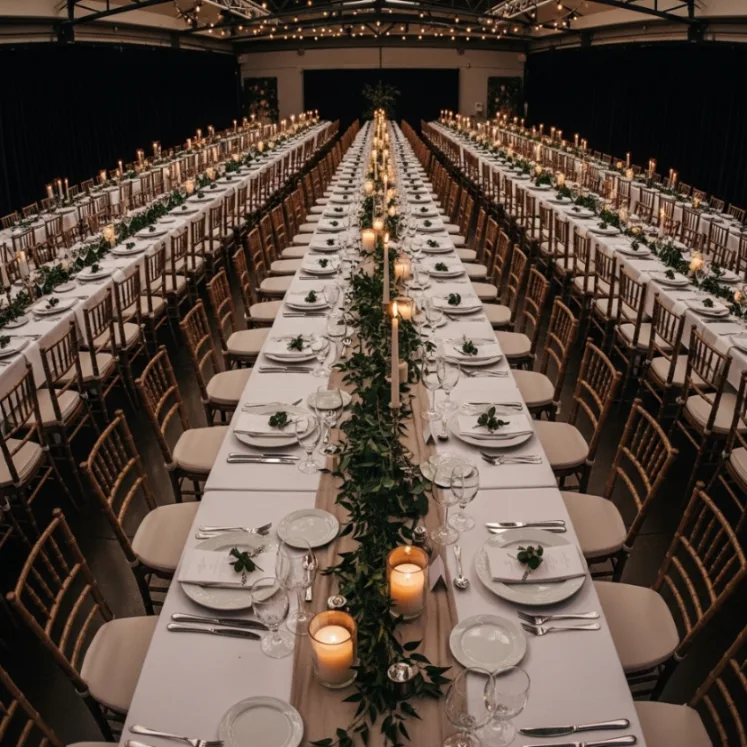
Personalized Place Setting Details
Personal details at each place setting make guests feel valued. These small touches add emotional depth to the table design.
Examples include name cards, custom menus, or meaningful favors placed at each seat. These elements do not need to be expensive to feel thoughtful.
This idea works with any table style. Personalization transforms design into experience, which guests remember long after the wedding.
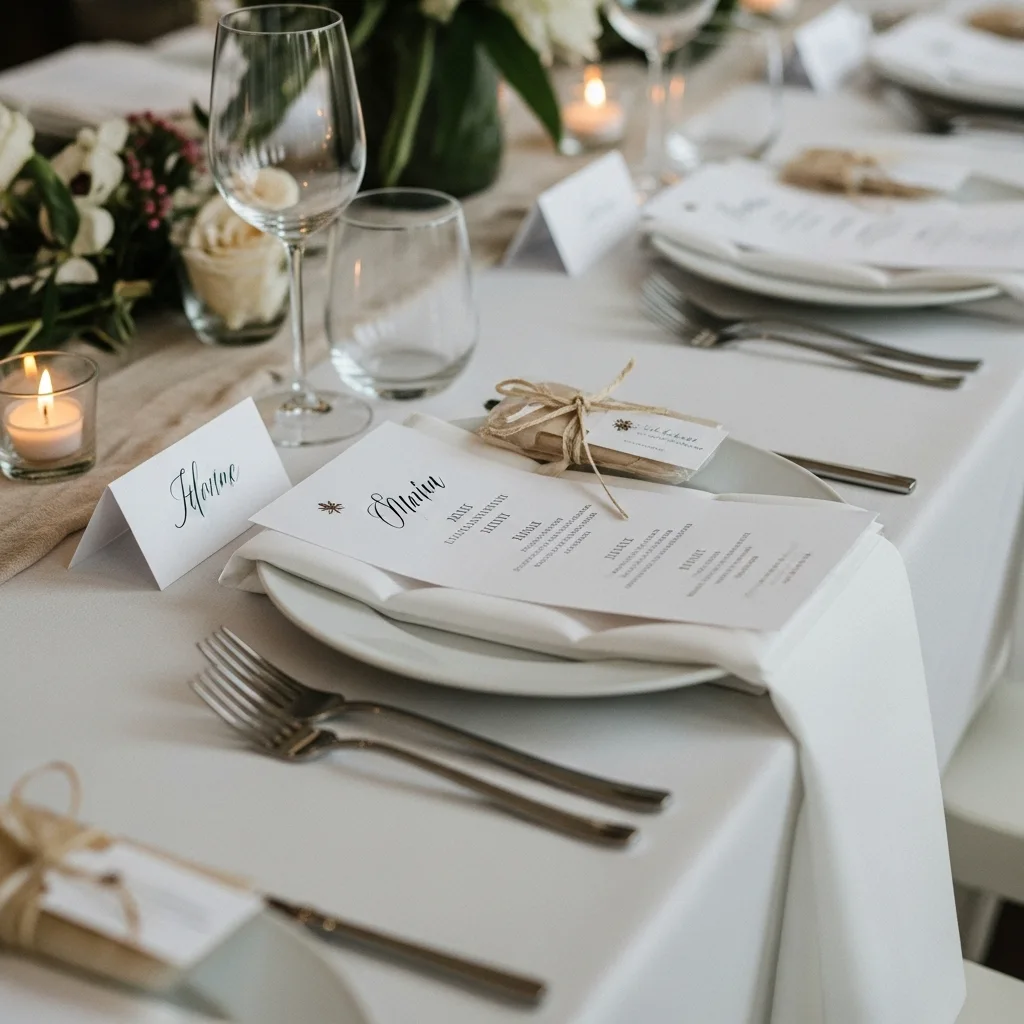
Mixed Textures and Materials Table Setting
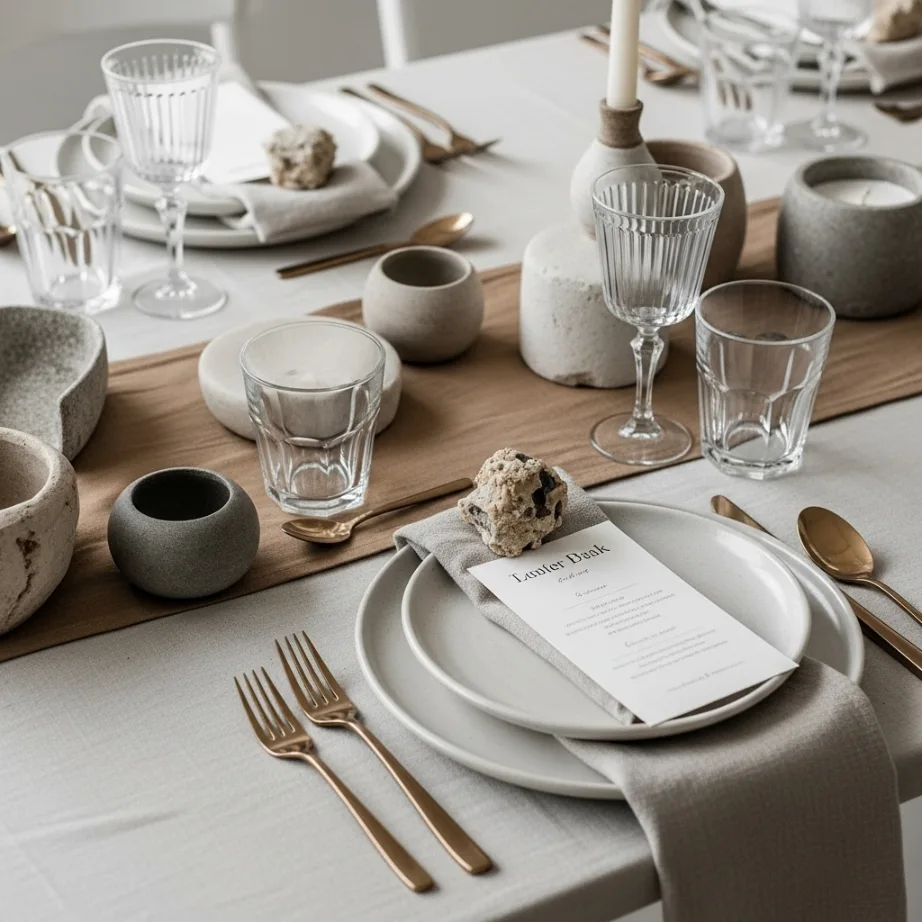
Mixing textures adds richness without clutter. Combining linen, glass, metal, wood, and ceramic creates visual depth and interest.
A common setup might include linen napkins, ceramic plates, glassware, and metallic flatware. Each texture plays a role without overpowering the table.
This style offers endless flexibility. You can stay neutral or introduce color through materials. Texture-driven design always feels layered and intentional.
FAQs
How important are wedding table settings?
They shape the guest experience and set the tone for the entire reception.
Can simple table settings still look elegant?
Yes, simplicity often feels more refined when details are chosen carefully.
Should table settings match the wedding theme?
They should support the theme without overpowering it.
Are personalized place settings worth it?
Yes, they make guests feel considered and add emotional value.
How do I avoid overcrowding wedding tables?
Focus on balance, spacing, and choosing fewer high-quality elements.