12 Rustic Farmhouse Kitchen Décor Ideas That Feel Warm, Lived-In, and Timeless
Rustic farmhouse kitchens have a kind of honesty that never goes out of style. They do not try to look perfect or overly polished. Instead, they focus on warmth, function, and that comforting feeling of a space that is meant to be used every single day. A farmhouse kitchen should feel like a place where cooking happens slowly, conversations linger, and nothing feels too precious to touch.
What makes rustic farmhouse kitchen décor special is the balance between old and practical. You are not recreating a museum kitchen. You are building a space that feels rooted, familiar, and welcoming while still working for modern life. Texture matters more than trends here. Wood grains, worn finishes, and natural materials quietly do the work.
Below are 12 rustic farmhouse kitchen décor ideas designed to feel open-ended and lived-in. Each idea flows naturally, without forcing a finished look, so your kitchen can grow and change over time instead of feeling frozen in one moment.
1. Open Wooden Shelving Instead of Upper Cabinets
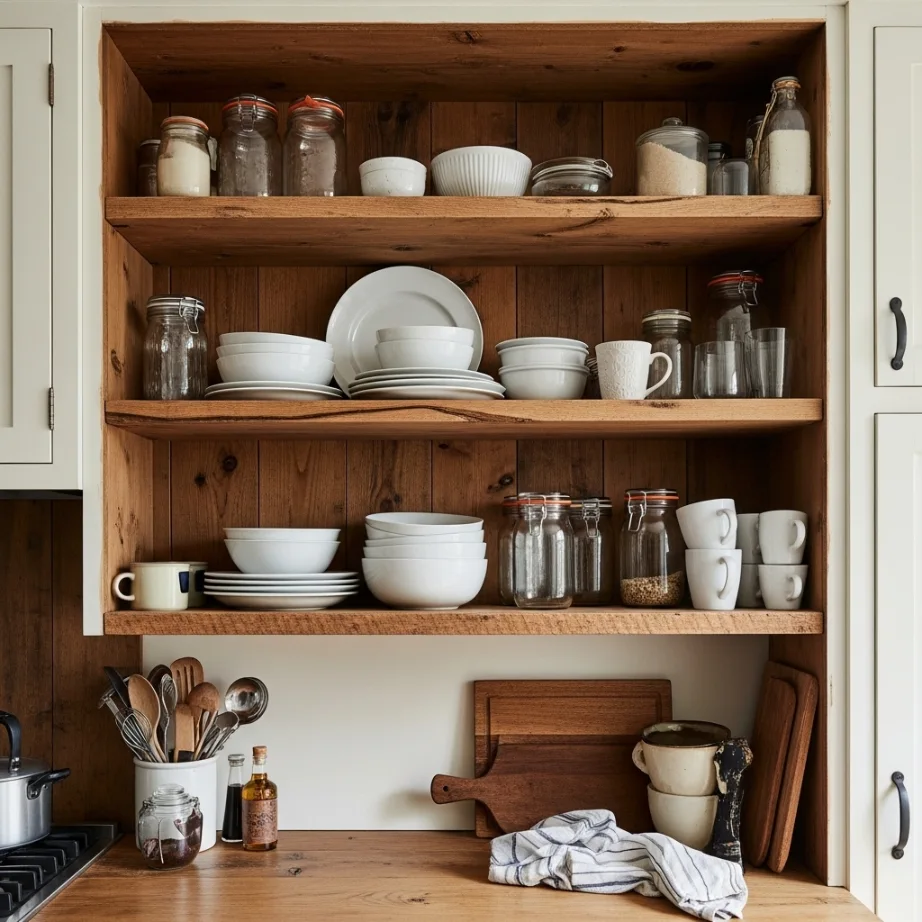
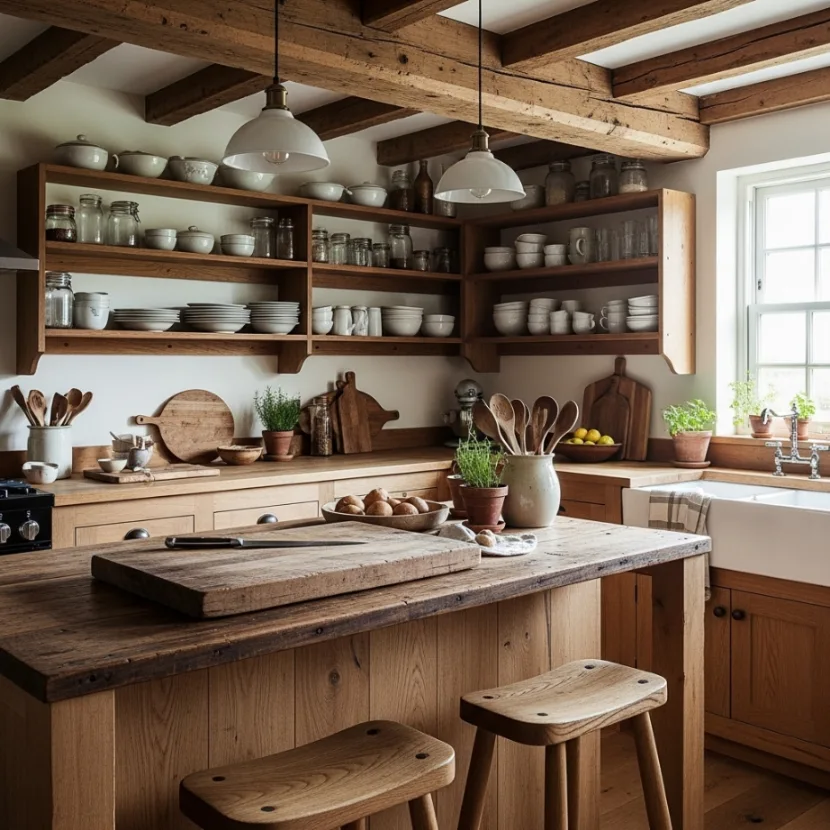
Open shelving instantly brings a rustic farmhouse feel into a kitchen. It removes visual heaviness and allows everyday items to become part of the décor rather than being hidden away. Wood shelves, especially when slightly imperfect or reclaimed, add warmth that standard cabinetry often lacks.
Imagine shelves holding plates, bowls, jars, and mugs that are actually used daily. The beauty comes from repetition and function, not from styling perfection. When items are easy to reach, the kitchen feels more relaxed and human.
These shelves evolve naturally. You might add seasonal items, rotate dishes, or slowly collect pieces over time. The shelves never feel finished, and that is exactly why they work so well in farmhouse kitchens.
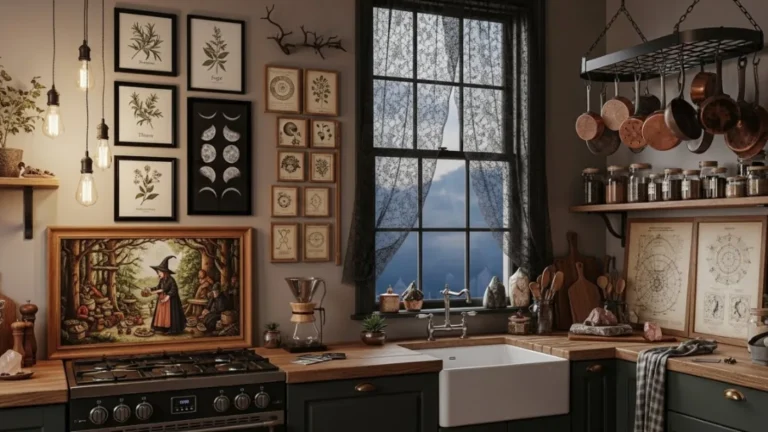
2. Farmhouse Sink as a Visual Anchor
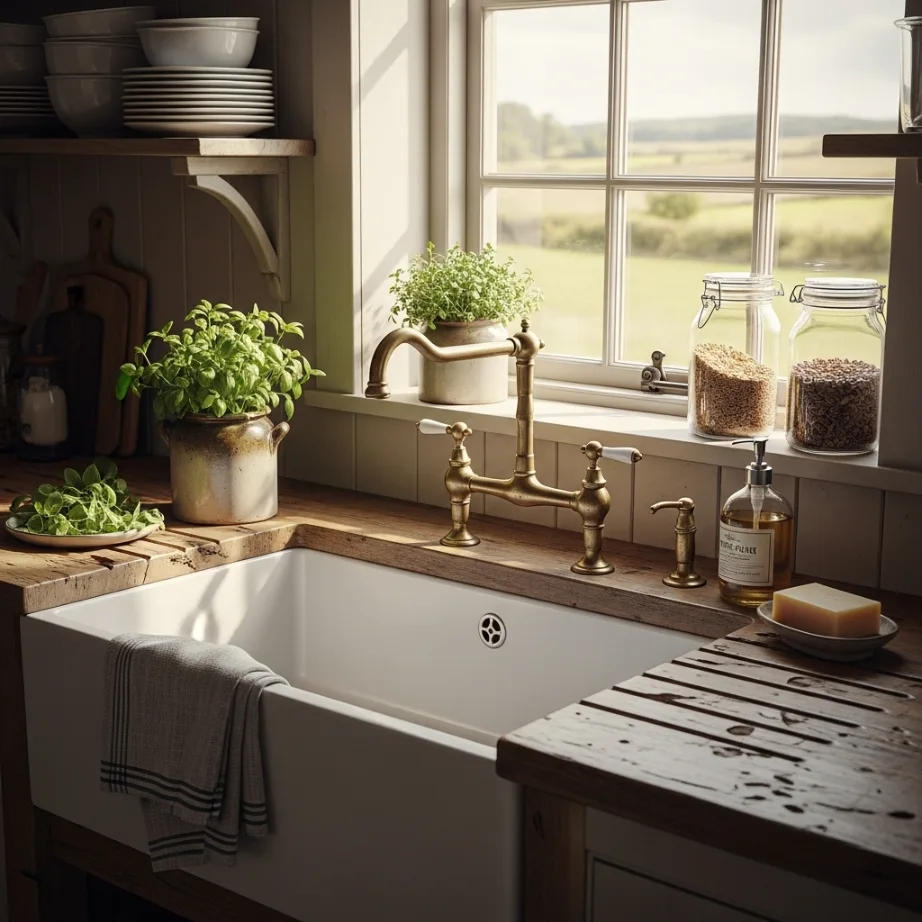
A farmhouse sink is not just functional. It becomes a visual anchor that grounds the entire kitchen. Its large, deep basin feels generous and practical, which aligns perfectly with rustic design.
Picture a white apron-front sink paired with simple fixtures and worn countertops. It draws the eye without demanding attention. The sink feels like it belongs there, not like a design statement trying to impress.
This element blends easily with different materials. Whether surrounded by butcher block, stone, or aged wood, the farmhouse sink remains timeless and flexible as the rest of the kitchen evolves.
3. Natural Wood Elements Throughout the Space
Rustic farmhouse kitchens rely heavily on wood, but not in a polished way. The beauty comes from visible grain, knots, and slight imperfections that tell a story.
Wood can appear in beams, shelves, cutting boards, stools, or even countertops. These elements soften hard surfaces like tile and metal, creating balance in the space.
You do not need matching wood everywhere. Mixing tones and finishes keeps the kitchen from feeling staged. The variety adds depth and makes the space feel collected rather than designed all at once.
4. Vintage or Antique Kitchen Accessories
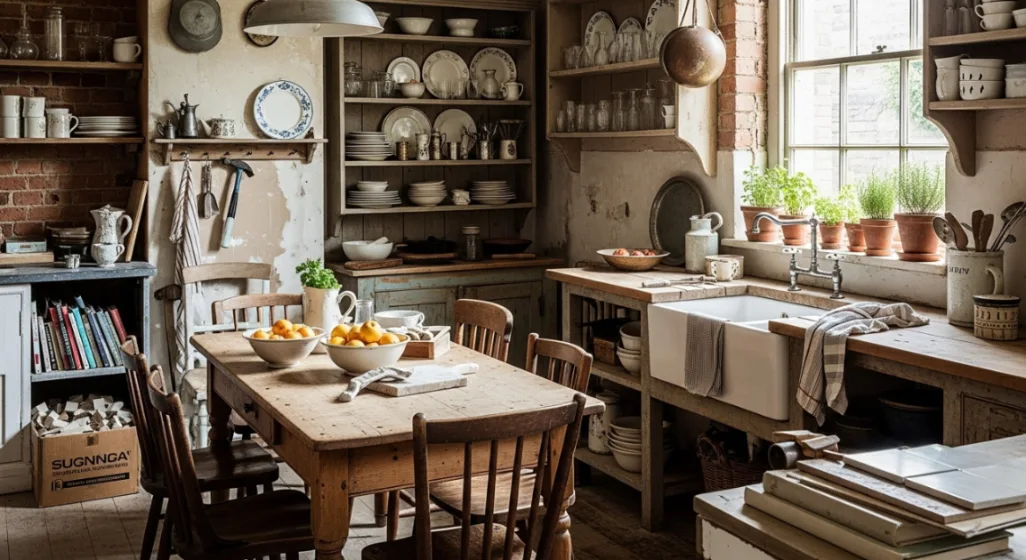
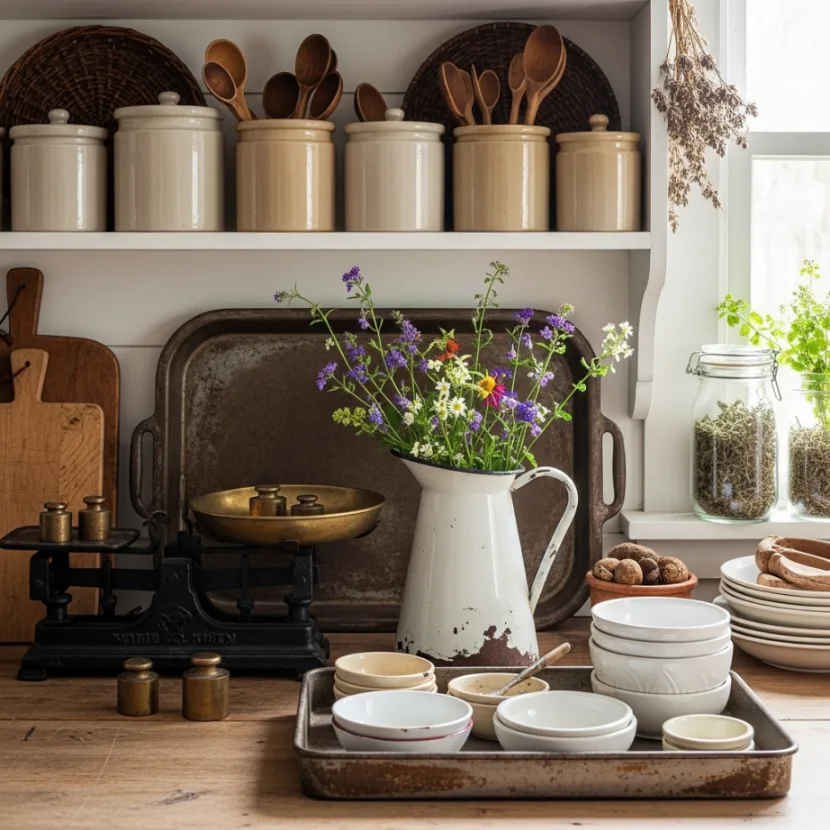
Rustic farmhouse kitchens feel most authentic when they include items with history. Vintage or antique accessories add soul in a way new décor often cannot.
Think old scales, enamel pitchers, ceramic crocks, or worn trays placed casually on counters or shelves. These items feel functional even when used decoratively.
They also invite storytelling. Guests notice them, ask about them, and the kitchen becomes more personal. Over time, these pieces blend seamlessly into daily life instead of standing out as décor.
5. Neutral, Earthy Color Palette
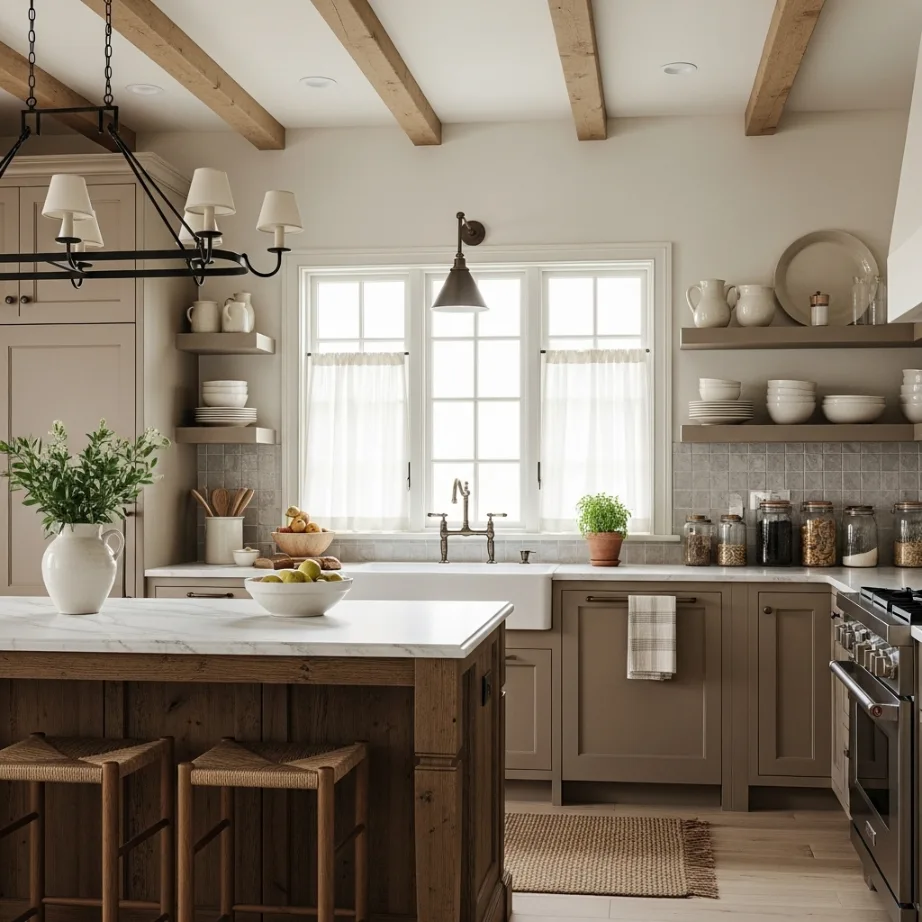
Color in a farmhouse kitchen should feel grounded and calming. Whites, creams, soft grays, muted greens, and warm beiges create a timeless base.
A neutral palette allows textures to take center stage. Wood, metal, and ceramics stand out more when colors stay quiet.
This approach gives freedom to change details later. Seasonal accents, linens, or dishes can shift without forcing a full redesign.
6. Worn or Distressed Finishes
Rustic farmhouse décor embraces wear rather than hiding it. Distressed finishes on cabinets, furniture, or accessories add character and warmth.
A cabinet with softened edges or a table with visible wear feels inviting rather than damaged. These surfaces encourage use instead of caution.
Over time, natural wear blends with intentional distressing, making the kitchen feel even more authentic as years pass.
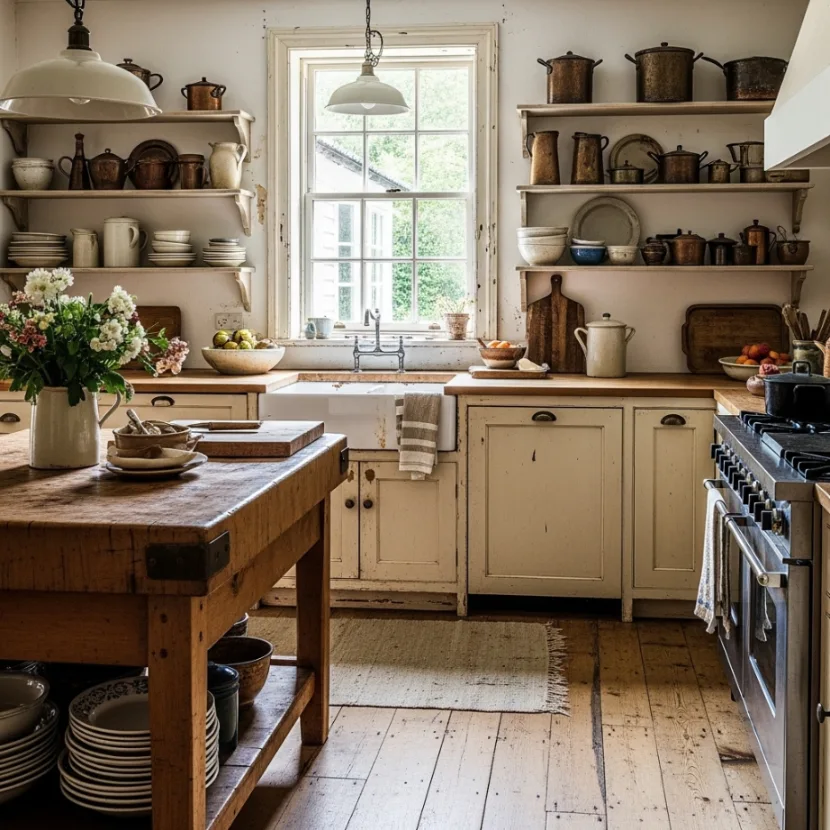
7. Simple, Practical Lighting Fixtures
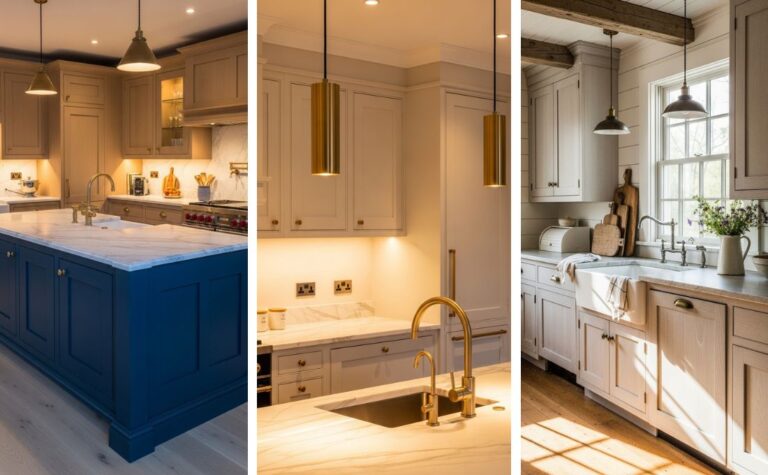
Lighting in a farmhouse kitchen should feel purposeful, not decorative-heavy. Fixtures often lean simple, with materials like metal, glass, or aged finishes.
Pendant lights over an island or sink provide focused light while adding subtle style. The fixtures should support the space, not dominate it.
Warm light is essential. It softens the kitchen and enhances the rustic atmosphere, especially during early mornings or evenings.
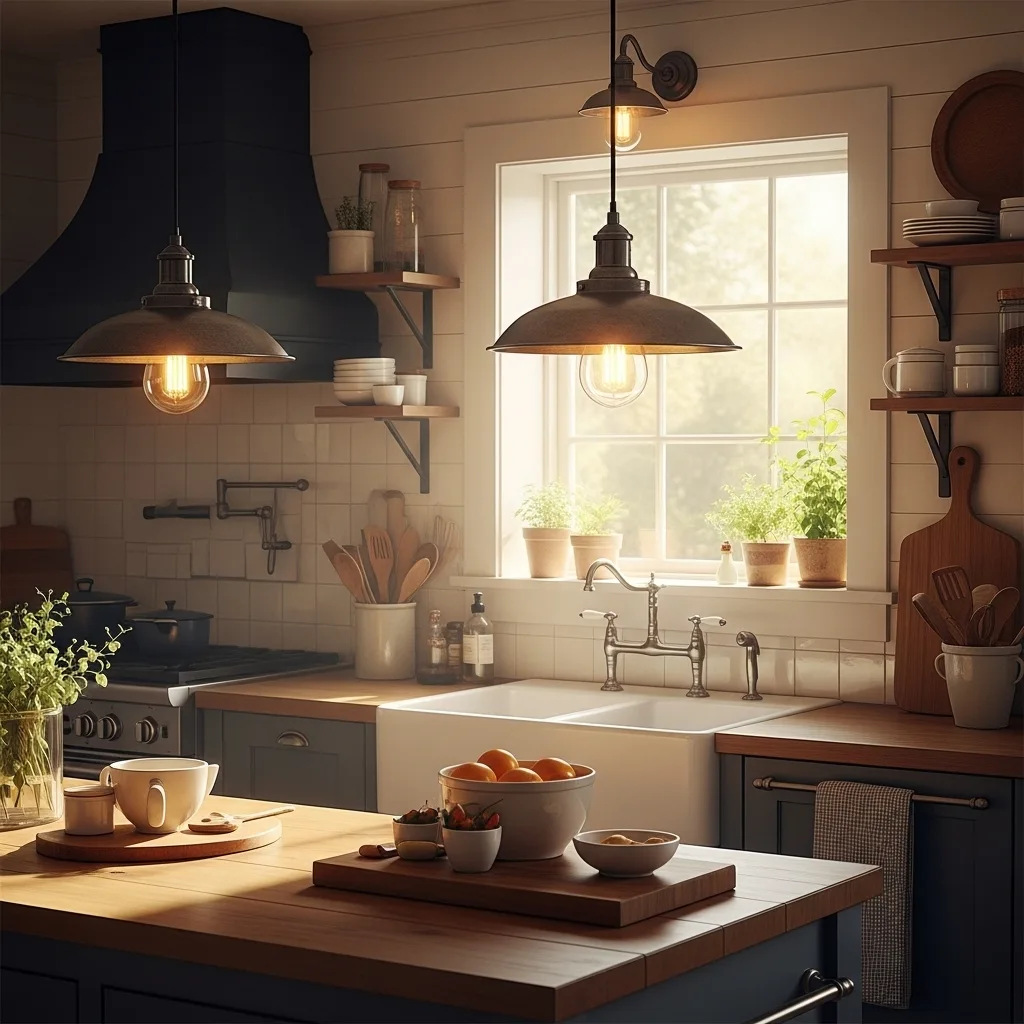
8. Textiles That Feel Soft and Functional
Fabric plays a quiet but important role in farmhouse kitchens. Linen towels, cotton curtains, and simple runners add softness without fuss.
These textiles should feel usable, not decorative-only. Hanging towels, folded linens, and simple patterns make the kitchen feel lived in.
They are also easy to update. Changing textiles is one of the simplest ways to refresh the space while keeping the core intact.
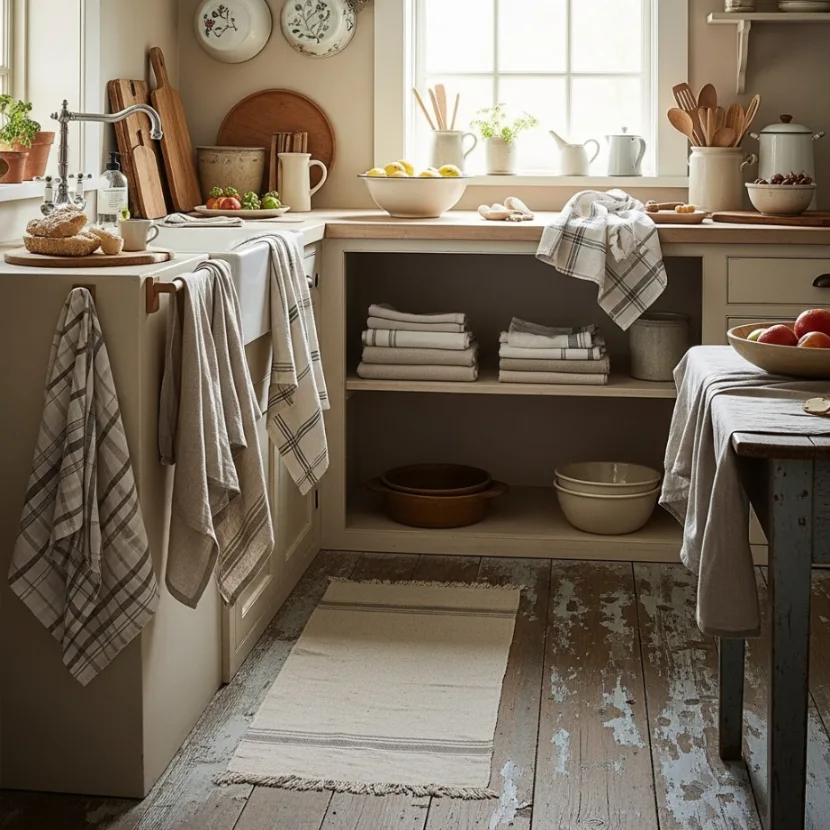
9. Functional Decor on Countertops
Rustic farmhouse kitchens do not hide everything away. Functional items are allowed to stay out and become part of the décor.
Wooden cutting boards, ceramic jars, and glass canisters create layers while staying useful. The key is restraint, not clutter.
When counters hold meaningful items, the kitchen feels active and welcoming instead of overly styled.
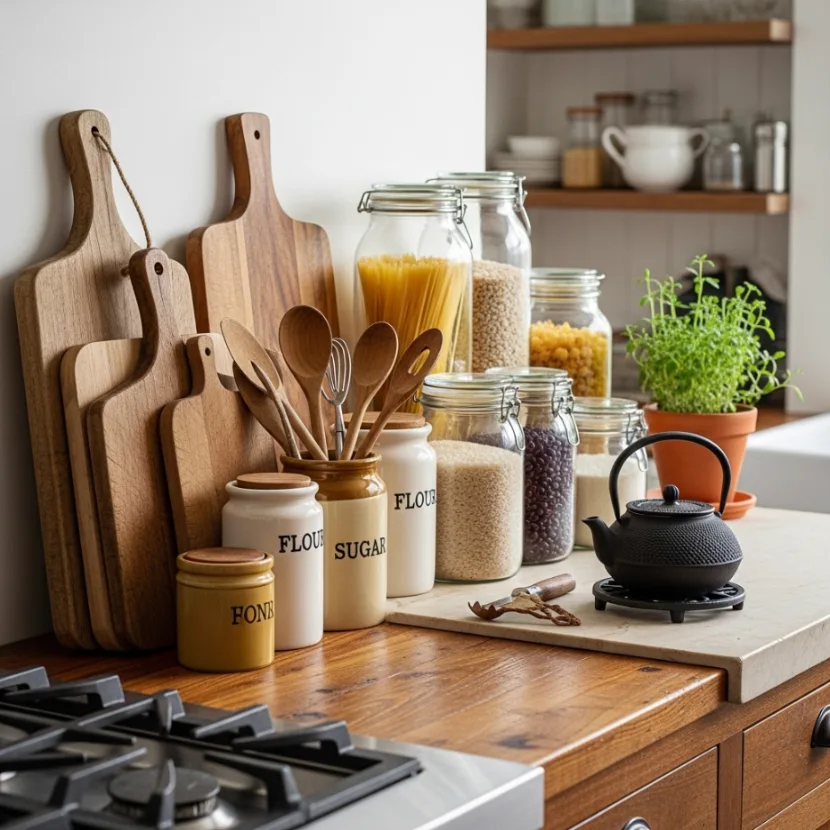
10. Mix of Old and New Appliances
A farmhouse kitchen does not have to reject modern convenience. The charm comes from mixing old aesthetics with modern function.
Modern appliances can blend in when paired with rustic finishes, neutral colors, or simple lines. They support daily life without breaking the mood.
This balance keeps the kitchen practical while still honoring the farmhouse spirit.
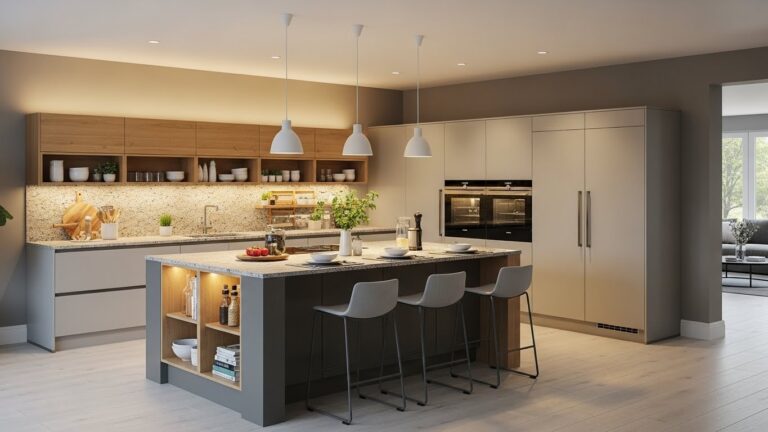
11. Statement Kitchen Island with Character
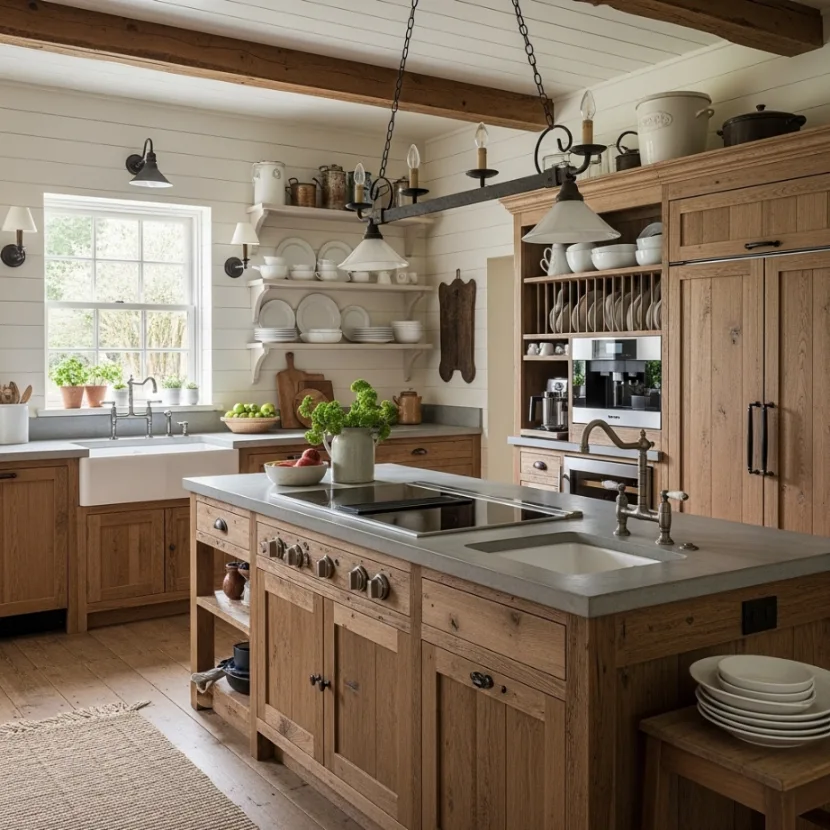
If space allows, a kitchen island becomes the heart of a farmhouse kitchen. It should feel sturdy and welcoming, not sleek or delicate.
An island with a wood top, visible wear, or a slightly mismatched finish adds personality. It invites gathering, prep work, and conversation.
Over time, the island becomes a shared surface where life happens, reinforcing the farmhouse feeling naturally.
12. A Kitchen That Feels Collected Over Time
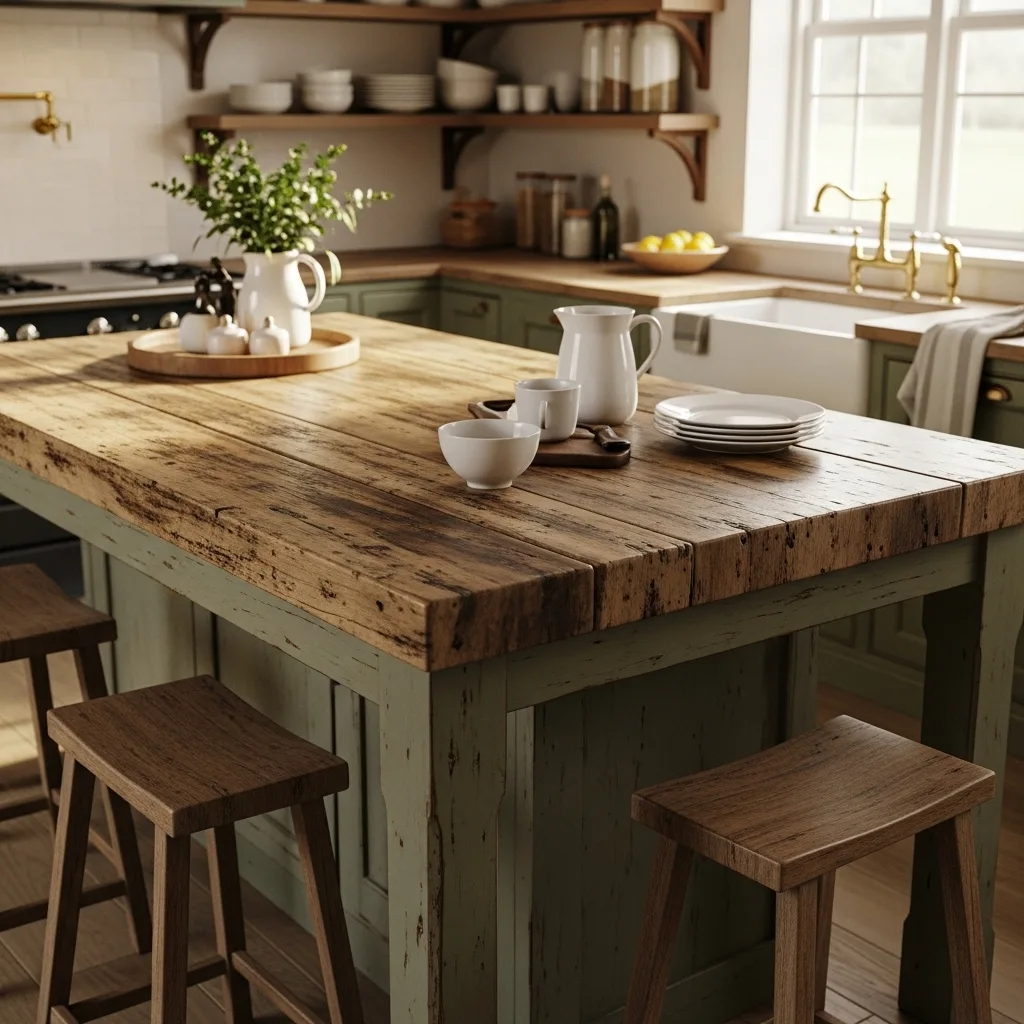
The most important rustic farmhouse kitchen idea is patience. These kitchens should never look finished overnight.
Pieces are added slowly. Items shift. Some things stay, others leave. The kitchen grows with the people using it.
When a space feels collected rather than decorated, it becomes timeless. That is the true heart of rustic farmhouse décor.
Conclusion
Rustic farmhouse kitchen décor is not about copying a look. It is about creating a space that feels honest, warm, and deeply usable. When texture, function, and comfort lead the design, the kitchen becomes more than a place to cook.
These 12 rustic farmhouse kitchen décor ideas show that beauty often comes from simplicity and intention. A kitchen that welcomes wear, embraces warmth, and allows life to happen will always feel like home.
FAQs
1. What defines rustic farmhouse kitchen décor?
Natural materials, worn finishes, and a warm, functional layout define the style.
2. Can rustic farmhouse kitchens work in modern homes?
Yes, mixing rustic elements with modern layouts creates balance.
3. Do farmhouse kitchens need all wood finishes?
No, wood works best when balanced with stone, metal, and ceramics.
4. How do I keep a farmhouse kitchen from looking cluttered?
Use functional decor and leave breathing space on surfaces.
5. Are neutral colors important in farmhouse kitchens?
Yes, neutral tones allow textures and materials to stand out naturally.