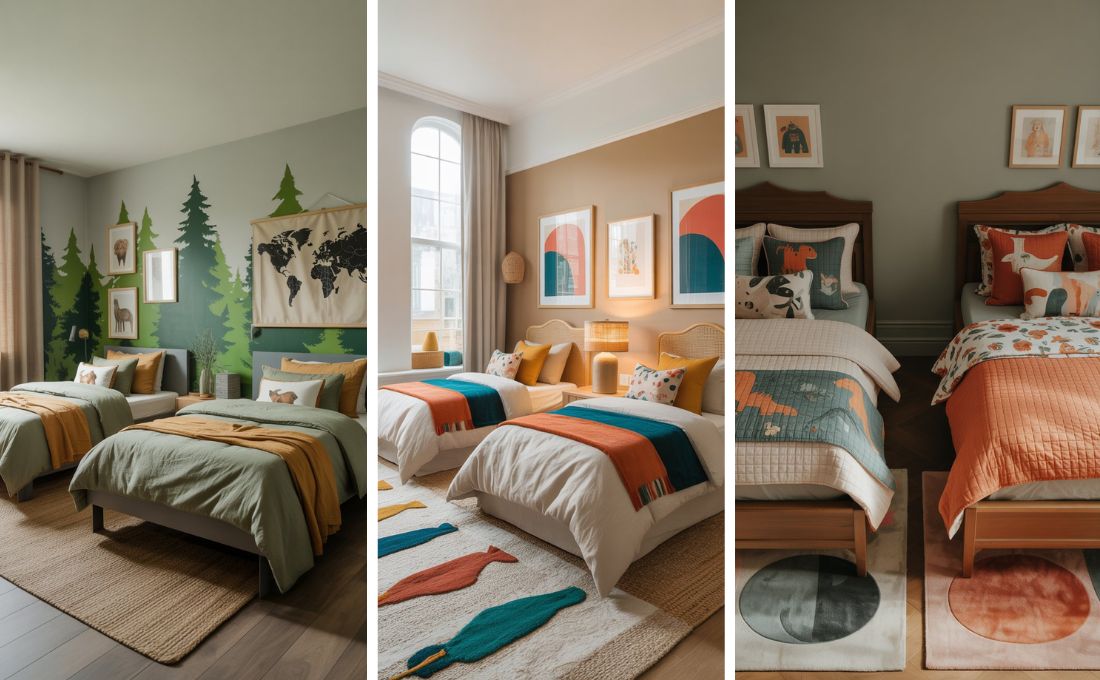
15 Boy Girl Shared Bedroom Ideas That Actually Work Well Together
Sharing a bedroom can be tricky, especially when you’re trying to balance a boy and a girl’s personalities in one space. You don’t want it to feel too girly, too boyish, or like two mismatched rooms smashed together. The goal is simple: a room that feels fair, fun, and functional for both kids. Sounds easy, right? (Okay, maybe not that easy, but totally doable!)
The truth is, shared bedrooms can be a blessing in disguise. They teach kids about compromise, teamwork, and the fine art of not hogging the nightstand. Plus, when you get the design right, the room can feel playful, cozy, and way more stylish than you imagined. Whether you’re decorating for siblings close in age or older kids with different tastes, there are smart tricks to make it all come together.
Ready to see how it’s done? Let’s dive into 15 boy girl shared bedroom ideas that strike the perfect balance between practical and Pinterest-worthy.
1. Neutral Base with Pops of Color
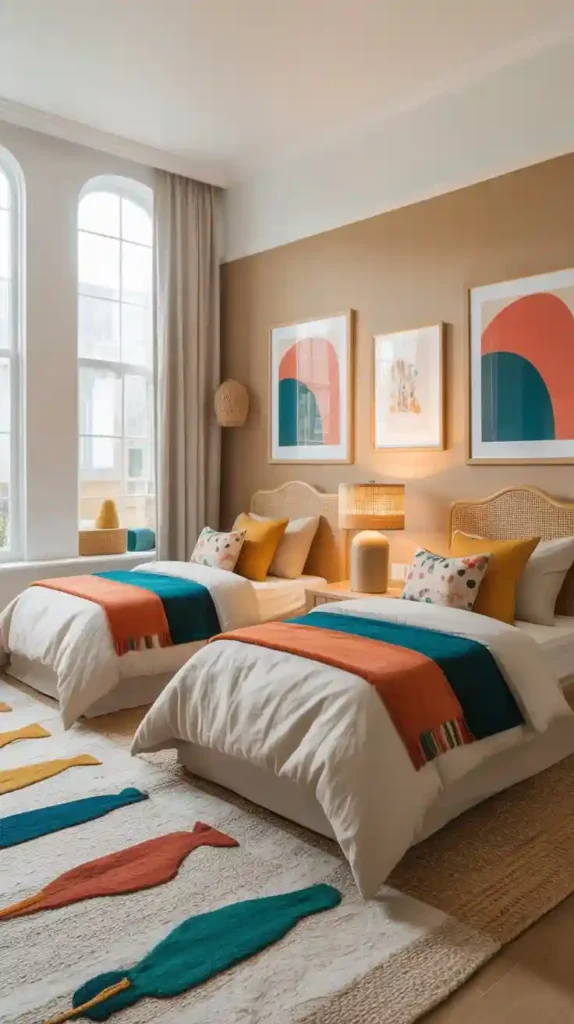
Start with a neutral base—think white, gray, or beige walls—and add pops of color through bedding, rugs, or art. This creates a balanced canvas so neither child feels the room leans too much one way. Bright blue and coral? Green and mustard? Totally works. By letting the kids pick their favorite accent colors, you give them ownership without creating chaos. Plus, a neutral backdrop makes it easier to switch themes later as tastes evolve (because, trust me, they will).
2. Matching Beds with Unique Bedding
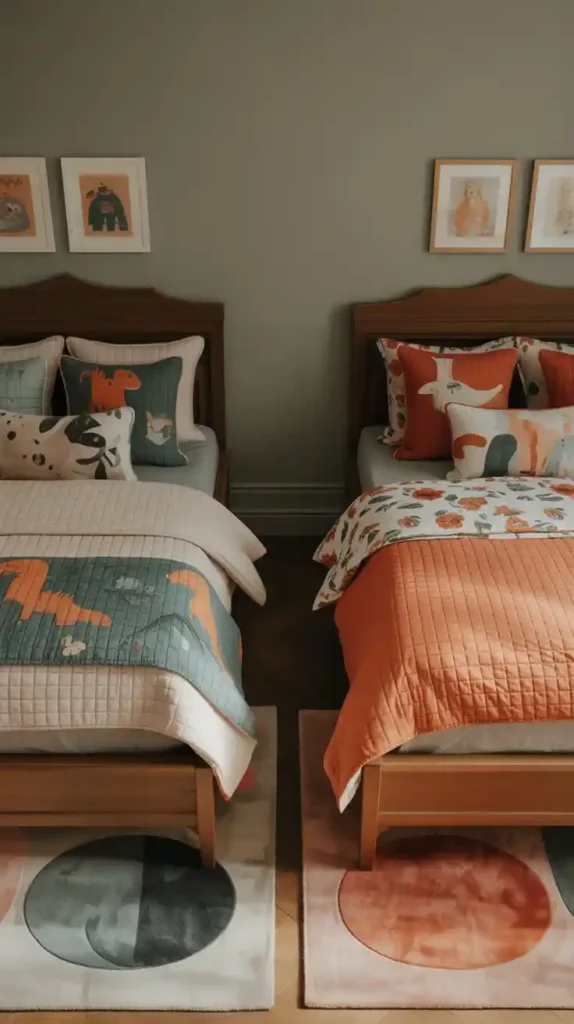
Kids love having their “own thing,” and bedding is the easiest place to make that happen. Choose matching bed frames to keep the room cohesive, but let each child pick their bedding style. One can go with dinosaurs while the other chooses florals, and it still works because the frames tie everything together.
Matching rugs under each bed can also help anchor their personal space while still keeping the overall design balanced. It’s fair, it’s simple, and it avoids those “why do they get the fun bed?” arguments.
3. Divide with a Rug or Curtain
Sometimes a little visual separation goes a long way. A large area rug can create zones, or you can hang a light curtain or fabric panel between the beds. It gives each child a sense of privacy without building a wall.
This trick is especially helpful for older kids who might crave a bit more personal space. And let’s be real—sometimes you just need a way to keep the peace when one kid’s Lego explosion is creeping into the other’s side of the room.

4. Bunk Beds for Floor Space
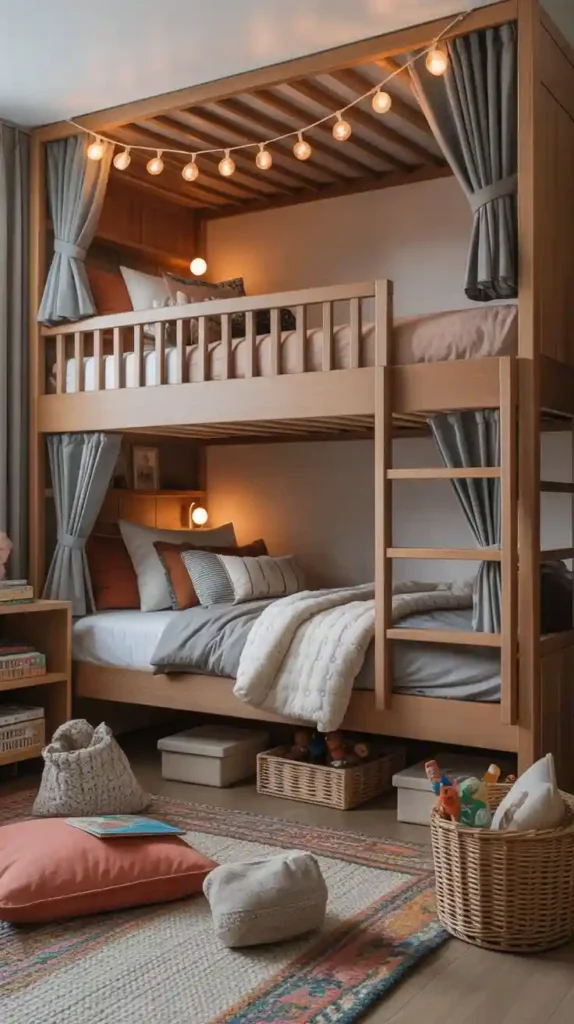
Bunk beds are the MVP of shared rooms. They free up floor space for play, desks, or storage while giving each child their own “territory.” The top bunk feels adventurous, the bottom bunk cozy—it’s a win-win.
To keep it fair, rotate who gets which bunk every year (or every six months if you want to keep sibling rivalry at bay). Add curtains or lights to personalize each bunk, so both kids feel like they have their own nook. Practical and fun? That’s a double win.
5. Gender-Neutral Themes
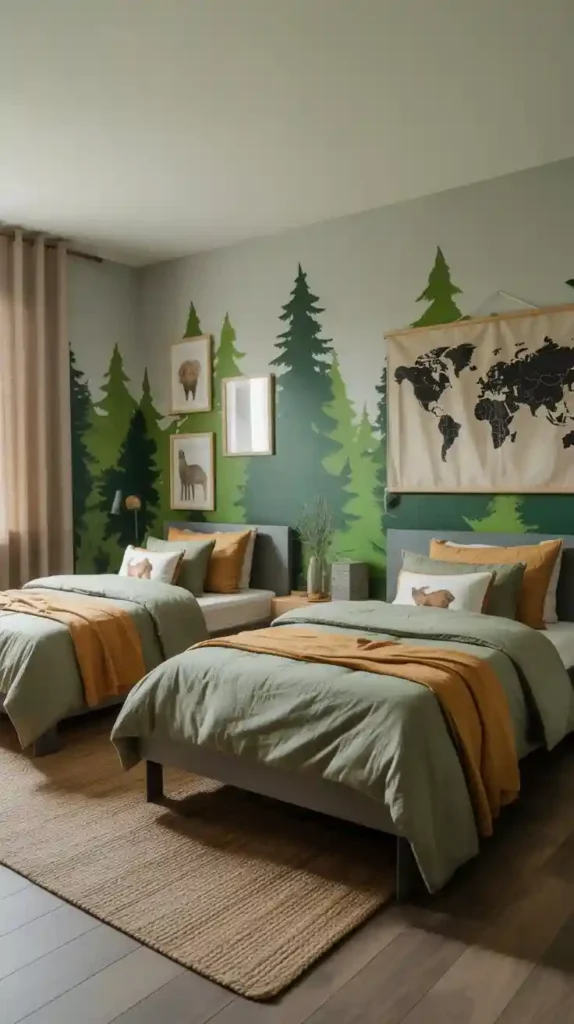
Skip the pink vs. blue battle and go for gender-neutral themes like nature, travel, animals, or outer space. These themes let both kids feel included without the room feeling too skewed. A forest theme with green accents, a galaxy ceiling mural, or a world map wall can spark creativity for both. Plus, neutral themes age better. You won’t be repainting the walls in two years when your daughter suddenly decides pink is “so last year.”
6. Smart Storage Solutions
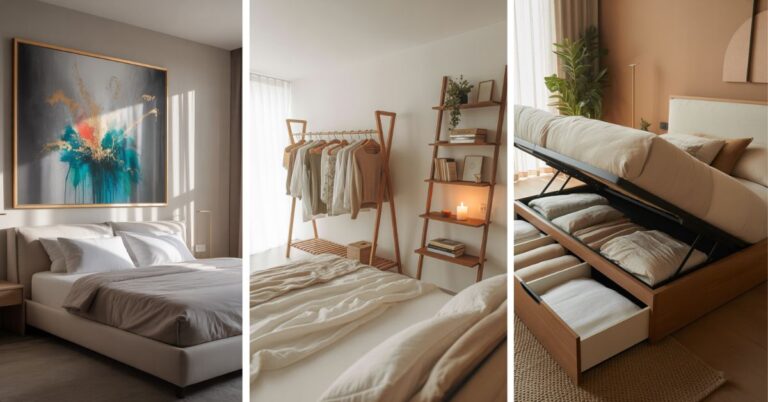
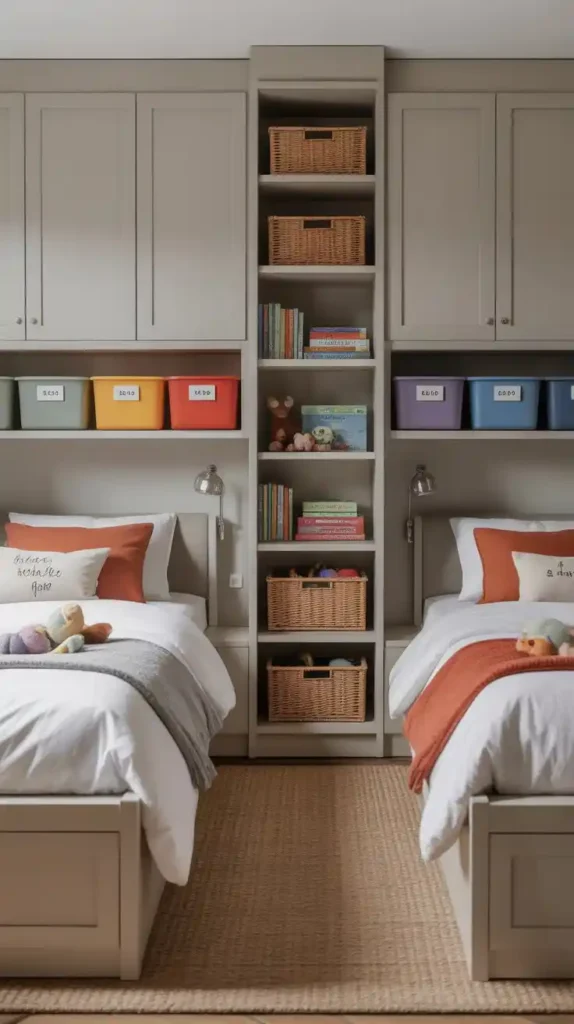
Clutter is the enemy of shared bedrooms. Invest in smart storage like under-bed drawers, labeled bins, or a shared bookshelf with individual cubbies. Give each child their own designated space so there’s no confusion about whose stuff is whose.
Vertical storage, like wall-mounted shelves, helps maximize space. And here’s the thing—kids are way more likely to actually use storage when it’s simple and accessible. Less mess, fewer fights, happier parents. Win all around.
7. Double Desks for Study Time
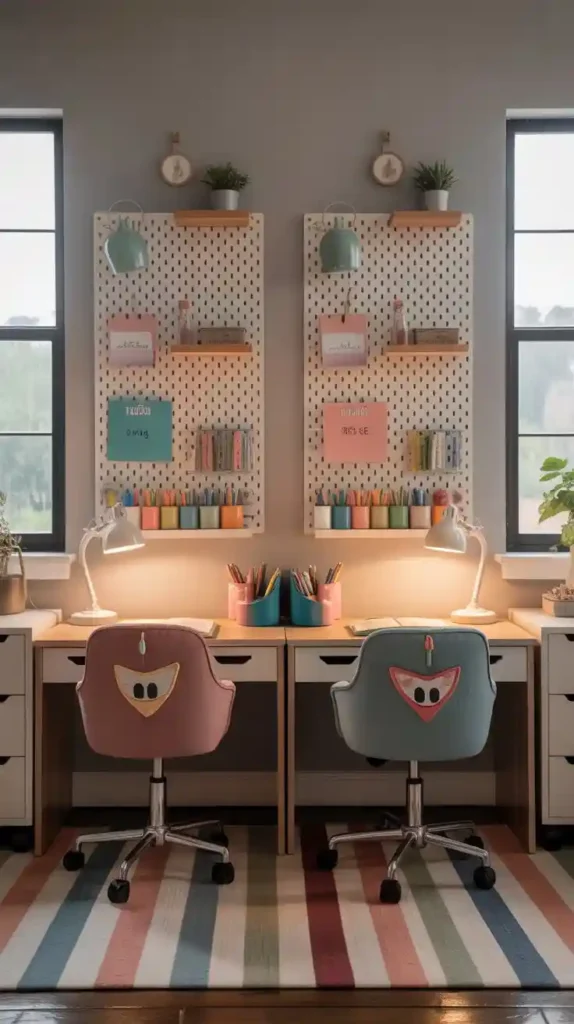
School-age kids need their own workstations. Instead of cramming them onto one desk (recipe for disaster), try two small desks side by side or one long shared desk with divided sections. Add fun chairs or wall-mounted organizers above each desk so they have their own supplies.
The symmetry looks neat, and more importantly, it gives them space to focus without arguing over whose pencil cup is whose. Pro tip: pegboards above each desk are both functional and stylish.
8. Wall Decals or Murals
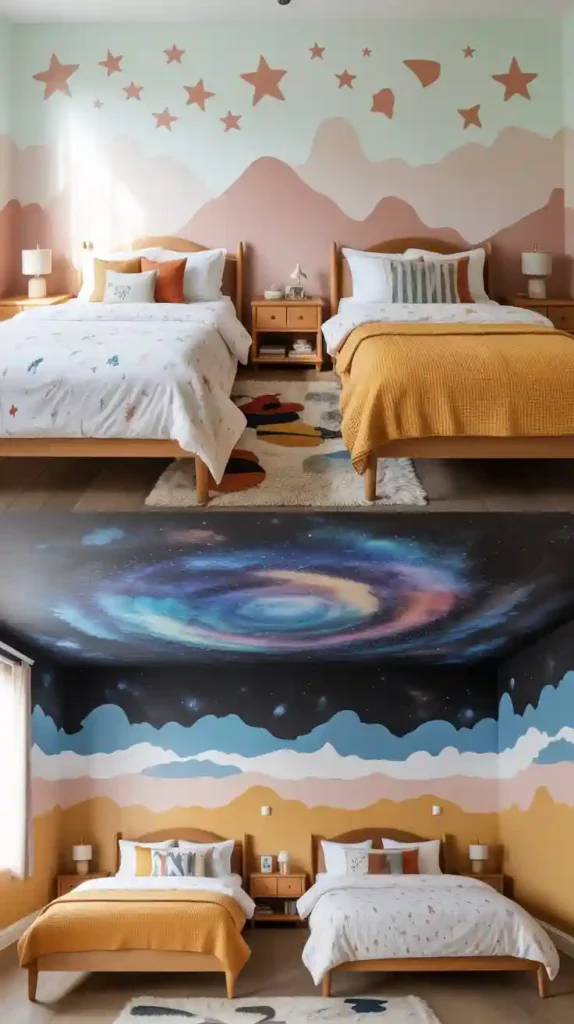
Kids love decor that feels playful, and wall decals are an easy, low-commitment option. Go for removable decals—like stars, mountains, or geometric patterns—that fit both personalities. Or if you’re feeling bold, paint a mural that works for everyone (like a city skyline, underwater scene, or rainbow gradient).
This way, the walls become a shared canvas without leaning too hard into “boy” or “girl” territory. Plus, when they get older, you can swap decals out without repainting the whole room.
9. Headboard Wall as a Focal Point
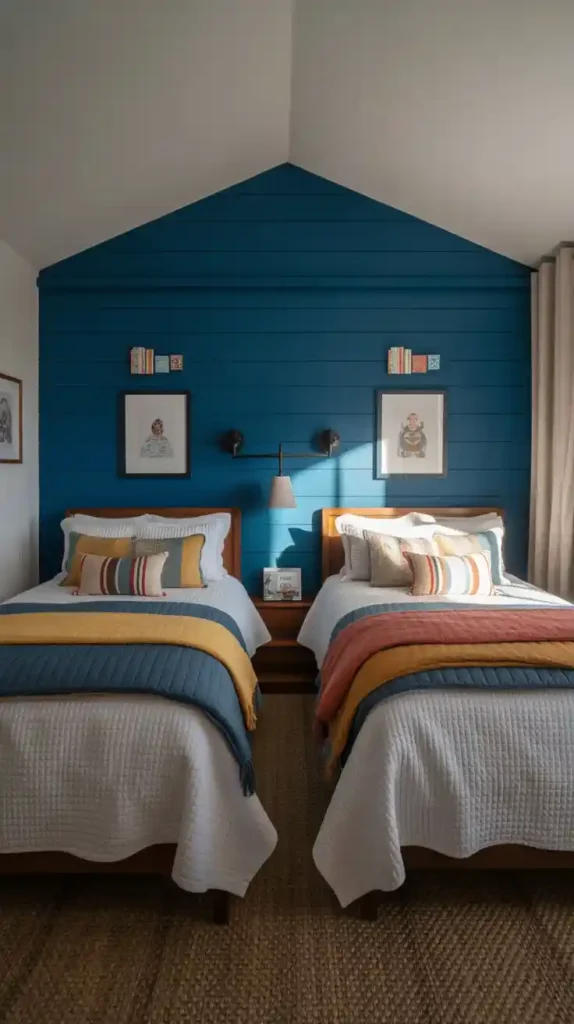
Design the headboard wall as a focal point to tie the whole room together. Use shiplap, bold paint, or wallpaper across the entire wall, then place both beds against it. It creates a sense of unity while still allowing for individual touches with bedding or decor.
This trick is especially useful for small rooms, since it keeps the design streamlined. Add a shared sconce or wall art between the beds to reinforce that this is a “together” space.
10. Mix and Match Art
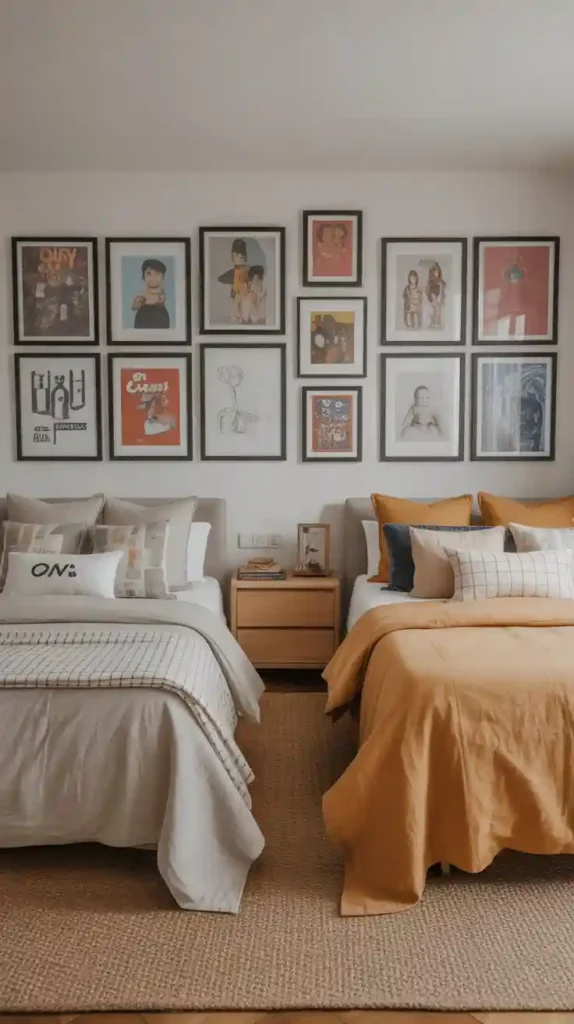
Here’s a fun one: create a gallery wall with art that represents both kids. Let them each choose a few pieces—posters, prints, or even their own drawings—and arrange them together. The mix of styles actually makes the wall look eclectic and intentional. It also gives each child the chance to express their personality.
You can even use matching frames to keep the look cohesive while still celebrating their differences. It’s like teamwork, but for decor.
11. Personal Shelves or Cubbies
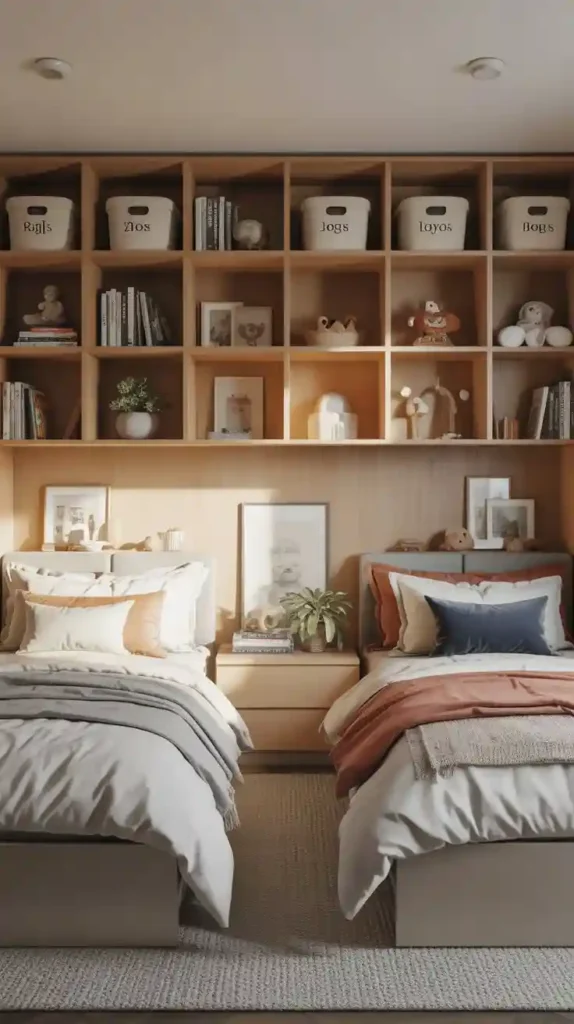
Every kid wants their own “spot.” Install personal shelves, cubbies, or lockers where they can keep treasures, books, or prized possessions. It’s their space to decorate however they like, and it helps avoid those “don’t touch my stuff” battles.
Cubbies can also double as nightstands if you don’t have room for two separate tables. Pro tip: add a name label to each space—it makes things more fun for the kids and helps keep organization (somewhat) in check.
12. Shared Play Zone
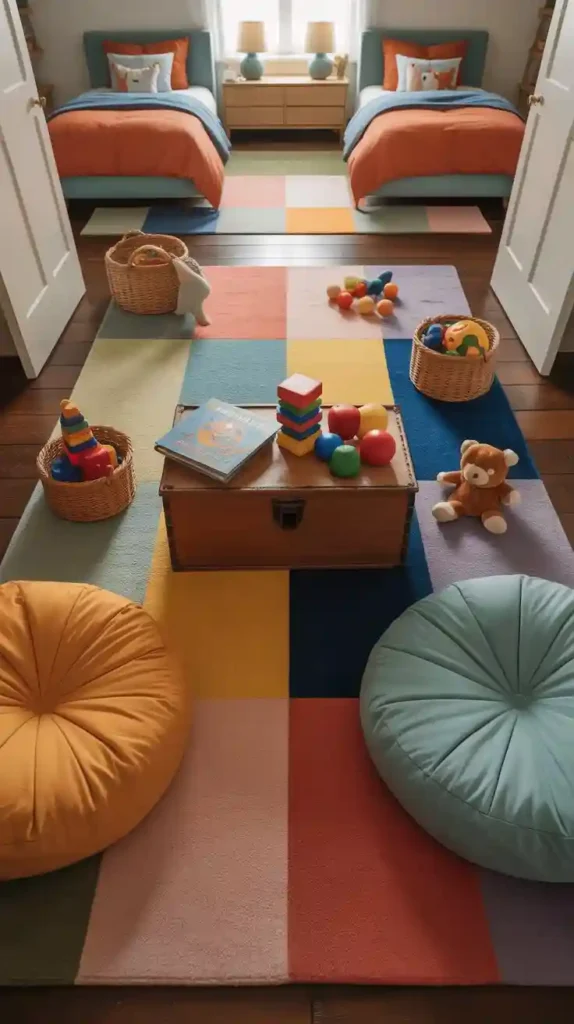
Instead of squeezing play areas into random corners, dedicate a shared play zone in the center of the room. A big rug, toy chest, and floor cushions make it clear that this is the “community space.” By giving them a designated play area, you free up the beds and desks for rest and focus. It also teaches them how to share space in a way that feels fair. Just keep the play zone simple and easy to clean up—because toys multiply fast.
13. Color-Coded Decor
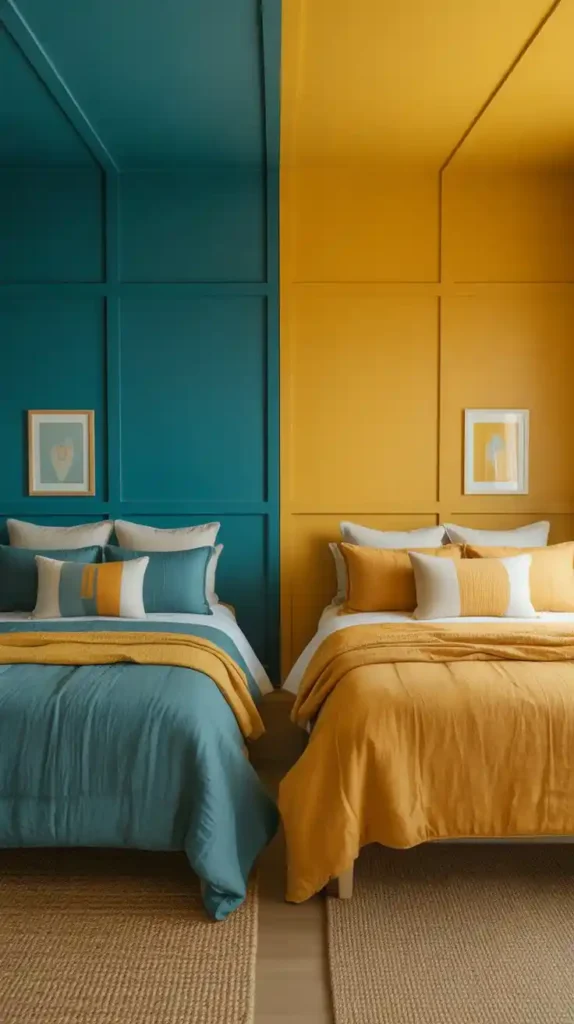
If your kids love different colors, embrace it. Color-code the decor so each side of the room feels unique but still coordinated. For example, one child gets teal accents, the other mustard yellow. Use the same furniture style, but differentiate with bedding, pillows, or wall art.
It’s an easy way to personalize the space while keeping the overall design harmonious. Plus, kids feel proud when their “color” is represented—it gives them a sense of ownership without chaos.
14. Lighting for Each Child
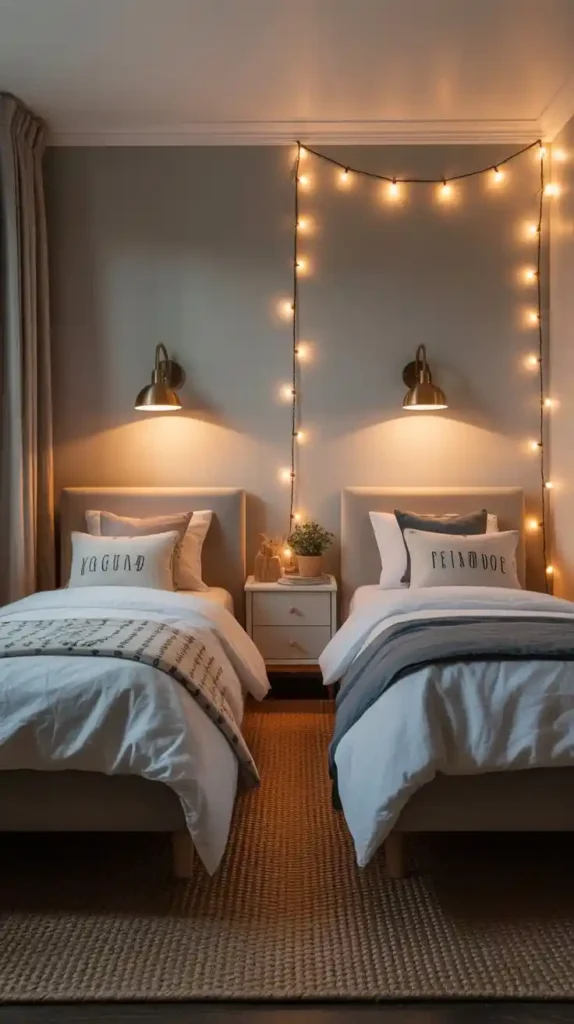
Lighting can make or break a shared bedroom. Give each child their own reading lamp or wall sconce so they can control their own light. This way, one kid can stay up reading while the other dozes off. Fun string lights or LED strips can also help divide zones.
The idea is simple: lighting = independence. And let’s be honest, kids love being in charge of something as simple as turning their own light on or off.
15. Keep It Flexible for Growth
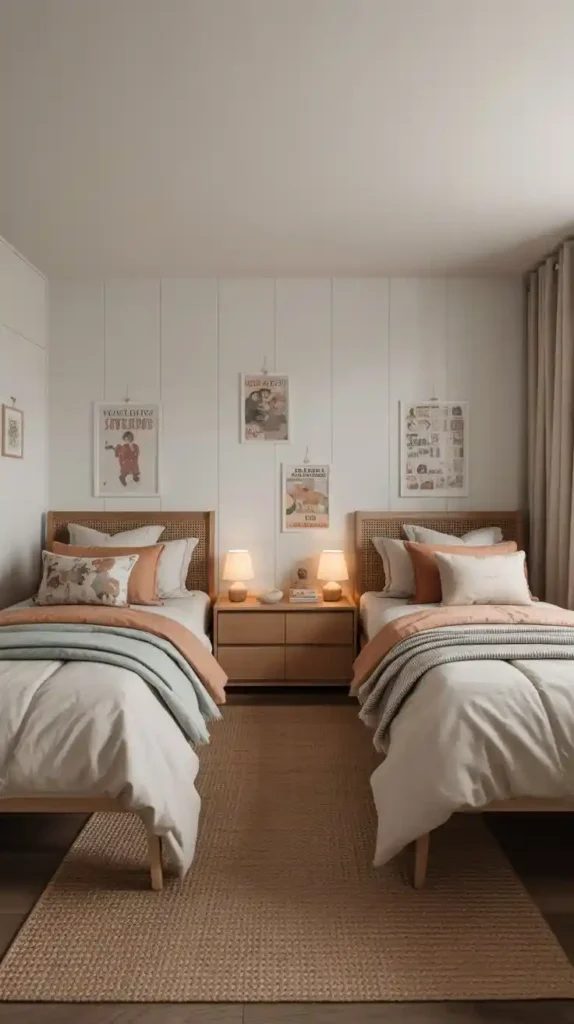
Kids grow fast, and so do their tastes. Design the room with flexibility in mind. Invest in neutral furniture that will last, and let them personalize with swappable decor like bedding, posters, or pillows. That way, when your “princess and pirate” phase turns into “soccer and space nerd,” you’re not redoing the entire room.
Flexibility saves money, effort, and your sanity. The goal is to create a foundation that adapts as they grow, while still feeling fun in the moment.
Conclusion
So, there you have it—15 boy girl shared bedroom ideas that actually work in real life. The secret isn’t about splitting the room in half like a courtroom—it’s about blending personalities, creating fairness, and keeping things functional. With the right balance of neutral bases, personal touches, and smart storage, you can design a space both kids love (and you won’t lose your mind over).
At the end of the day, the best shared bedrooms teach kids how to compromise while still letting their individuality shine. And hey, if you can cut down on the “he’s on my side!” arguments, that’s a design win in itself. 🙂
FAQs
1. How do you design a boy girl shared bedroom without it feeling mismatched?
Stick to a neutral base and add personality through bedding, art, and small accents. Matching furniture helps keep the design cohesive.
2. What’s the best way to give kids privacy in a shared room?
Use curtains, rugs, or furniture placement to create zones. Bunk beds or individual shelves also give a sense of personal space.
3. Can a small room work for two kids of different genders?
Yes! Smart storage, vertical space, and multipurpose furniture can make even small rooms functional and comfortable for both kids.
4. What are good color schemes for boy girl shared bedrooms?
Gender-neutral palettes like gray, green, yellow, or navy work great. You can also color-code each child’s side with their favorite accent color.
5. How do I keep a shared bedroom organized?
Give each child their own storage bins, shelves, or cubbies. Clear labeling and designated spaces help avoid confusion and clutter.