12 DIY Pergola Ideas for Defined Outdoor Rooms That Feel Intentional and Livable
An outdoor space can be large, green, and technically beautiful, yet still feel undefined. Without structure, patios and backyards often feel like pass-through areas instead of places where life actually happens. That is where a pergola makes a real difference. It does not just add shade. It creates boundaries, purpose, and a sense of room without walls. Suddenly, your backyard is no longer one big open area. It becomes a collection of outdoor rooms.
What makes DIY pergolas especially appealing is control. You decide where the room begins and ends. You choose whether the space feels cozy, open, social, or quiet. A pergola can define a dining zone, a lounge area, a reading corner, or even an outdoor workspace. The structure tells your brain, “this space has a function,” and that changes how often you use it.
DIY pergola ideas for defined outdoor rooms are popular because they are practical, flexible, and budget-friendly. You do not need a full renovation or expensive materials to create a sense of separation. With thoughtful placement, scale, and styling, a pergola becomes an outdoor wall, ceiling, and design anchor all at once. It gives your backyard layout the same clarity that rooms inside your home already have.
In this guide, we are exploring 12 DIY pergola ideas designed specifically to define outdoor rooms. Each idea breaks down how the pergola works as a spatial divider, how it looks in a real backyard, how flexible it is as your needs change, and the common mistakes that stop outdoor rooms from feeling intentional. If your outdoor space feels underused or undefined, these ideas will help you rethink it.
1. DIY Pergola Over an Outdoor Living Room
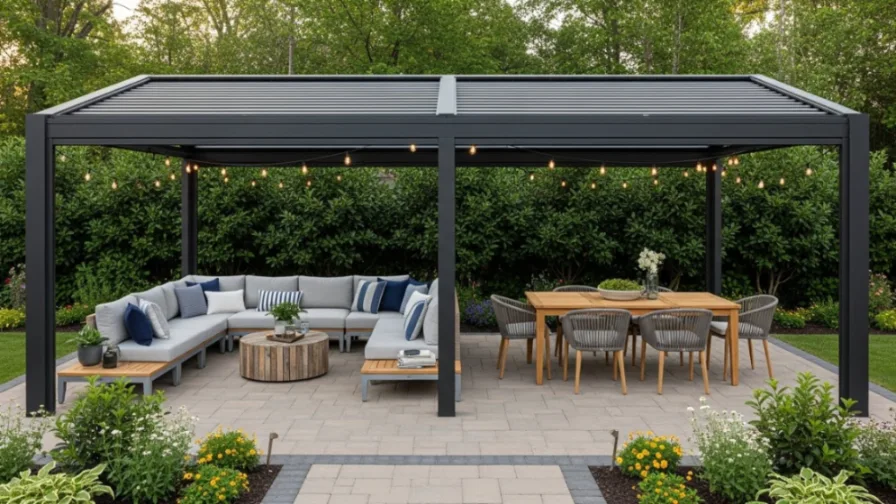
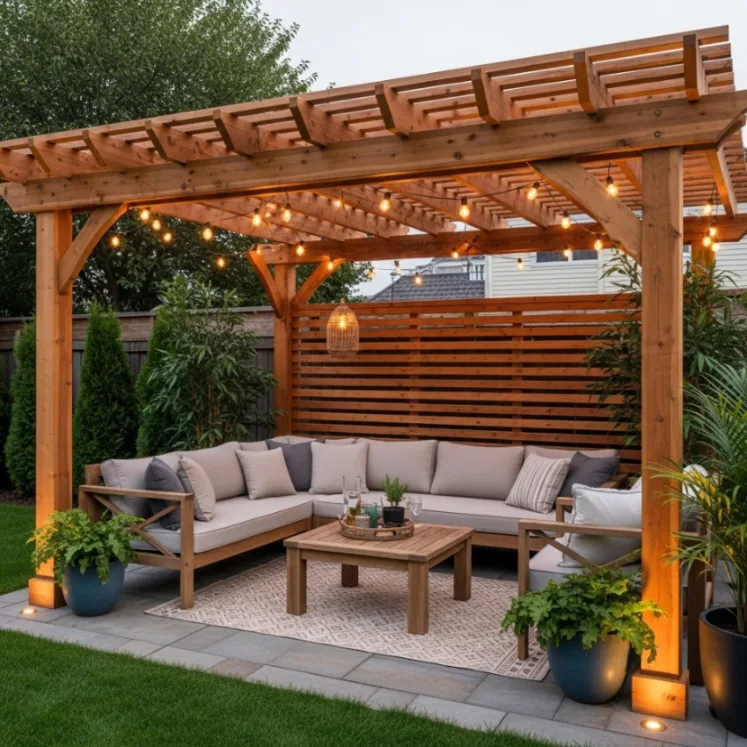
Using a pergola to define an outdoor living room is one of the most effective ways to create a true outdoor room. Instead of furniture floating in an open yard, the pergola acts like a ceiling, visually anchoring the space. This approach instantly makes the area feel intentional and comfortable.
Imagine a pergola positioned over a sectional sofa, coffee table, and outdoor rug. The structure frames the seating area, separating it from the rest of the yard. Even without walls, the space feels enclosed enough to relax, talk, or unwind at the end of the day.
Styling flexibility is high with this setup. You can change cushions, rugs, lighting, or even add curtains later. The pergola remains the constant structure while decor evolves around it. It works in modern, rustic, and casual backyards alike.
A common mistake is building the pergola too small for the furniture underneath. Another issue is not centering the pergola properly, which makes the room feel unbalanced.
2. DIY Pergola to Define an Outdoor Dining Room
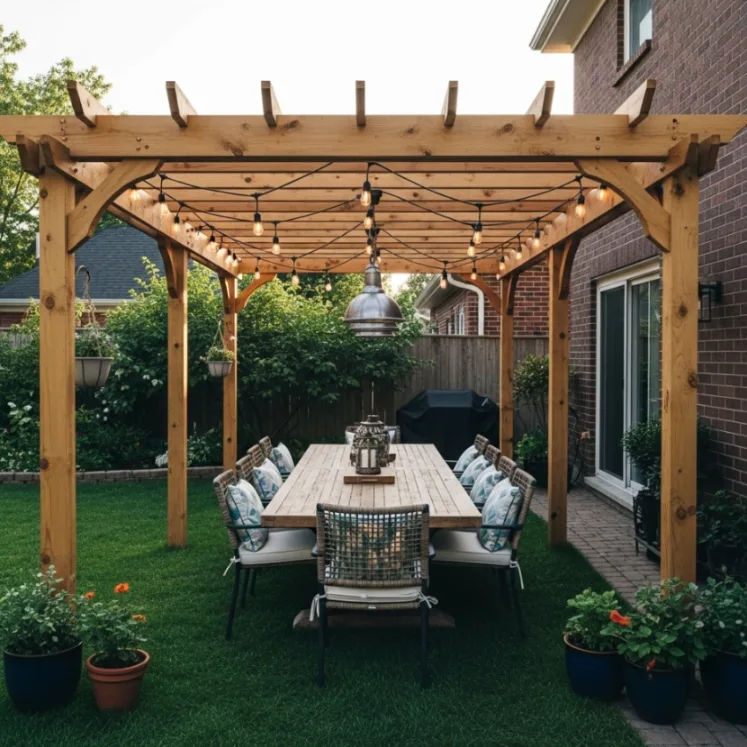
A pergola over a dining area instantly turns meals into an experience. This DIY pergola idea for defined outdoor rooms creates a clear eating zone separate from lounging or play areas. It brings structure and comfort to outdoor dining.
Picture a dining table centered beneath a pergola with enough space for chairs to move comfortably. The pergola frames the table, making the dining area feel like a room rather than a temporary setup. Shade makes midday meals more enjoyable.
Styling flexibility comes from lighting and table decor. You can hang string lights, lanterns, or even a pendant light. Seasonal table settings change the mood without altering the structure.
A common mistake is placing the pergola without considering chair clearance. Another issue is hanging lights too low, which interferes with conversation and movement.
3. DIY Pergola as a Backyard Lounge Zone Divider
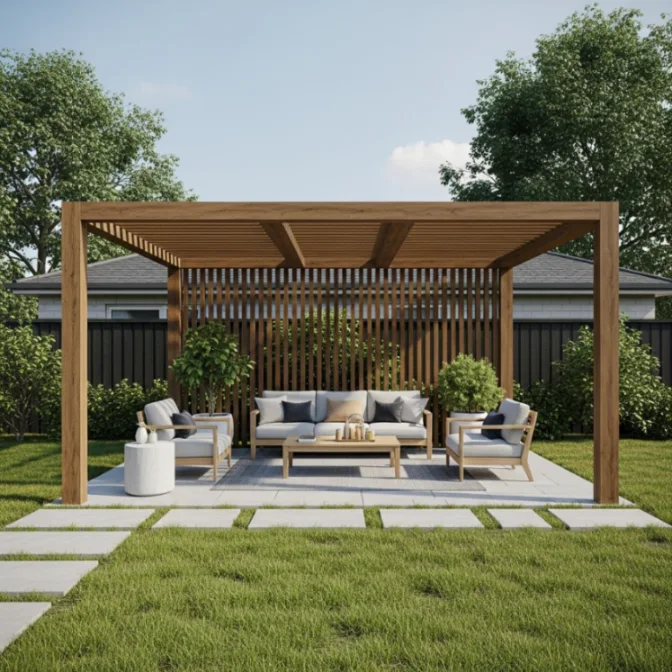
In open backyards, pergolas work beautifully as visual dividers. This DIY pergola idea separates a lounge zone from the rest of the yard without blocking views. It defines space while keeping the yard open.
Imagine a pergola positioned slightly off-center, marking a lounge area distinct from lawn or garden zones. Furniture sits comfortably underneath, and the structure signals that this is a place to gather and relax.
Styling flexibility comes from orientation and accessories. You can add side panels, plants, or lighting to increase separation over time. The pergola adapts to how private or open you want the space to feel.
A common mistake is placing the pergola randomly without aligning it to furniture or pathways. Another issue is making it too tall, which reduces the sense of enclosure.
4. DIY Pergola to Create a Poolside Room
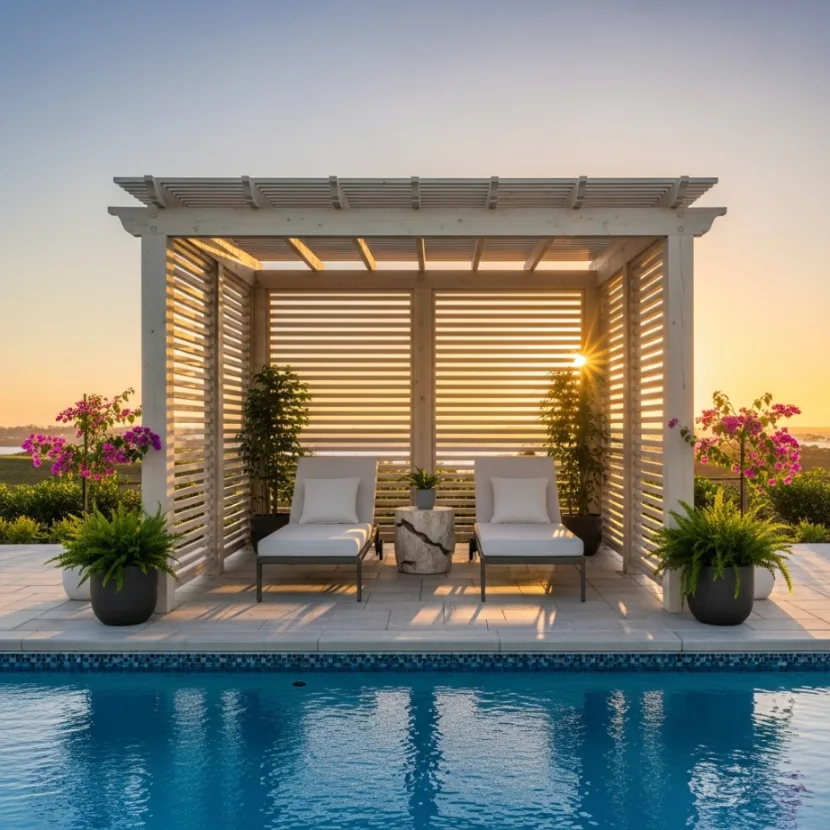
Pool areas often feel busy and undefined. A pergola helps carve out a calm zone near the pool for lounging or shade. This DIY pergola idea for defined outdoor rooms adds balance to energetic spaces.
Picture a pergola placed slightly away from the pool edge, covering lounge chairs or a seating set. It creates a retreat where you can dry off, relax, or escape the sun without leaving the pool area.
Styling flexibility is excellent. Light fabrics, neutral furniture, and plants soften the look. You can adjust decor depending on whether the space feels more like a resort or a family hangout.
A common mistake is placing the pergola too close to the pool, which can cause splashing and wear. Another issue is using materials not suited for moisture.
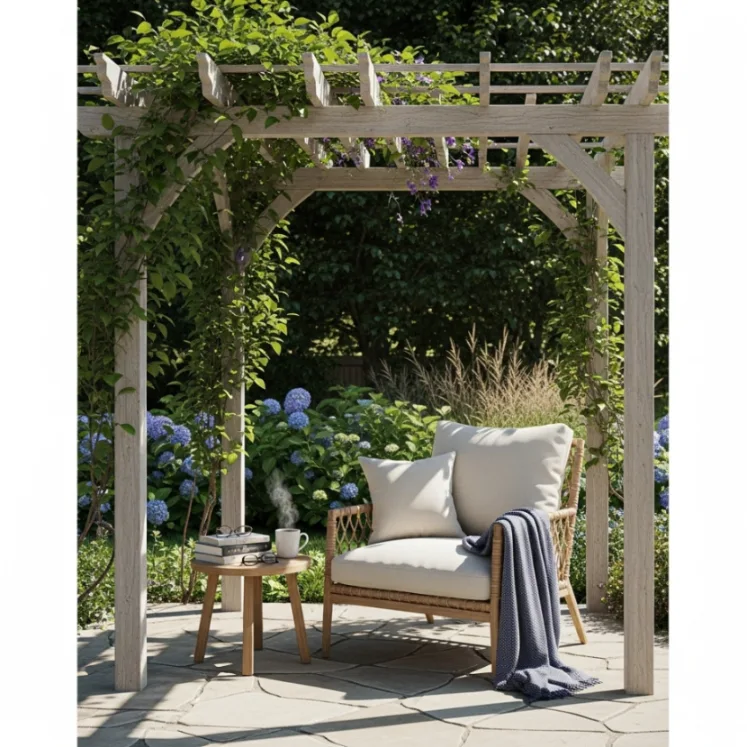
5. DIY Pergola for a Backyard Reading Nook
Small pergolas work beautifully as intimate reading or relaxation rooms. This idea focuses on creating a quiet corner rather than a social space. The pergola defines a personal zone within the yard.
Imagine a compact pergola tucked into a corner of the backyard with a chair, small table, and soft lighting. The structure creates a mental boundary, signaling calm and solitude.
Styling flexibility comes from scale. You can keep it minimal or add curtains, plants, and cushions. It works well for people who want a peaceful retreat outdoors.
A common mistake is overdecorating a small space. Another issue is placing the pergola in a noisy or high-traffic area.
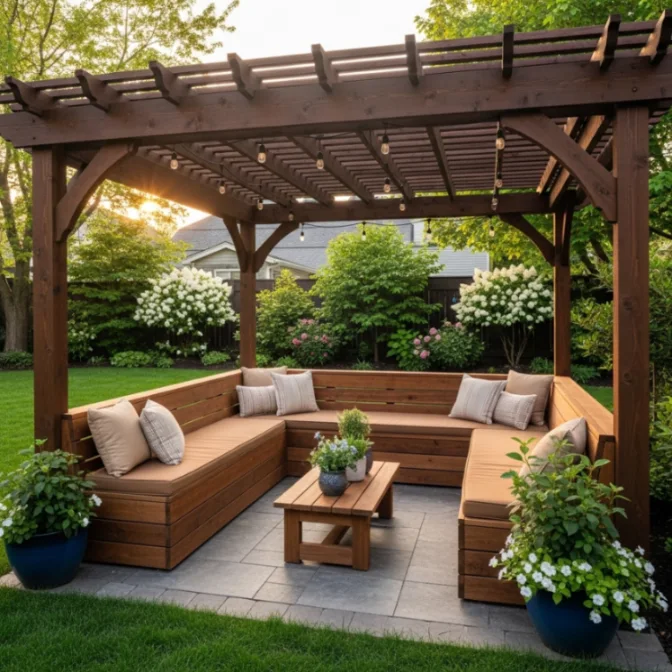
6. DIY Pergola With Built-In Seating as a Defined Room
Built-in seating makes a pergola feel permanent and room-like. This DIY pergola idea creates a fixed gathering space that does not rely on movable furniture.
Picture benches built into the pergola frame, forming a defined seating layout. The space feels intentional and grounded, almost like an outdoor living room without walls.
Styling flexibility comes from cushions and pillows. You can change colors and textures without changing the structure. Storage can even be added under seating.
A common mistake is prioritizing design over comfort. Another issue is not planning for drainage around built-in elements.
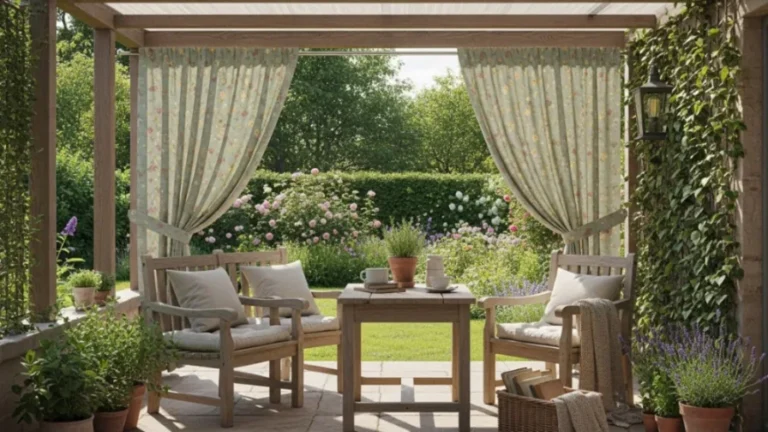
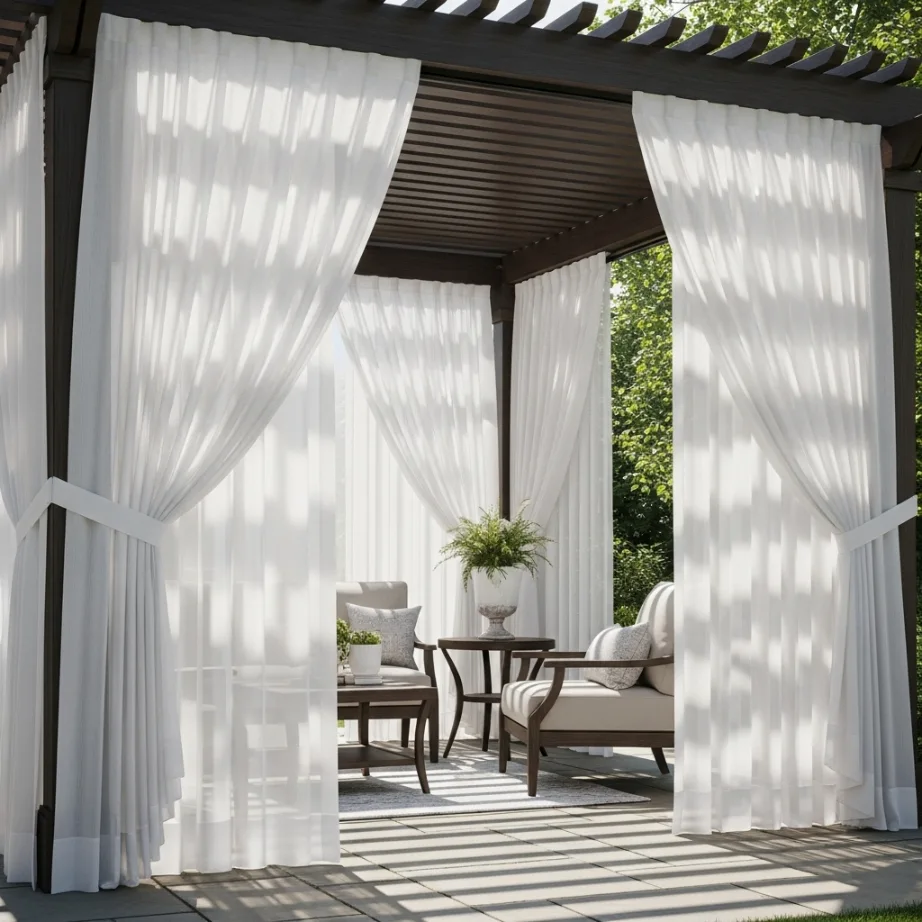
7. DIY Pergola With Curtains for Visual Boundaries
Curtains add softness and flexibility to pergolas. They help define outdoor rooms by creating temporary walls that can open or close as needed.
Imagine sheer curtains framing the sides of a pergola, gently moving in the breeze. When closed, the space feels private. When open, it feels airy and connected.
Styling flexibility is very high. Curtains can be swapped seasonally or styled differently depending on mood. They add privacy without permanent enclosure.
A common mistake is using indoor fabric outdoors. Another issue is weak curtain hardware that sags or rusts.
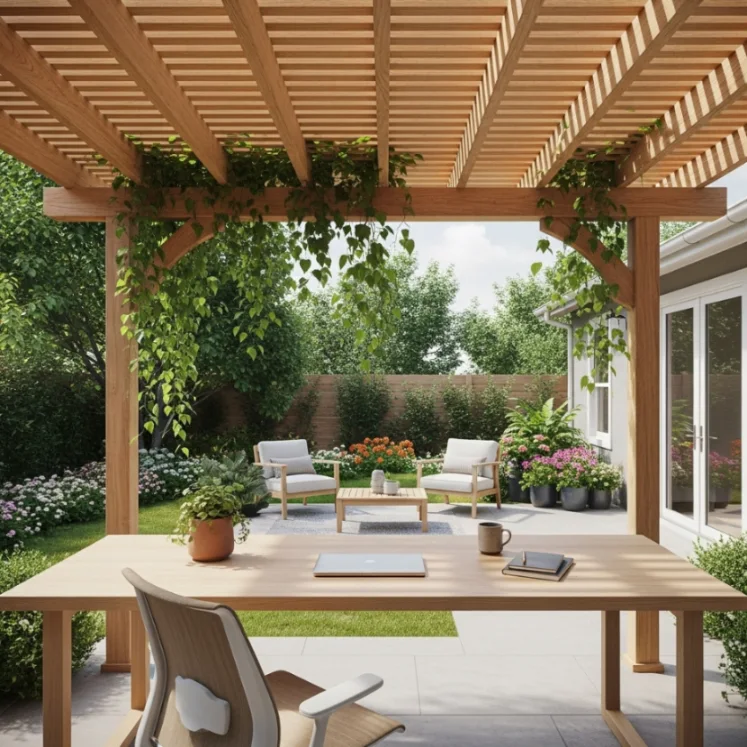
8. DIY Pergola to Define a Backyard Workspace
Outdoor workspaces are becoming more common. A pergola helps define a focused area for work, hobbies, or creative projects. It separates work from leisure zones.
Picture a pergola sheltering a desk or worktable, positioned away from play areas. The structure provides shade and focus, making outdoor work more comfortable.
Styling flexibility comes from furniture choice. You can make it casual or more office-like depending on needs. Lighting and outlets can be added over time.
A common mistake is poor lighting. Another issue is placing the workspace in direct afternoon sun.
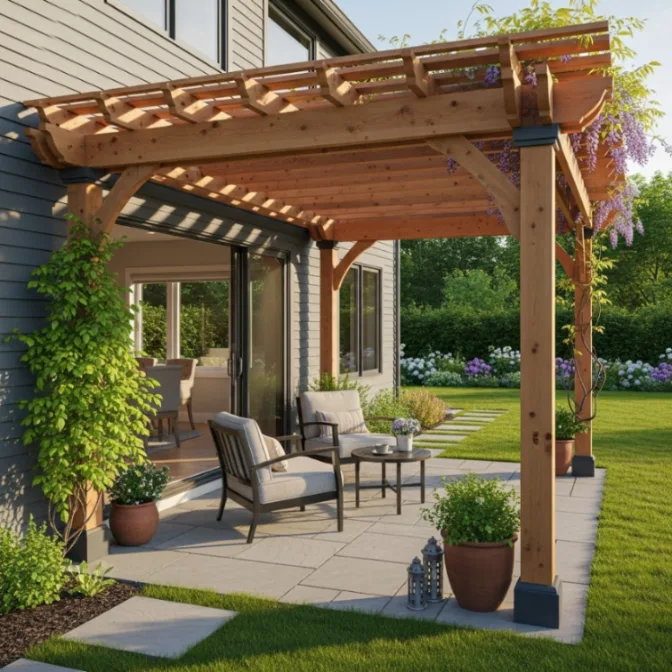
9. DIY Pergola Between House and Yard as a Transition Room
A pergola can act as a transition between indoor and outdoor spaces. This DIY pergola idea creates an in-between room that eases the shift from inside to outside.
Imagine a pergola attached near the back door, covering a small seating area. It feels like an outdoor entry room rather than an exposed patio.
Styling flexibility is strong. You can mirror indoor decor or lean more outdoor over time. The pergola bridges both worlds.
A common mistake is ignoring roof alignment with the house. Another issue is not considering drainage near walls.
10. DIY Pergola for a Garden Dining Room
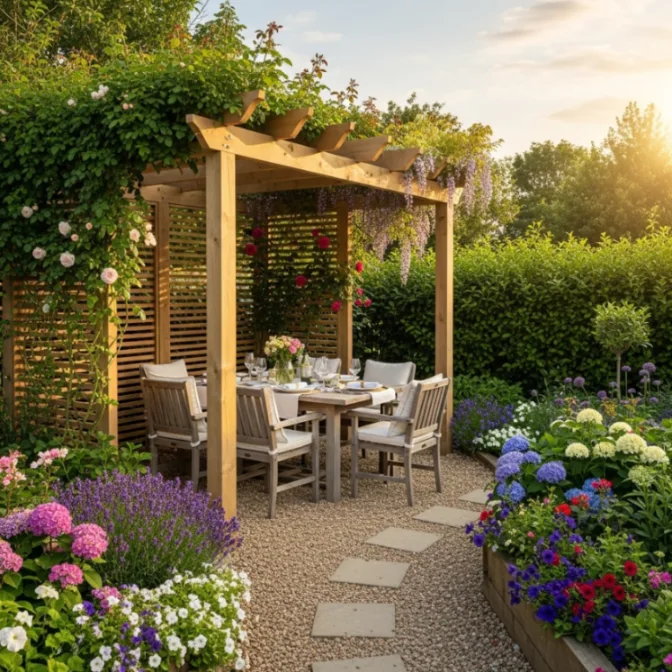
In garden-heavy backyards, pergolas help define dining spaces among plants. This DIY pergola idea creates a room within nature rather than against it.
Picture a pergola nestled among flower beds with a dining table underneath. The structure frames the greenery and creates a sense of place.
Styling flexibility comes from plant growth and seasonal changes. Furniture stays simple while nature does the styling.
A common mistake is choosing plants that overwhelm the structure. Another issue is not allowing enough clearance for movement.
11. DIY Pergola to Separate Play and Adult Zones
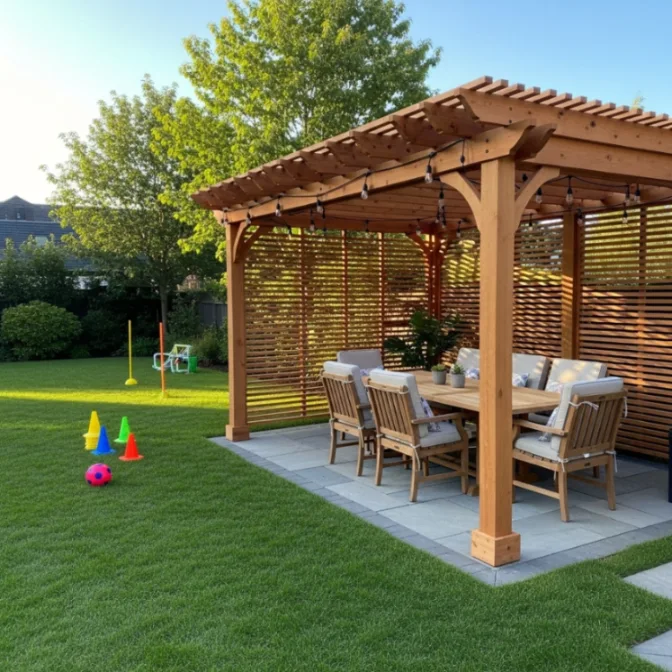
Backyards often need multiple zones. A pergola helps visually separate adult spaces from play areas without building fences.
Imagine a pergola defining a seating area while the lawn remains open for kids. The structure signals different uses without blocking supervision.
Styling flexibility allows the adult zone to feel calm while the rest of the yard stays active. Furniture and decor reinforce the separation.
A common mistake is placing the pergola too far from sightlines. Another issue is using fragile materials near play zones.
12. DIY Pergola as a Multi-Purpose Outdoor Room
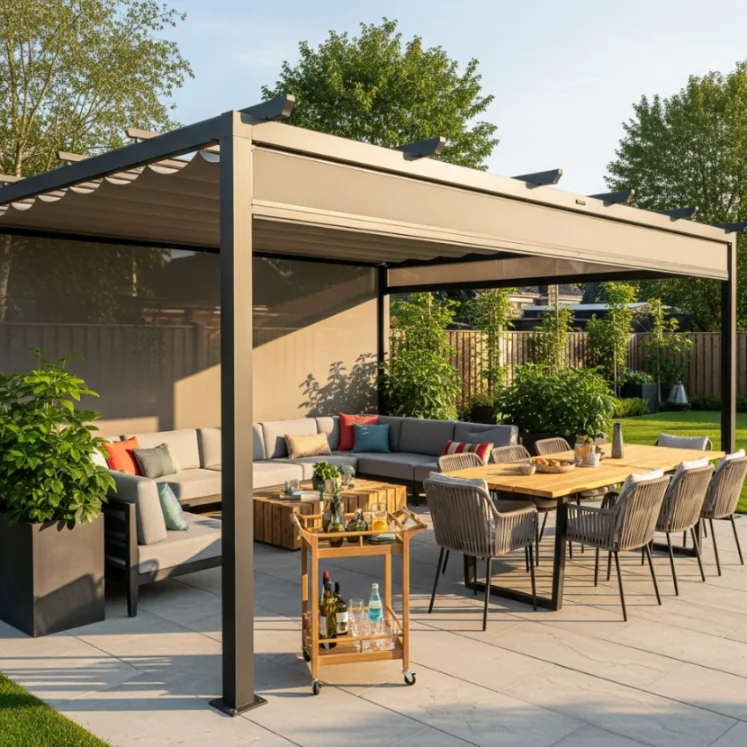
Some outdoor rooms need to do it all. A pergola can define a flexible space used for dining, lounging, or entertaining. This DIY pergola idea focuses on adaptability.
Picture a pergola with movable furniture that shifts based on activity. The structure defines the room, while the layout changes.
Styling flexibility is the biggest strength here. Lighting, furniture, and accessories adapt easily over time. A common mistake is trying to do too much without clear zoning. Another issue is overcrowding the space.
FAQs
1. Do pergolas really define outdoor rooms
Yes, they act like ceilings that visually separate spaces.
2. Can small yards benefit from pergolas
Yes, pergolas help small spaces feel intentional.
3. Are DIY pergolas expensive
They can be budget-friendly with proper planning.
4. Do outdoor rooms need walls
No, structure alone can define space.
5. Can pergolas be moved or changed later
Many designs allow future modifications.