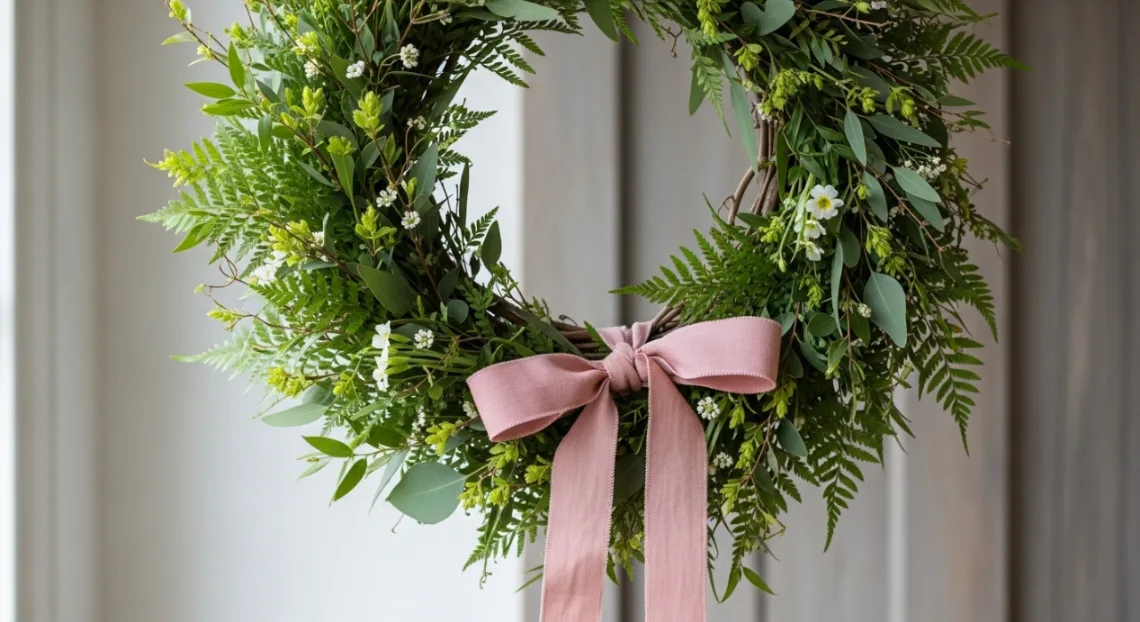
13 Spring Wreath Decoration Ideas That Feel Fresh, Soft, and Naturally Inviting
Spring wreaths are one of those decor elements that quietly do a lot of heavy lifting. They sit right at eye level, greet every guest, and set the emotional tone before anyone even steps inside. A good spring wreath does not scream for attention. It gently suggests freshness, warmth, and a sense that the home is awake again after winter. That is why wreaths work so well in spring. They feel symbolic without being dramatic.
What often goes wrong with spring wreath decoration is overthinking it. People assume wreaths must be packed with color, flowers, and accessories to feel seasonal. In reality, the most beautiful spring wreaths feel balanced and breathable. They hint at nature rather than copying it exactly. The best ones look like they belong there, not like they were hung just for a photo.
In this blog, we are exploring 13 spring wreath decoration ideas that work for real homes and real doors. Each idea focuses on how the wreath feels, how it fits into daily life, and how it can evolve through the season without feeling outdated or forced.
1. Fresh Greenery Spring Wreath
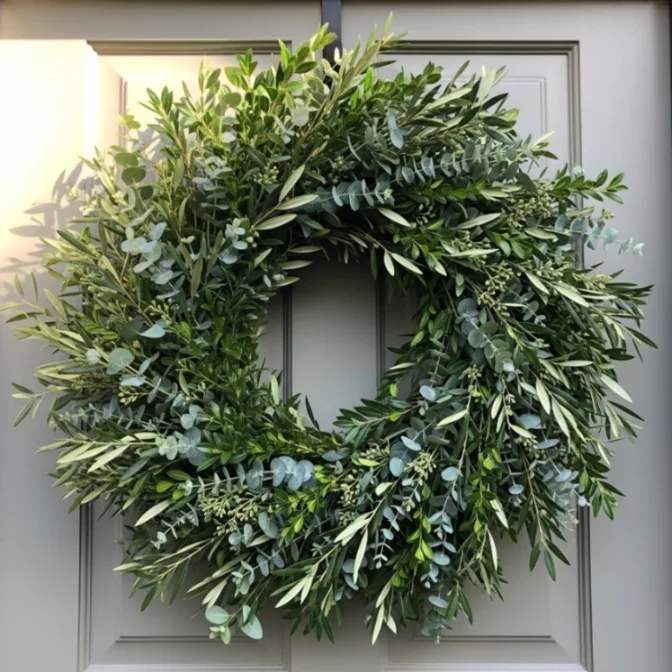
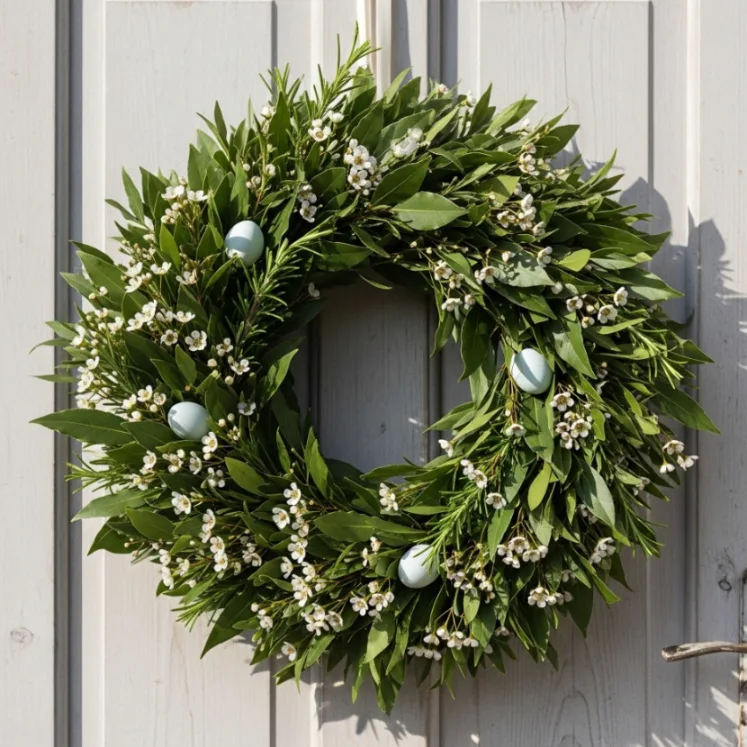
A greenery-based spring wreath is one of the most timeless choices you can make. It feels light, calm, and instantly seasonal without relying on bright colors or obvious florals. Greenery signals growth and renewal, which is exactly what spring represents.
A common example is a wreath made from eucalyptus, boxwood, or olive branches. Hung on a front door, it softens the entry and makes the home feel welcoming without being loud. It works beautifully on both light and dark doors.
This type of wreath adapts easily. You can keep it simple early in spring and add subtle ribbon or small florals later in the season. The base remains relevant from early spring well into summer.
2. Soft Floral Wreath with Muted Colors
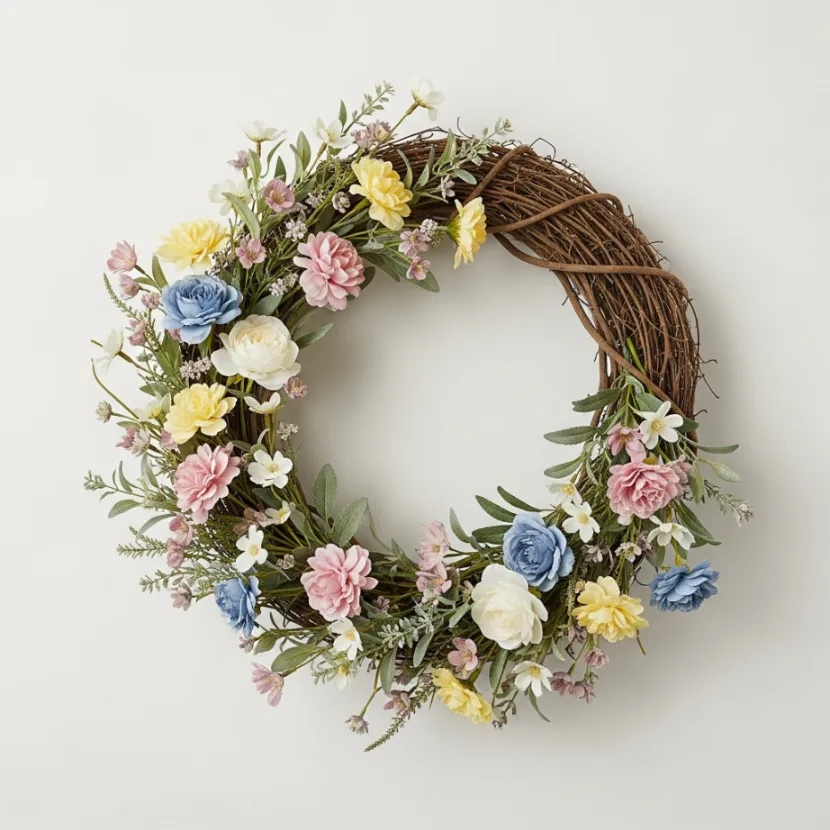
Floral wreaths feel like spring at first glance, but muted florals keep the look elegant rather than overwhelming. Soft pinks, creams, pale yellows, and dusty blues feel gentle and inviting.
An example would be a grapevine wreath with scattered faux florals arranged loosely rather than tightly packed. The flowers feel natural, as if they grew there instead of being placed deliberately.
This idea allows flexibility in scale. You can go minimal with just a few blooms or fuller without losing softness, as long as the colors stay restrained.
3. Grapevine Wreath with Natural Texture
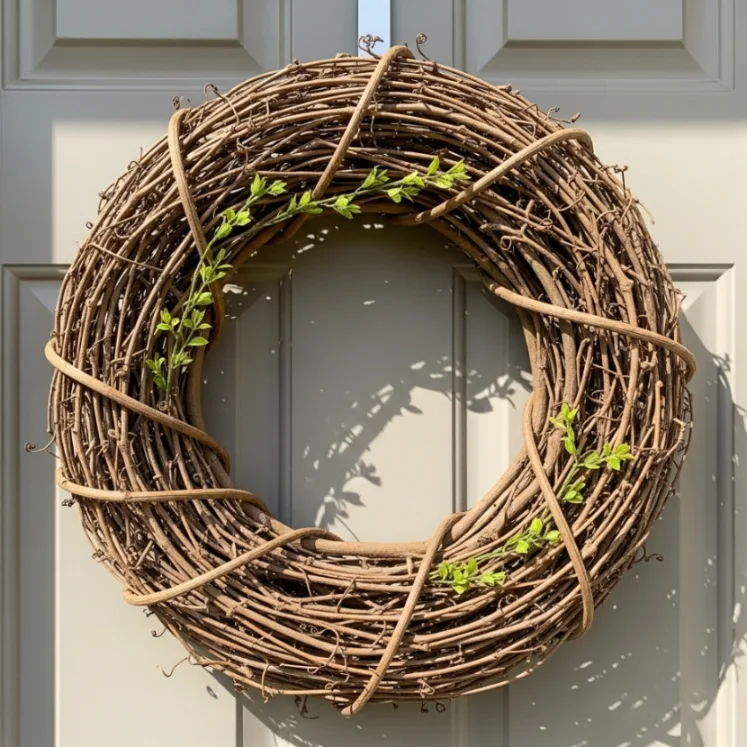
Grapevine wreaths bring texture and warmth, making them perfect for spring transitions. They feel rustic but light, grounding the decor while still allowing seasonal elements to shine.
A simple grapevine wreath on its own already works for spring, especially when paired with a neutral door. Adding a few greenery sprigs enhances the seasonal feel without overpowering the natural base.
This wreath style evolves easily. You can refresh it with florals, ribbons, or seasonal accents as spring progresses, keeping the structure while updating the details.
4. Minimalist Spring Wreath for Modern Homes
Not every home suits florals and bows, and that is where minimalist spring wreaths shine. These designs focus on clean lines, simple materials, and intentional spacing.
A good example is a metal hoop wreath with a small cluster of greenery placed asymmetrically. The negative space becomes part of the design, making it feel modern and calm.
This idea works well on contemporary homes and apartments. It feels thoughtful without being decorative-heavy, and it pairs well with sleek doors and minimal porches.
5. Pastel Ribbon Accent Wreath
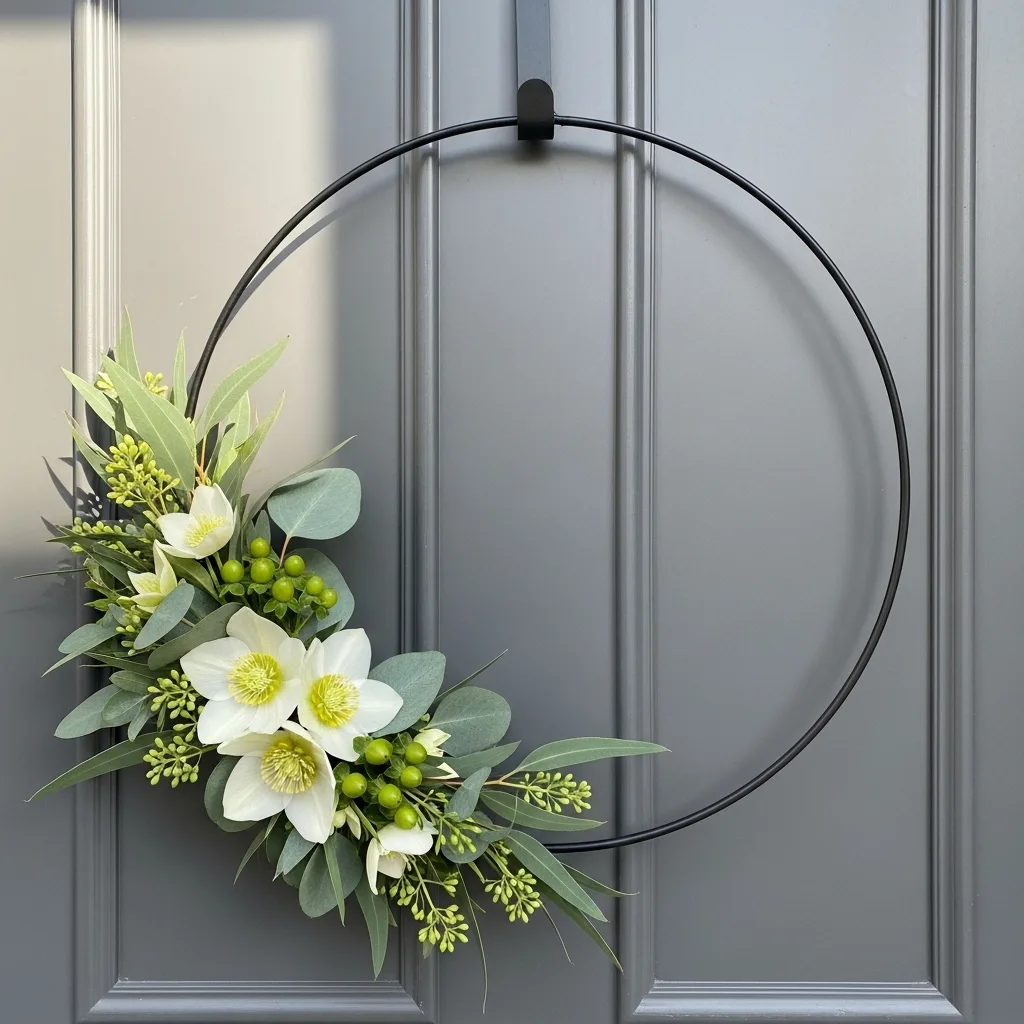
Ribbons are an easy way to introduce spring color without committing to florals. Pastel ribbons feel soft and playful while remaining subtle.
An example includes a greenery or grapevine wreath finished with a simple blush or sage ribbon tied loosely. The ribbon adds movement and softness without stealing attention.
You can swap ribbons throughout the season, making this a low-effort way to refresh the look. One wreath base can support multiple styles.
6. Wildflower-Inspired Spring Wreath
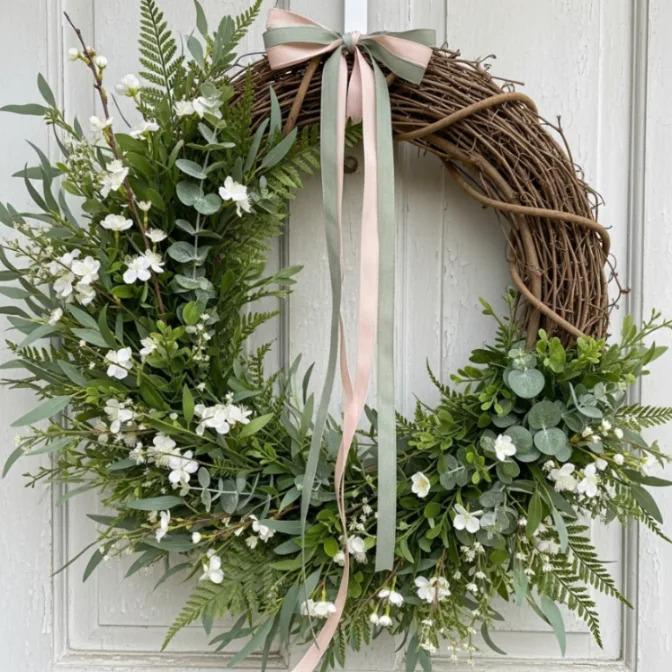
Wildflower wreaths feel relaxed and joyful. They capture the feeling of spring meadows and spontaneous blooms rather than structured arrangements.
A typical wildflower wreath includes mixed small florals, greenery, and varied textures arranged loosely. Nothing looks too perfect, which adds to the charm.
This idea feels especially welcoming on cottage-style or farmhouse homes. It brings personality and warmth without feeling styled or artificial.
7. White Floral Spring Wreath
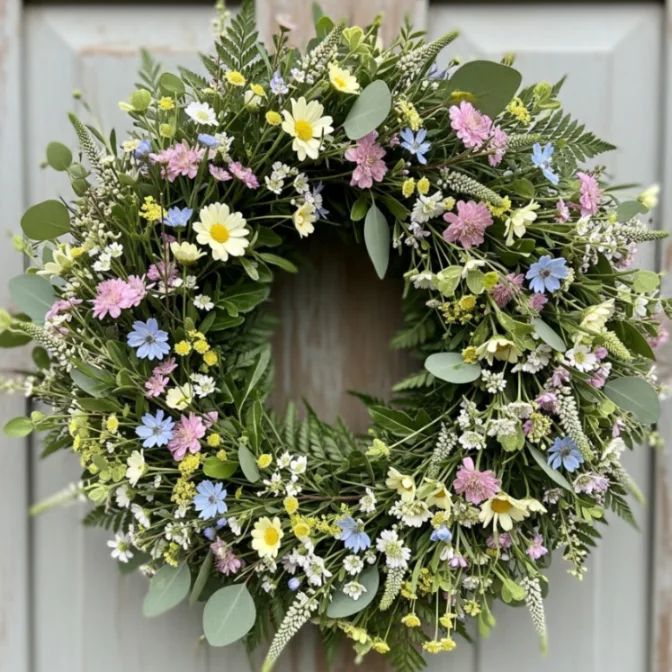
White florals create a clean, airy spring look that feels timeless. They brighten the door without overpowering the entry.
An example would be a wreath made of white blossoms mixed with light greenery. It pairs beautifully with wood, black, or colored doors.
This style works across different decor aesthetics. You can keep it classic or add subtle texture for a more relaxed feel, and it transitions well into summer.
8. Asymmetrical Spring Wreath Design
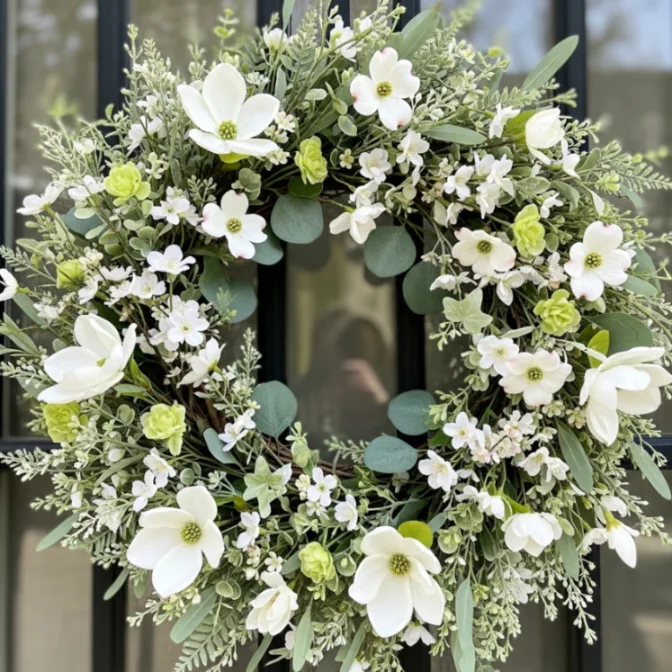
Asymmetry adds interest while keeping the wreath feeling modern and organic. These designs feel intentional but not rigid.
A common example includes greenery or florals placed on one side of a circular wreath, leaving the rest open. This creates movement and visual balance.
Asymmetrical wreaths are flexible and forgiving. You can adjust placement, add or remove elements, and keep the design feeling fresh with minimal effort.
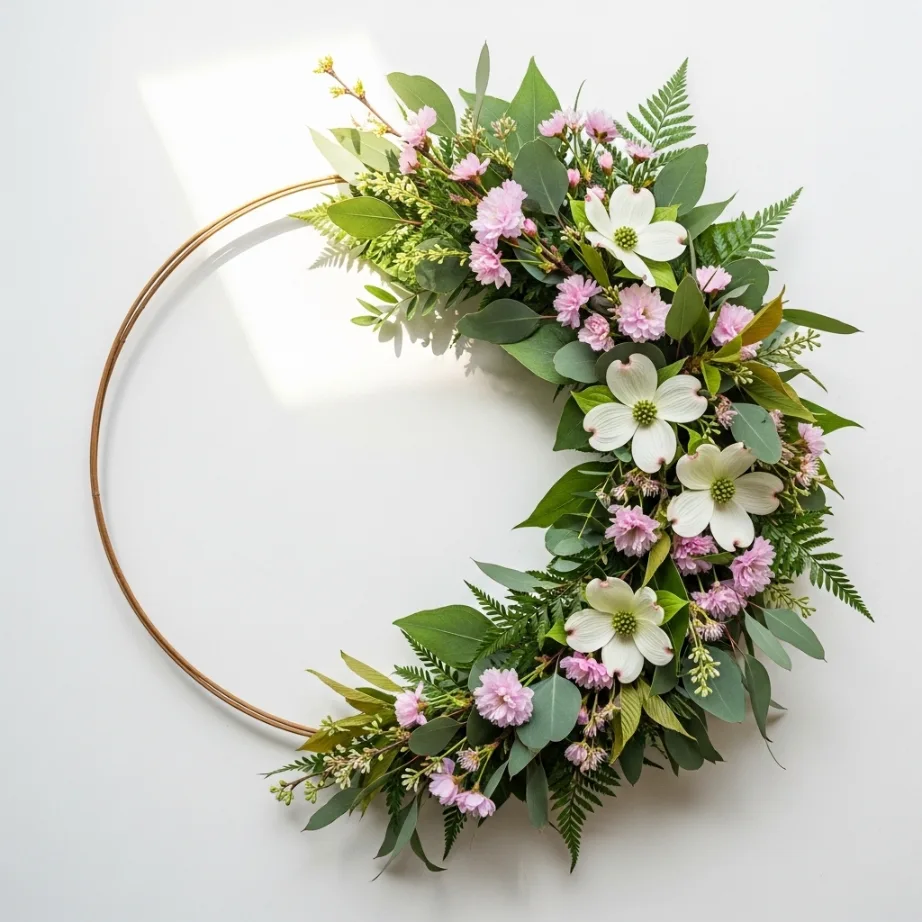
9. Spring Wreath with Subtle Seasonal Touches
Sometimes spring decor works best when it hints at the season rather than announcing it. Small seasonal details can make a big impact.
An example is adding tiny faux blossoms, soft buds, or light greenery to a neutral wreath. These touches feel thoughtful rather than decorative-heavy.
This idea allows you to keep the wreath up longer without feeling out of season. It blends seamlessly with everyday decor.
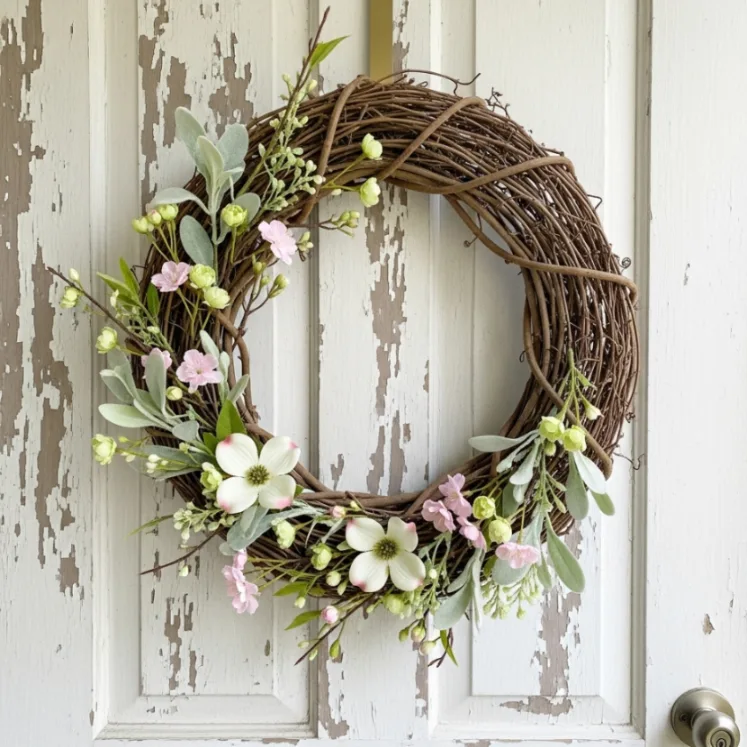
10. Farmhouse-Style Spring Wreath
Farmhouse wreaths feel cozy and familiar. They often combine natural textures, simple florals, and a relaxed arrangement style.
A common farmhouse wreath includes greenery, cotton stems, or small florals paired with a neutral ribbon. It feels welcoming and lived-in.
This style adapts well across seasons. By swapping accents, the same wreath base can work from early spring through late summer.
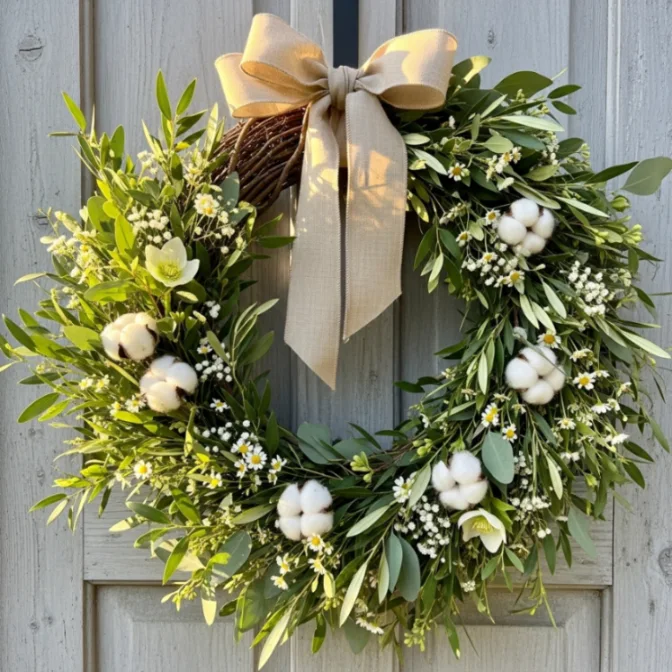
11. Spring Wreath with Mixed Greenery Layers
Layering different types of greenery adds depth without adding color overload. It creates a fuller, richer look while staying calm.
An example includes combining eucalyptus, fern, and olive leaves. The variation in leaf shape keeps the wreath visually interesting.
This idea works well for larger doors where a fuller wreath feels balanced. It also looks beautiful from a distance.
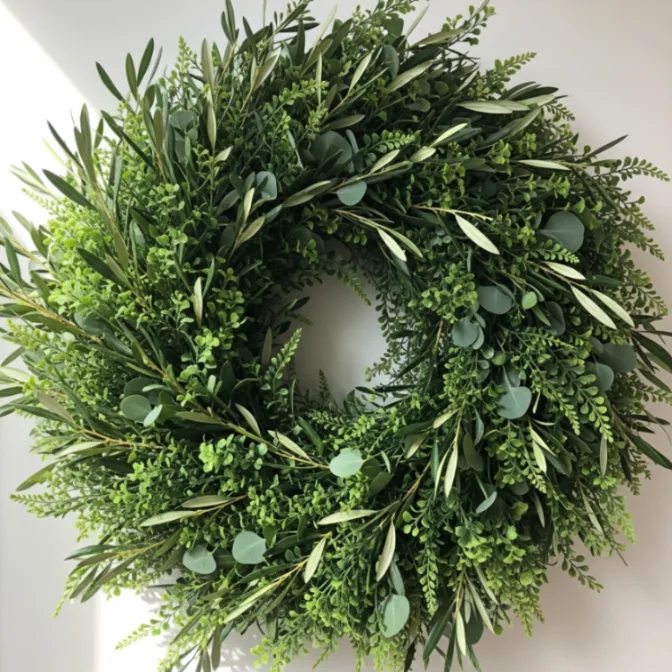
12. Indoor Spring Wreath as Wall Decor
Spring wreaths do not have to live on the front door. Using them indoors adds softness and seasonal charm inside the home.
Examples include hanging a wreath above a console table, fireplace, or bed. It brings spring indoors without rearranging the room.
Indoor wreaths offer styling freedom. You can go softer, more detailed, or more personal without worrying about weather exposure.

13. Simple Everyday Spring Wreath That Lasts
The best spring wreath is one you do not feel pressured to change constantly. Simple designs tend to last longer and feel more natural.
A good example is a greenery-based wreath with minimal accents that stays relevant all season. It becomes part of the home rather than a decoration.
This idea prioritizes ease and comfort. When decor feels effortless, it naturally feels more beautiful.
Conclusion
Spring wreath decoration is not about trends or perfection. It is about creating a welcoming moment that feels fresh and intentional every time you come home. The right wreath sets the mood quietly, without needing constant updates.
These 13 spring wreath decoration ideas show that simplicity, texture, and balance often matter more than color or quantity. When a wreath feels natural, it becomes part of the home’s rhythm rather than a seasonal obligation.
If it makes you smile when you open the door, then it is doing its job perfectly.
FAQs
1. What materials work best for spring wreaths?
Greenery, grapevine, faux florals, and soft ribbons work best for durability and seasonal appeal.
2. Can I use the same wreath all spring?
Yes, neutral or greenery-based wreaths stay relevant all season.
3. Are faux spring wreaths better than real ones?
Faux wreaths last longer and require less maintenance while still looking beautiful.
4. Can spring wreaths be used indoors?
Yes, they work well on walls, mirrors, and over furniture for subtle seasonal decor.
5. How big should a spring wreath be?
It should fill the door space comfortably without overwhelming it.