15 Poetcore Reading Nook Ideas for a Bookish, Vintage Home
Poetcore decor is bookish, vintage reading-corner styling built around old books, a worn leather chair, a brass reading lamp, and cozy wool textures — a corner that looks like a poet actually lives there. The simplest formula is this: one comfortable chair by good light, a stack of old books within arm’s reach, and one warm layer like a tweed throw or a knit blanket, and you already have a poetcore reading nook.
A Corner That Reads Like a Poem
There is a particular kind of quiet I only find in a room full of old books. It is not silence exactly — it is the soft sound of pages, the tick of a clock, the feeling that the world has slowed down enough for a long sentence to finish. My own reading corner started by accident, with a secondhand armchair I bought for almost nothing and a pile of library-sale paperbacks I had nowhere else to put, and it has quietly become the most-used spot in my whole house. I read there every evening, I write letters there on Sundays, and on winter afternoons I have genuinely lost track of hours in that chair. That is the spirit behind these fifteen poetcore reading nook ideas: not a themed set you buy in one shopping trip, but a corner gathered slowly — a book found in a charity shop, a lamp inherited or thrifted, a throw that has already survived three winters — until the whole corner feels like it has a history. Every idea below is one I have tried in my own home, with honest notes on what was comfortable, what looked better in photographs than in real life, and what I would do differently next time.
1. A Window-Seat Poet’s Corner for Your Poetcore Bedroom Decor Ideas
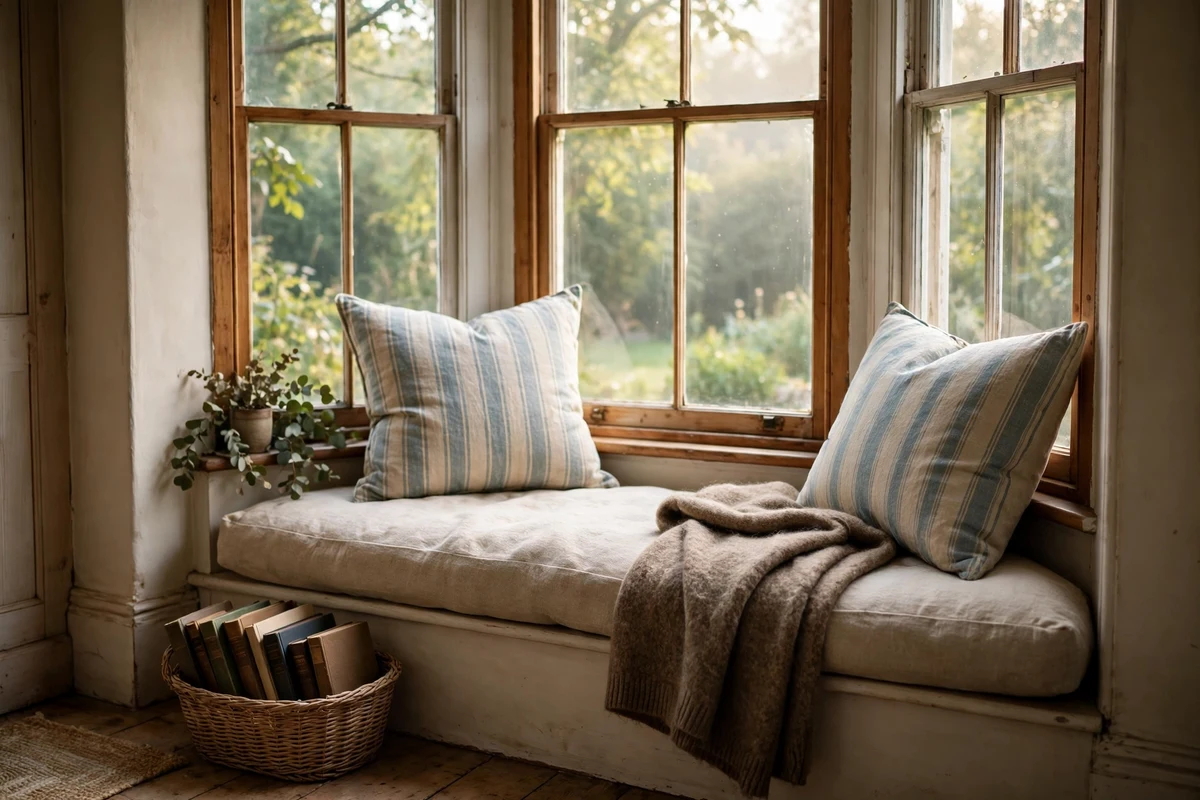
If you try only one of these poetcore bedroom decor ideas, make it a window seat — because a poetcore reading nook lives or dies by its light, and window light is the kindest light there is. Mine is a deep bay window with a thick cushion in natural linen, two oversized pillows in faded ticking stripe, and a folded wool throw always within reach. In the morning the sun comes straight across the pages, and on grey days the light is soft enough that I can read for hours without my eyes tiring. It is the spot my cat claims first every day, which I take as a professional opinion.
Build yours wherever a window is wide enough to sit in, even if the seat is just a sturdy bench pushed up against the sill. Start with a cushion at least ten centimetres thick — anything thinner feels like a ledge, not a seat — and add pillows you can actually lean on, not decorative ones that slide away. I keep a small basket beside the seat for the book I am reading, a pencil, and a pair of reading glasses, because a nook that makes you get up every ten minutes is not a nook at all. If your bedroom already leans soft and layered, echoing the same warmth with cozy winter bedding in cream or oat keeps the whole room feeling like one calm story instead of two competing ones.
2. A Worn Leather Armchair and Brass Reading Lamp
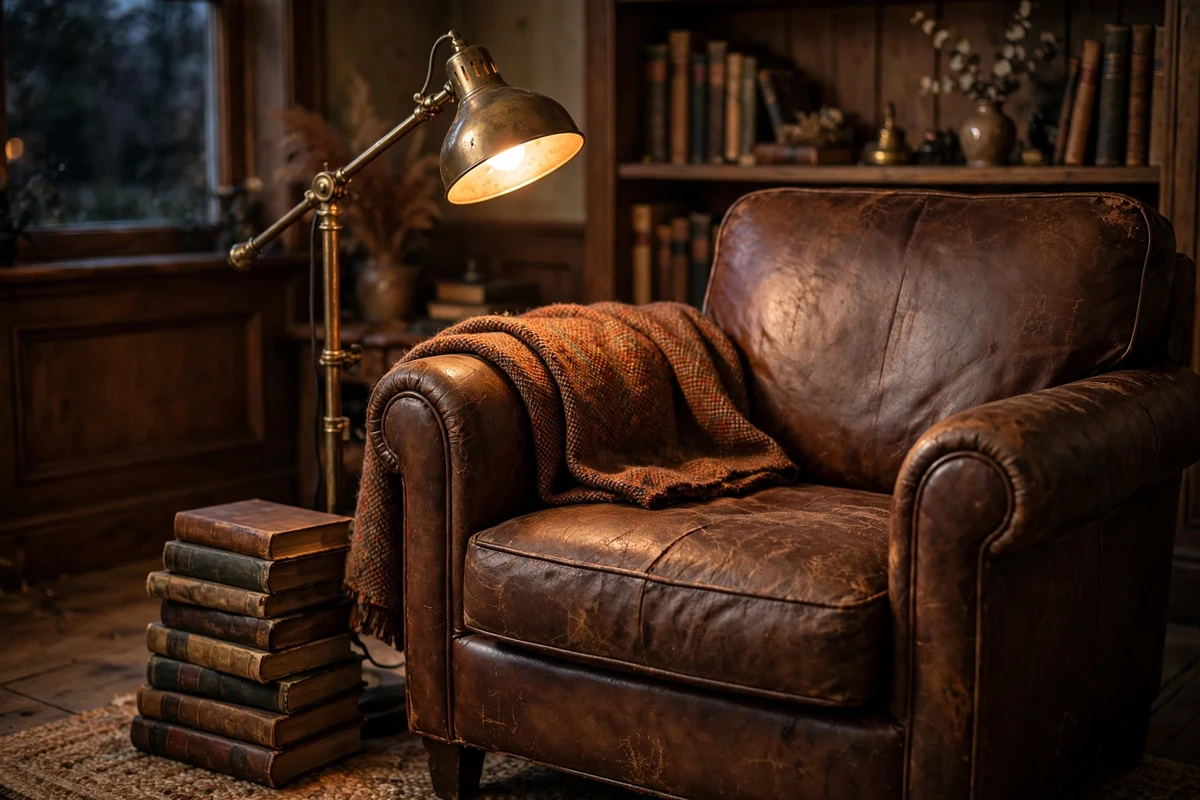
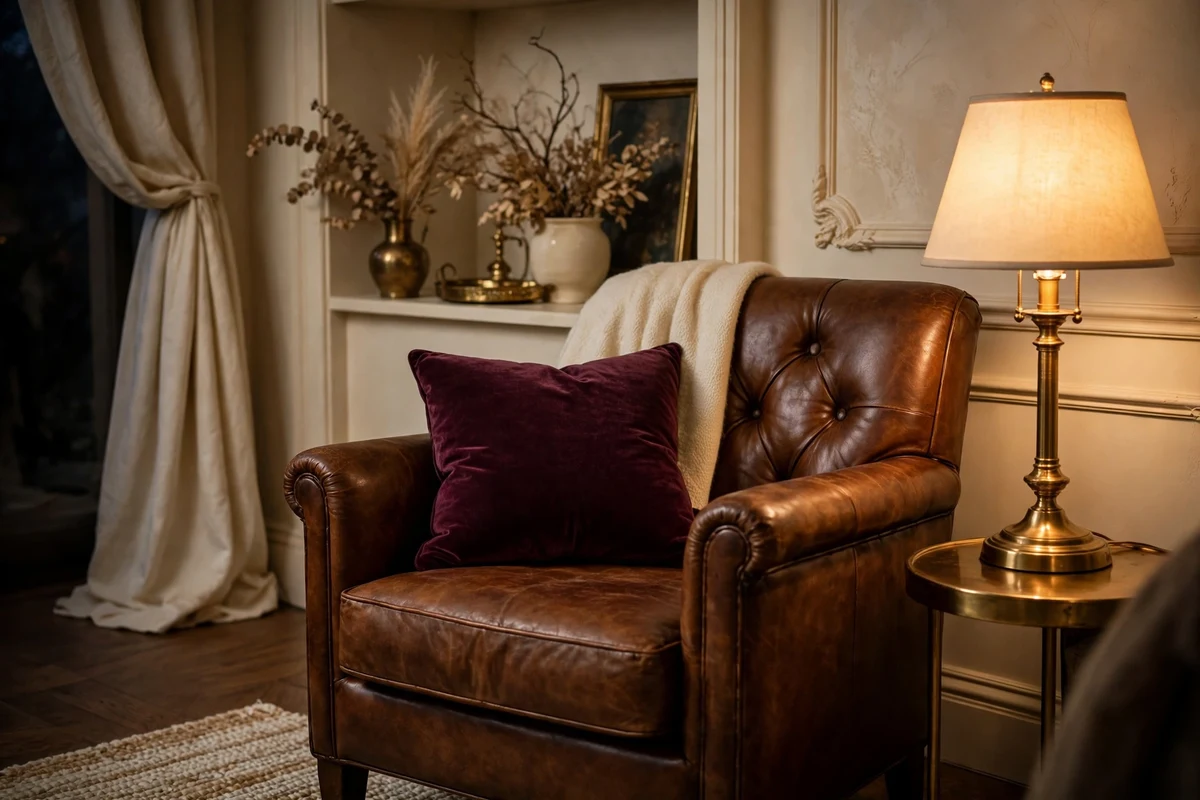
A worn leather armchair is the single most poetcore piece of furniture you can own, because it already looks like it has read a hundred books before you sat down. Mine came from a secondhand shop with a cracked seat and one arm shinier than the other, and I have never conditioned that shine away — it is the whole point. Beside it stands a brass reading lamp with an adjustable arm, angled low over the shoulder, so the light falls on the page and nowhere else. In the evening the brass glows warm, the leather smells faintly of old libraries, and the corner feels like a study in a house much grander than mine.
Choose the chair for comfort first and looks second: sit in it for ten minutes in the shop, with your feet flat and a book in your hands, before you decide. A chair that is beautiful but tips you forward will never become your reading chair, no matter how good it photographs. Position the lamp behind and slightly to one side of your reading shoulder, not in front of you, so the light pools on the page without glare. I drape a tweed throw over one arm — vintage blazer tones of brown, olive, and rust — and the whole arrangement reads as gathered over years, which, honestly, it was.
3. A Stack of Old Books as Your Side Table
A stack of old books makes the most poetcore side table there is, and it costs almost nothing if you shop library sales and charity shops. Mine is six hardbacks high beside my chair: a poetry anthology on top, a battered novel underneath, and a field guide at the bottom that nobody has opened in years but that makes the stack the perfect height for a teacup. Guests always pick up the top book, which is exactly what a side table should invite. It is furniture that starts conversations, and it tells anyone who sits down that reading is what this corner is for.
Build your stack from books you actually like, not matching spines bought for colour — a poetcore corner built on books nobody reads feels like a stage set, and you will feel it every time you sit down. Vary the sizes slightly, largest at the bottom, and put the book you are currently reading on top so the stack is always in use. I top mine with a small brass dish for a pencil and a bookmark, because a teacup left directly on a book is a heartbreak waiting to happen. If you want the same old-soul feeling on a larger scale, styling a whole shelf this way turns a plain bookcase into a moody, bookish corner without repainting a single wall.

4. Dark Academia Reading Nook Styling on the Bookshelf
Dark academia reading nook styling is poetcore’s moodier cousin, and the bookshelf is where it earns its keep: spines out, books stacked horizontally in places, a few objects tucked between the rows so the shelf looks curated rather than crammed. My shelf holds my poetry facing out, my novels in tall rows, and, between them, a small brass clock, a dried flower in a bud vase, and a framed photograph of my grandmother reading in her own chair. It is the shelf I look at most in the house, and it makes me want to read simply by being there.
Style your shelf in thirds rather than all at once: a row of upright books, then a horizontal stack with a small object on top, then another row, so the eye has somewhere to rest. Leave a little empty space — a shelf packed edge to edge reads as storage, while a shelf with breathing room reads as a collection. I keep my most-loved books at eye level and the heavy reference books low, because a shelf should be used, not just admired. The loveliest thing about a well-styled shelf is how it changes through the year: books move, new finds arrive, and the shelf slowly becomes a record of what you have actually read.

5. Vintage Blazer Tones in Tweed and Wool
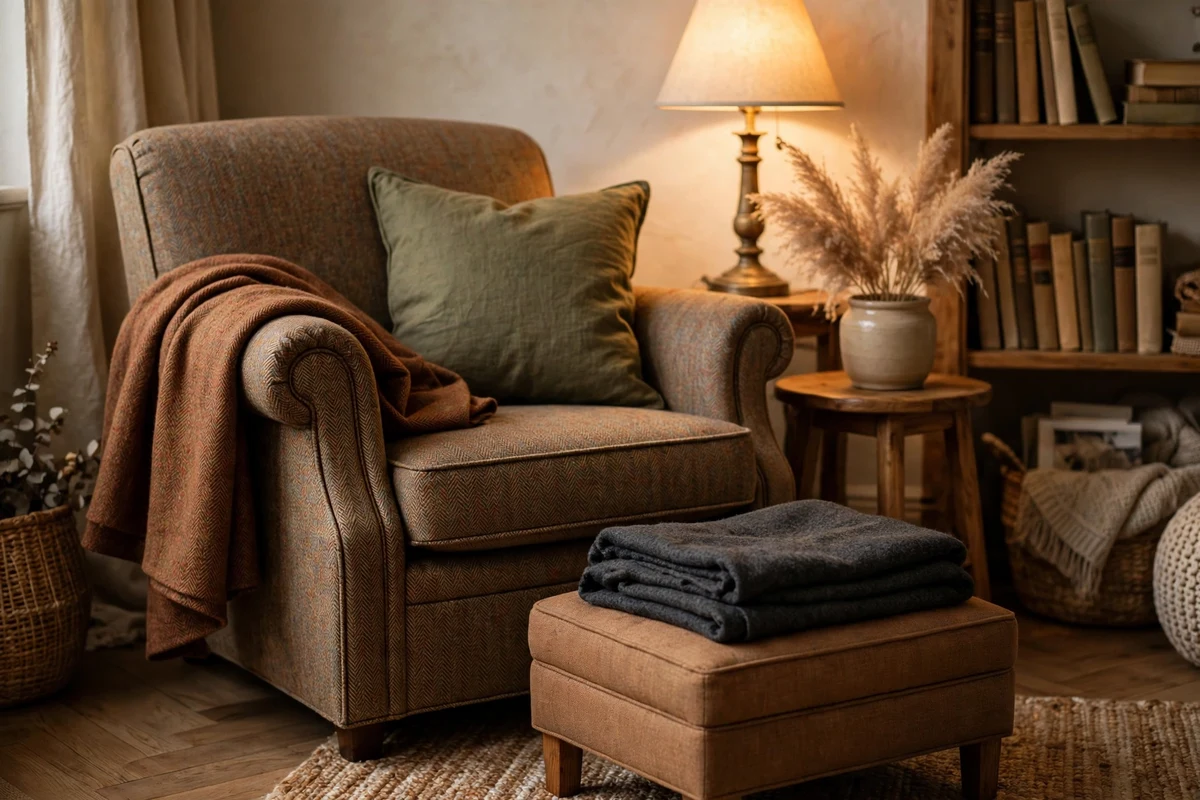
Vintage blazer tones — brown, olive, rust, charcoal, and a touch of burgundy — are the colour palette that makes a poetcore corner feel instantly old-souled. My nook wears them everywhere: a tweed throw in rust and brown over the chair arm, an olive cushion on the window seat, a charcoal wool blanket folded on the footstool. None of it matches exactly, and that is the point — these are colours that look like they were collected over decades, not bought as a set, and they warm up a pale room without a single dramatic gesture.
Start with one anchor piece, a throw or a cushion, in the tone you love most, and let the other pieces echo it rather than match it. I found my tweed throw in a charity shop for the price of a coffee, and it is the single most complimented thing in my house, which tells you everything about where the money in a poetcore corner should go: texture, not labels. Layer wool over cotton and tweed over linen, because a corner that mixes textures feels touched and lived-in, while a corner in one flat fabric feels like a showroom. If your room already leans pale, these deep tones do the work of a feature wall for a fraction of the effort.
6. A Candlelit Corner for Evening Poetry
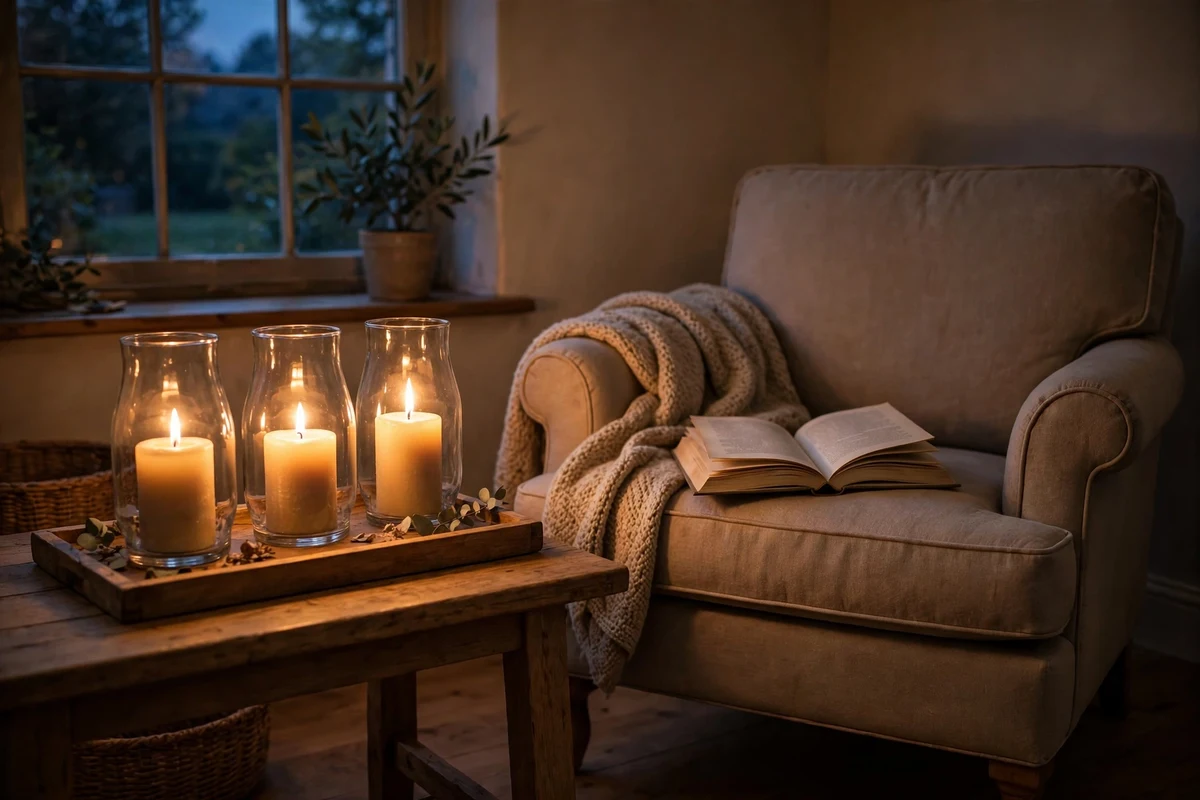
A candlelit corner is how a poetcore reading nook earns its evenings, because poetry read by candlelight is a different, slower pleasure than poetry read under a ceiling light. Mine is simple: three pillar candles in glass hurricanes on the tray beside my chair, lit at dusk, with the overhead light firmly off. The flame moves on the walls, the room smells faintly of beeswax, and a poem I have read ten times suddenly sounds new. It is the cheapest luxury I own, and the one I would keep if I had to give up everything else in the corner.
Use proper glass hurricanes on a tray, never an open candle on a book stack, and keep the flames well away from curtains and throws — a poetcore corner should smell of wax and wool, not of singed fabric. I light mine only while I am sitting there, and I blow them out the moment I leave the chair, which is a small ritual that marks the end of reading time beautifully. If you want the same low, warm light without a flame, the trick is layering lamps low instead of lighting the ceiling — cozy ambient lighting with a dimmed lamp and a candle or two gives you the same golden hour feeling every evening, whatever the weather outside.
7. A Framed Verse Wall Above the Chair
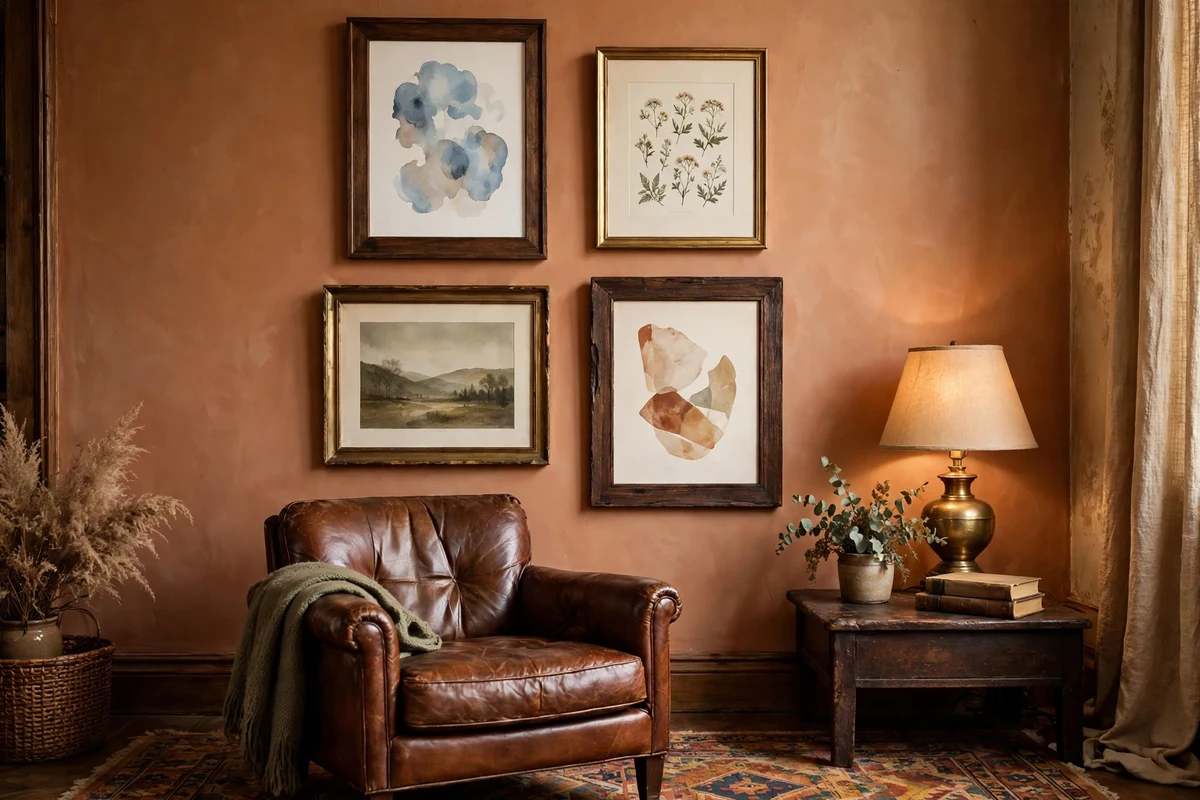
A framed verse wall turns a reading nook from a place where books live into a place where poetry lives, and it takes an afternoon at most. Mine holds four frames above the chair: a printed poem I love, a page from a damaged old anthology I could not bear to throw away, a handwritten line from a letter my friend once sent me, and a small botanical print that has nothing to do with poetry but everything to do with how I feel when I read. Together they make the wall feel personal in a way no shop-bought art ever has, and guests always stop to read them.
Frame what you actually love, not what looks literary — a grocery list in beautiful handwriting would be more poetcore than a famous poem you have never finished. Mix frame styles slightly: two dark wood, one brass, one plain black, so the wall looks gathered rather than ordered as a set. Hang the frames at eye level when seated, not standing, because this wall is for the reader in the chair, not for someone passing through. I change one frame with the seasons — a winter poem in December, a spring one in April — and the corner feels fresh without anything being redecorated.
8. A Tea Station Beside the Chair
A tea station beside the chair is the most practical poetcore idea in this article, because a reading nook without tea is a chair you keep leaving. Mine is a small wooden tray on the stack of books: a teapot that holds two cups, a favourite mug, a tiny jar of honey, and a linen napkin that has survived more spills than I care to admit. I make the tea before I sit down, and the ritual of pouring it is how I tell myself that the next hour belongs to reading and nothing else. It sounds small, and it is, but small rituals are what make a corner sacred.
Keep the station tiny — a tray, not a trolley — or it will swallow the nook and turn it into a kitchen. Choose a teapot with a lid that stays put and a mug with a handle big enough for cold hands, because a poetcore corner in winter is a cold-hands corner. I keep a small plate under the mug, because rings on old books are a tragedy, and I refill the honey jar on Sundays, which is a ritual inside a ritual that I unreasonably enjoy. If your nook is in the bedroom, this tray also doubles as a bedside station in the morning, which is the kind of double duty a small home quietly rewards.

9. Sheer Curtains and the Best Daytime Light
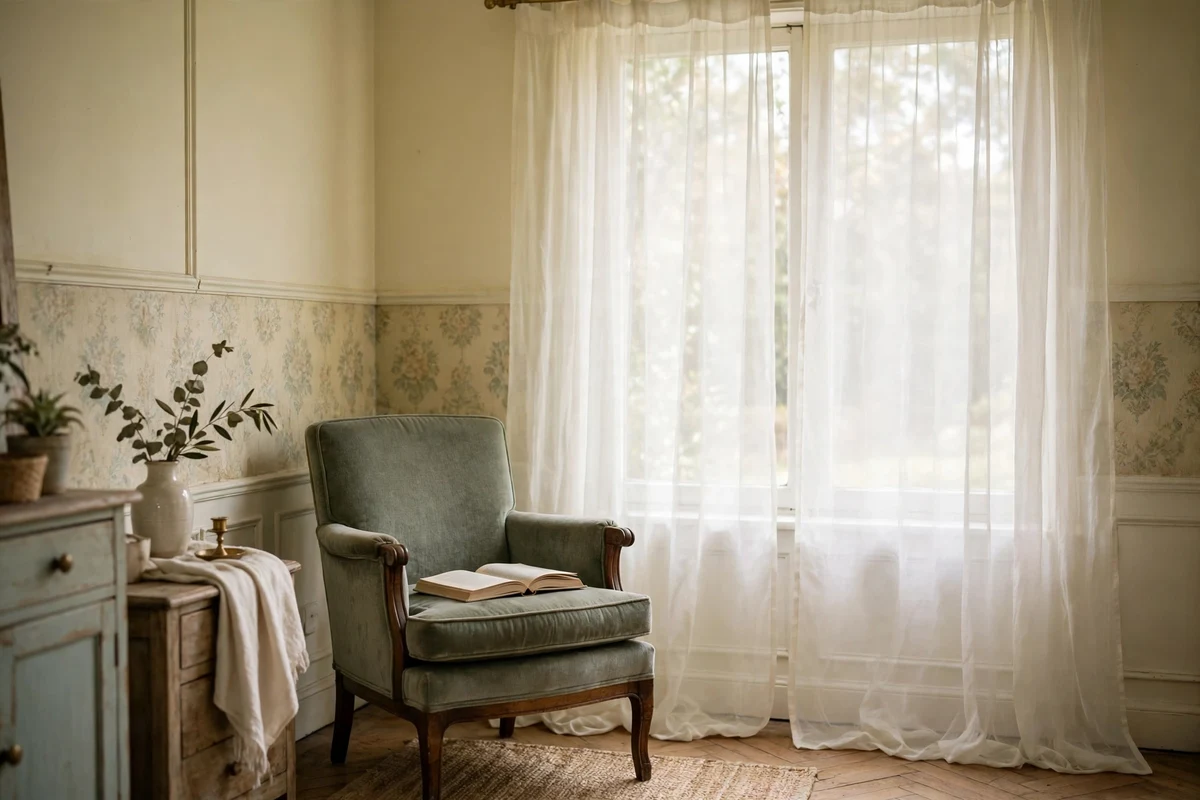
Sheer curtains are the poetcore reader’s secret weapon, because they turn harsh daylight into the soft, even light that old pages deserve. My reading chair sits beside a window dressed in plain ivory voile, and on a bright morning the whole corner glows without a single hard shadow. I can read the smallest print in my oldest paperback without squinting, and the room feels like the inside of a watercolour. It is also, if I am honest, the prettiest the corner ever looks, and it cost less than one hardback book.
Hang the sheers so they fall to the sill or just below it, not pooled on the floor, and keep them plain — no pattern competes with the books for attention. I wash mine twice a year and they come back soft and bright every time, which is more than I can say for the heavy curtains I used to have. The trick is in the layering: sheers for the day, and a heavier curtain or blind behind them for the evening, so the window works at every hour. If your nook faces a busy street, the sheers give you privacy without darkness, which means you can read in daylight without feeling watched — a small freedom that matters more than it sounds.
10. Cozy Wool Textures Layered Everywhere
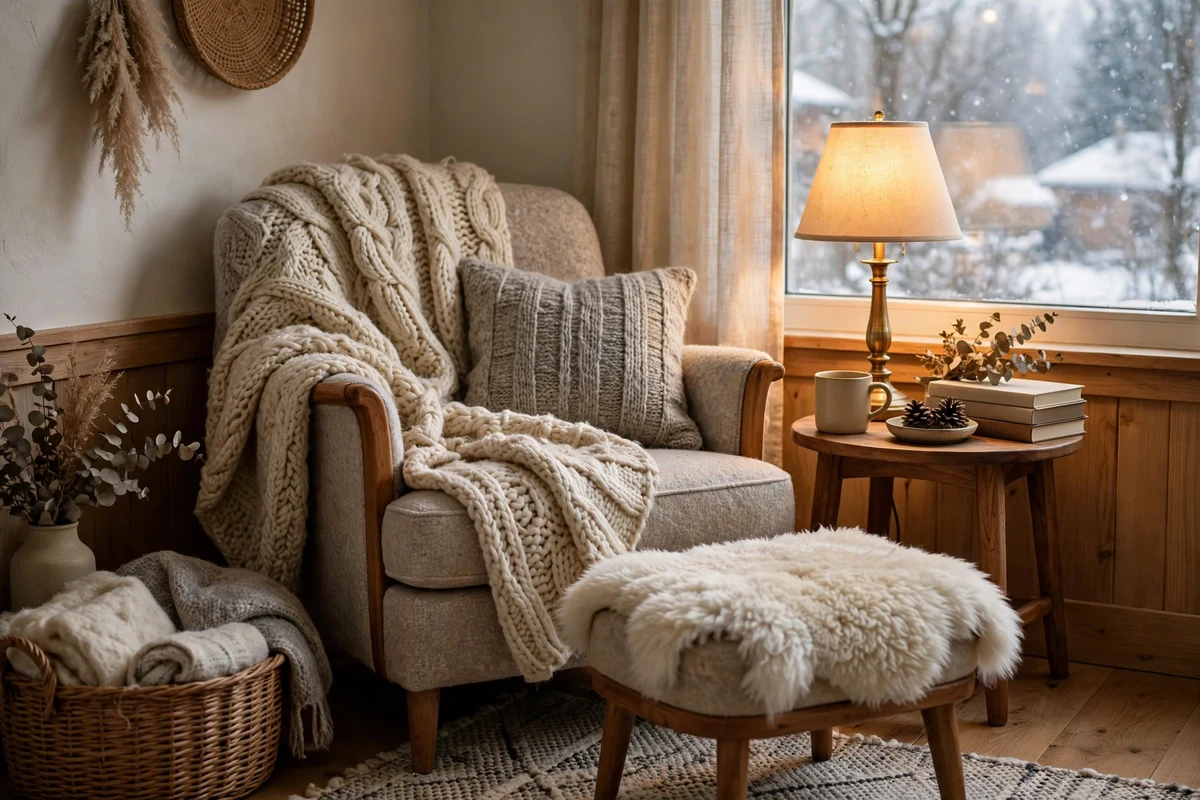
Cozy wool textures are what make a poetcore corner feel like an embrace rather than a display, and I layer them without apology: a chunky knit throw over the chair, a sheepskin on the footstool, a wool cushion on the window seat, and a knitted hot-water-bottle cover in winter that I will not pretend is ironic. The first time I sat down in the finished corner on a cold evening, wrapped in all of it at once, I understood why people write poems about winter. Texture is not decoration here — it is the whole point, because a reader sits still for a long time, and stillness gets cold.
Start with the throw, because it is the layer you will actually use, and choose wool or a wool blend over acrylic if you can — it breathes, it drapes, and it smells faintly of lanolin in a way that is oddly comforting. I fold mine rather than draping it artfully, because a throw that is folded is a throw that gets used, while a throw arranged like a waterfall is a throw nobody dares touch. Add a cushion in a different wool texture — knit against woven, chunky against fine — so the layers feel collected rather than matched. My sheepskin came from a car-boot sale and cost less than lunch, and it is the first thing visitors touch when they sit down, which tells you that texture is the most welcoming thing a room can offer.
11. An Antique Desk Nook for Letters and Journals
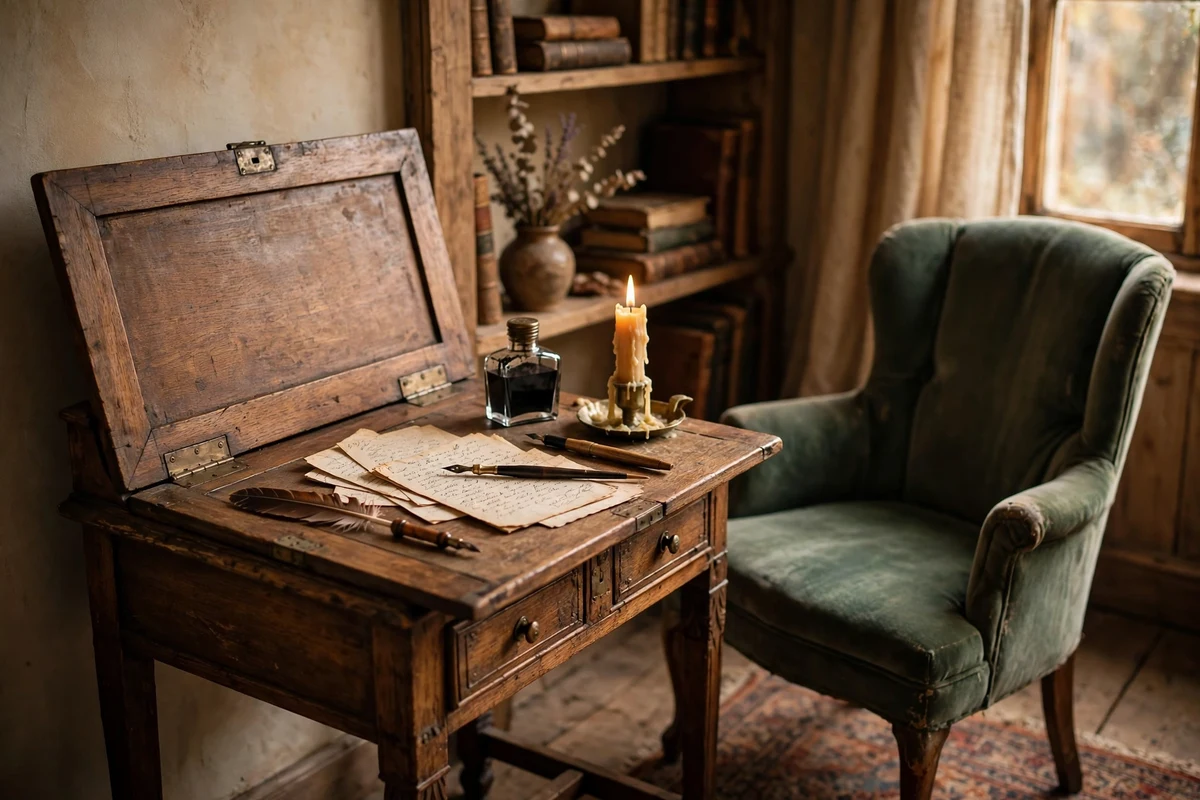
An antique desk nook turns a reading corner into a writing corner, and for a poetcore home that is the natural second half of the story. Mine is a small writing desk tucked into the corner beside the chair: a sloped lid that folds down, a drawer full of pens and paper, a stack of letters I have actually written and received, and an ink bottle I use rarely but love having. On Sunday mornings I sit there with coffee and write one letter, by hand, to someone I have not seen in a while, and it is the slowest, most satisfying hour of my week. Reading and writing belong together, and a corner that holds both feels complete.
Choose a desk that fits the corner, not the fantasy — a small bureau or a wall-mounted fold-down desk beats a grand partners’ desk that eats the whole room. I keep only what I use on the surface: paper, two pens, a blotter, and a candle, because a desk covered in objects is a desk that never gets written at. The drawer holds the rest, and clearing it out once a season is its own quiet pleasure. If you journal rather than write letters, the same desk works — a journal left open on the blotter is an invitation to write, and a closed journal in a drawer is a chore, so leave it where you will see it.
12. Dried Flowers and Botanicals on the Shelf
Dried flowers and botanicals are the poetcore shelf’s quiet punctuation: a stem of lavender in a bud vase, a dried rose laid on a stack of books, a bundle of eucalyptus tied with twine and hung from a shelf bracket. Mine came from my own garden and from walks, pressed between the pages of heavy books I was not reading at the time, and they smell faintly of summer even in February. They are also gloriously low-maintenance — no watering, no wilting, no guilt — which suits a corner meant for reading, not for plant care.
Dry your own if you can, because shop-bought dried flowers often arrive dyed in colours no flower ever was, and a poetcore corner is honest about its materials. Hang small bundles upside down in a dry, dark place for two weeks, and they will hold their shape for a year. I keep one stem in a tiny vase on the shelf and one bundle hanging by the window, and I replace them when they fade, which is a ritual that marks the seasons without any redecorating. The loveliest thing about dried botanicals is how they soften a shelf of hard spines: books are rectangles, and a stem of lavender is a curve, and a room needs both.

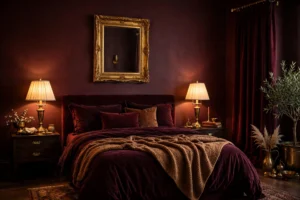
13. A Moody Burgundy Accent for Depth
A moody burgundy accent is what stops a poetcore corner from drifting into beige, and it does it with a single cushion, a throw, or a velvet-bound book left face-up on the chair. My corner wears burgundy in exactly one place — a deep plum cushion on the leather chair — and it is the first colour anyone notices, because everything else is brown, cream, and brass. It gives the corner depth, like the bass note in a song, and it makes the whole arrangement feel deliberate rather than accidental. Poetcore is not all pale linen and faded paper; it has a dark, romantic side too.
Use the accent sparingly, or it stops being an accent: one cushion, or one throw, or one framed print in burgundy, never all three at once. I chose plum over bright red because plum sits comfortably beside leather and brass, while scarlet would shout over them. If you want to take the moody palette further than one cushion, styling the whole room around it — deep walls, velvet, brass — turns a corner into a full moody burgundy room, but for a reading nook, restraint is the whole trick. The cushion is also, practically, the one I reach for on the coldest nights, because velvet is warm in a way linen never is.
14. A Small-Space Nook in an Alcove or Closet
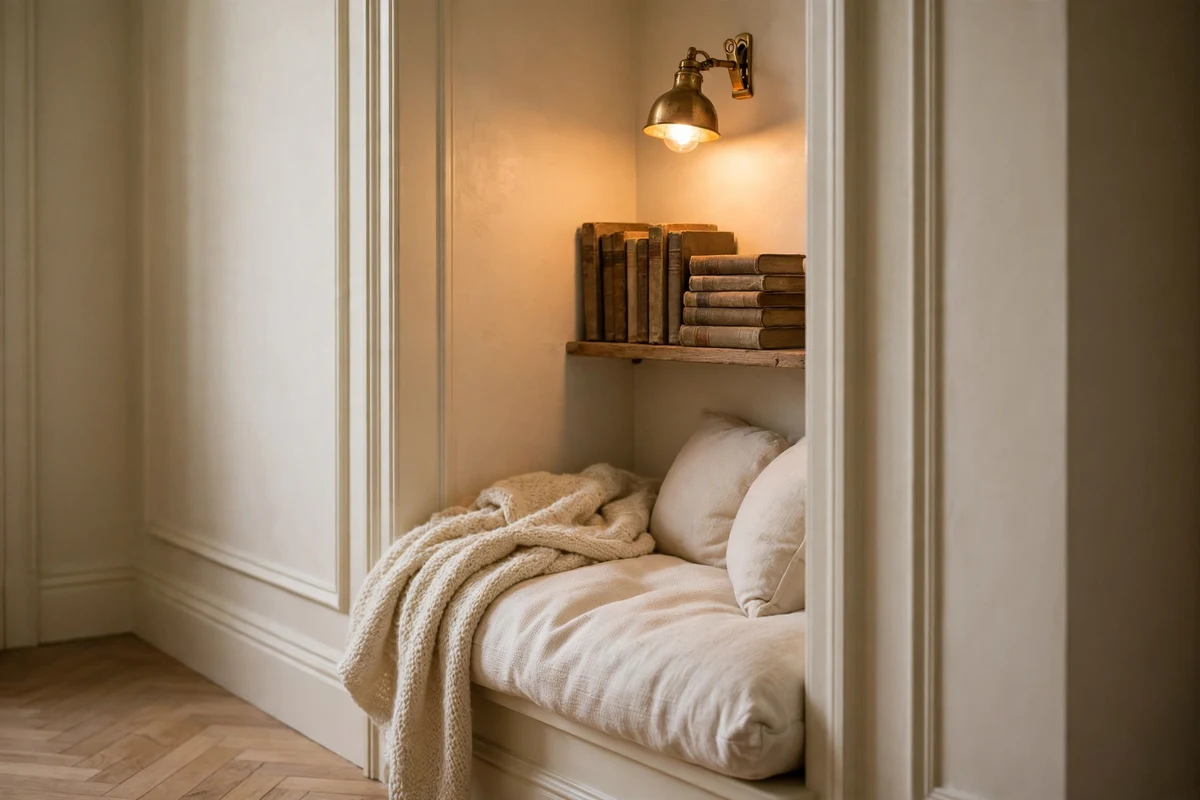
A small-space poetcore nook proves that you do not need a spare room, or even a spare corner — an alcove, a hallway recess, or a closet with the doors removed will do beautifully. Mine, in my first flat, was a closet: the doors came off, a cushion went on the floor of it, a shelf went up at eye level, and a brass clip light made it glow. I read some of my favourite books in that closet, and I have never loved a reading spot more, because a small space holds you the way a big room cannot. Poetcore is not about square metres; it is about intention.
Measure first, then furnish: a cushion that fits the alcove exactly, a shelf at the height your hand reaches without standing, and a light that clips or sticks rather than needing a table. I used a battery puck light in the closet days, and it worked perfectly, though a wired brass sconce is lovelier if you can manage it. Keep the palette pale in a tiny nook, or it will feel like a cupboard again — cream cushions, pale wood, brass, and one dark accent at most. The rule I learned in that closet still governs my much bigger corner today: every object in a nook must earn its place by being used, loved, or both, and anything else belongs somewhere else.
15. A Winter Poetcore Nook With Fairy Lights and Velvet
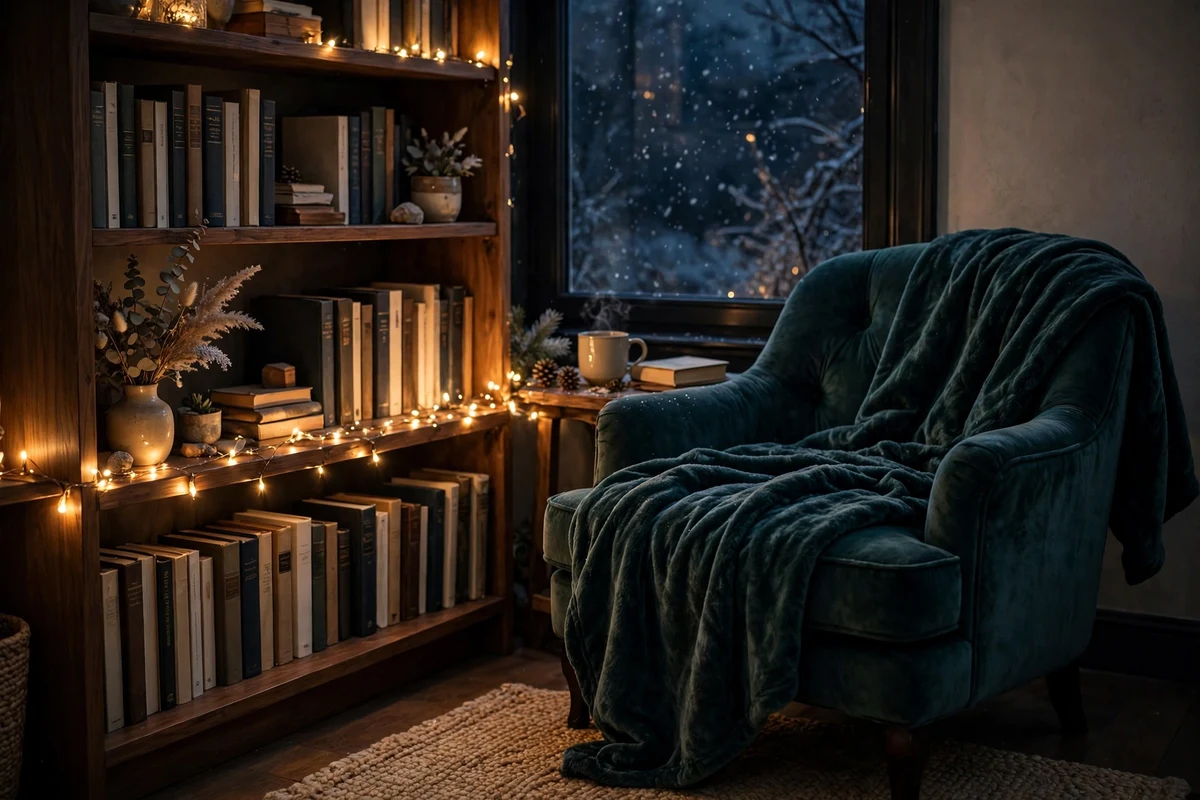
A winter poetcore nook is the corner at its most romantic: fairy lights strung along the shelf, a velvet throw instead of a wool one, a stack of books tied with ribbon for the season, and the window dark by four in the afternoon so the lights do all the work. Mine in December is my favourite version of the corner all year — the fairy lights make the brass lamp glow warmer, the velvet catches the light in a way wool does not, and the whole nook feels like the inside of a snow globe. I read more in December than in any other month, and I am quite sure the lights are why.
String the lights along a shelf or a window frame, never across the ceiling, so the glow stays low and intimate like candlelight. Choose warm white, never cool white or coloured, or the corner will feel like a shop window instead of a poem. I swap the wool throw for velvet in December and back again in January, which is a two-minute change that makes the corner feel seasonal without any redecorating. Keep the rest of the corner exactly as it is — the books, the chair, the tea tray — because a winter nook should feel like your nook, dressed for the season, not like a different room. When the lights go on at dusk, the whole house seems to exhale, and that is the feeling these fifteen ideas have been chasing all along.
Our Cozy Conclusion
A poetcore reading nook asks very little of you: a chair you love, light you can read by, books you have actually read, and one warm layer to sit under. In return it gives you the loveliest hour of the day — a corner that smells of old paper and wool, glows with brass and candlelight, and feels gathered rather than decorated. Start with one idea, the chair or the window seat or the stack of books, and let the rest follow year by year, as mine did. Tonight, make the tea, light the lamp, and sit down with a poem you have been meaning to read. The corner will do the rest.
You May Also Like
Moody Burgundy & Plum Noir Room Ideas — deep, romantic colour for bookish rooms – Cozy Winter Bedroom Ideas & Bedding Layering — layered warmth for cold nights – Cozy Ambient Lighting Ideas — low, warm light without the big light
FAQs
What is poetcore decor?
Poetcore decor is bookish, vintage home styling inspired by poets and old libraries: worn leather, brass lamps, stacks of old books, tweed and wool textures, and candlelight. It is a reading-corner aesthetic, not a fashion trend, and it works in any room with a chair and good light.
How do you make a poetcore reading nook on a budget?
Start secondhand: a thrifted armchair, library-sale books, a charity-shop throw, and a brass lamp from a car-boot sale. The whole corner can come together for very little, because poetcore values texture and history over newness, and old things are cheaper than new ones.
What colours work best for a poetcore reading nook?
Warm, vintage tones: brown, olive, rust, charcoal, cream, and one deep accent like burgundy or plum. These colours look collected over time rather than bought as a set, and they make pale rooms feel warmer without repainting anything.
Can you make a poetcore nook in a small bedroom?
Yes — a window seat, a hallway alcove, or even a closet with the doors removed makes a perfect poetcore nook. The key is a comfortable seat, good light, and books within reach; square metres matter far less than intention.
What lighting is best for a poetcore reading nook?
Low, warm light: a brass reading lamp angled over the shoulder, candles in glass hurricanes, and fairy lights in winter. Avoid overhead ceiling lights, which flatten the room; layered low light is what makes the corner glow.
How is poetcore different from dark academia decor?
Poetcore is softer and more romantic than dark academia: lighter woods, cream linen, dried flowers, and cozy wool alongside the leather and brass. Dark academia leans moodier and more formal, while poetcore keeps the bookish soul but adds warmth and comfort.
For more poetry inspiration, explore Poetry Foundation.