
15 Cozy Winter Bedroom Ideas & Bedding Layering Tricks for Cold Nights
Learning how to layer a bed for winter is simple: start with warm flannel or linen sheets, add a lofty duvet, then top with a velvet quilt and a chunky knit throw. Finish with faux-fur pillows and warm sconce lighting instead of the overhead light — and your bedroom becomes the coziest room in the house all winter long.
Introduction
The first really cold night of the year always finds me the same way: shivering under a single sad duvet, wondering why my bedroom feels like a refrigerator. A few winters ago I finally learned the secret that hotels and Scandinavian homes have always known — cozy winter bedroom ideas are not about one thick blanket, they are about layers. Thin, textural, beautiful layers that trap warmth and look like something from a catalog. I have spent three winters perfecting my bedding stack, and my bedroom is now the room I never want to leave from November to March. Here are my fifteen favorite ideas, from the exact order to layer a bed to the lighting trick that changes everything.
1. Start with a Linen Duvet Cover as Your Base
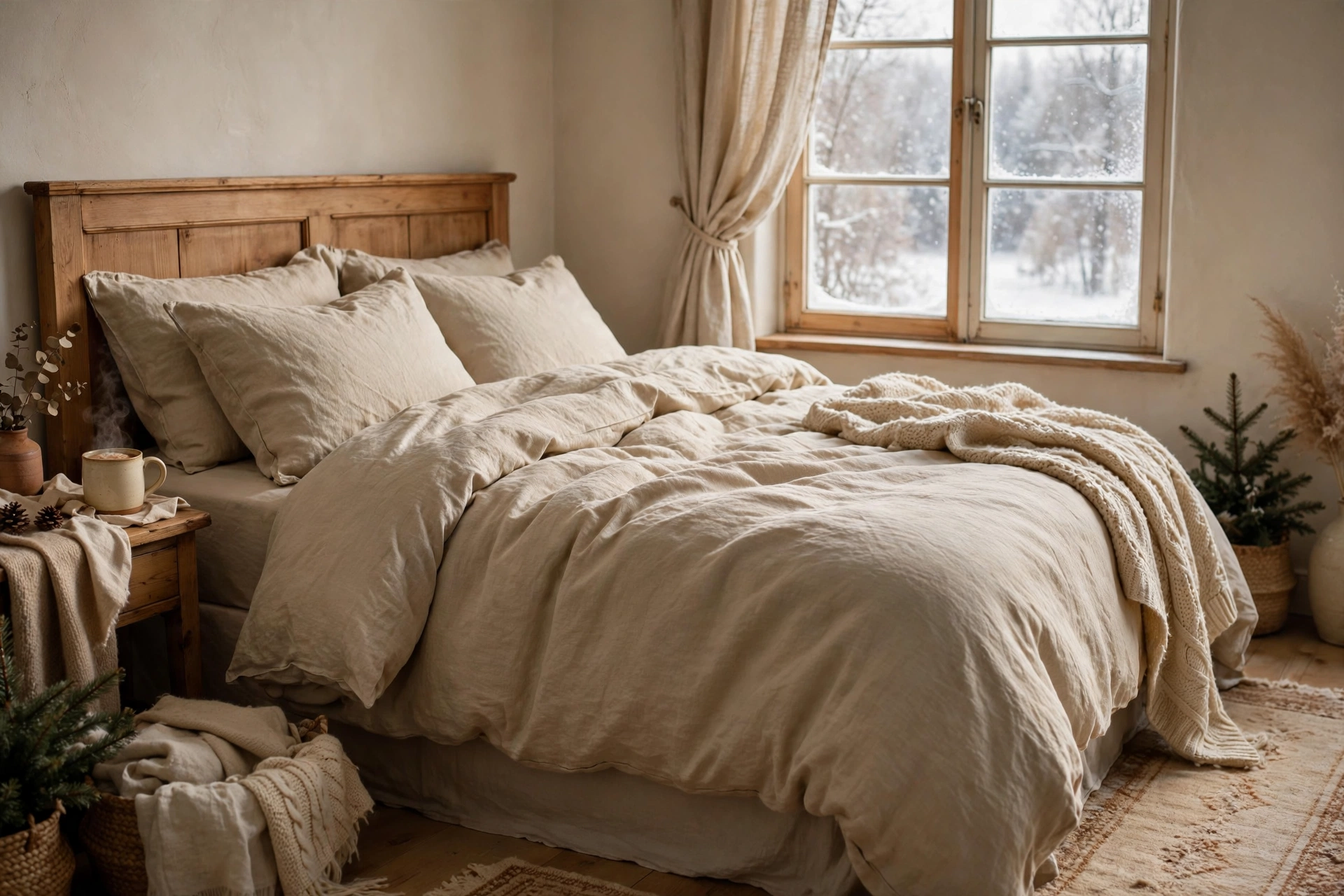
A linen duvet cover is the ideal winter base layer because linen breathes — it keeps you warm without the clammy overheating that cheap microfiber causes. It also wrinkles in that perfectly undone way that makes a bed look inviting rather than fussy. Choose a warm white, oatmeal, or soft flax tone and you have a foundation that works with every winter palette.
I switched to linen three years ago and it was the single biggest upgrade to my sleep. Wash it, put it straight back on slightly damp, and let it air-dry on the bed for that relaxed crumpled look. It gets softer with every wash, and by midwinter it feels like it was made for you. One good linen duvet cover outlasts three cheap ones.
2. Add a Velvet Quilt for Mid-Layer Warmth
A velvet quilt is the layer that makes guests gasp. It adds real warmth — velvet's dense pile traps heat beautifully — and it brings a richness that flat cotton quilts cannot touch. Drape it across the middle third of the bed, slightly off-center, so the linen base still shows at the top. Deep olive, rust, or forest green are perfect winter velvets.
Mine is a forest-green velvet quilt I found on sale in October, and it transformed my bed from "fine" to "five-star hotel" in one move. Velvet shows every fold, so embrace the rumple — smooth it once, then let it be. If you sleep hot, fold the velvet to just the foot of the bed so you get the look without overheating.

3. Finish with a Chunky Knit Blanket
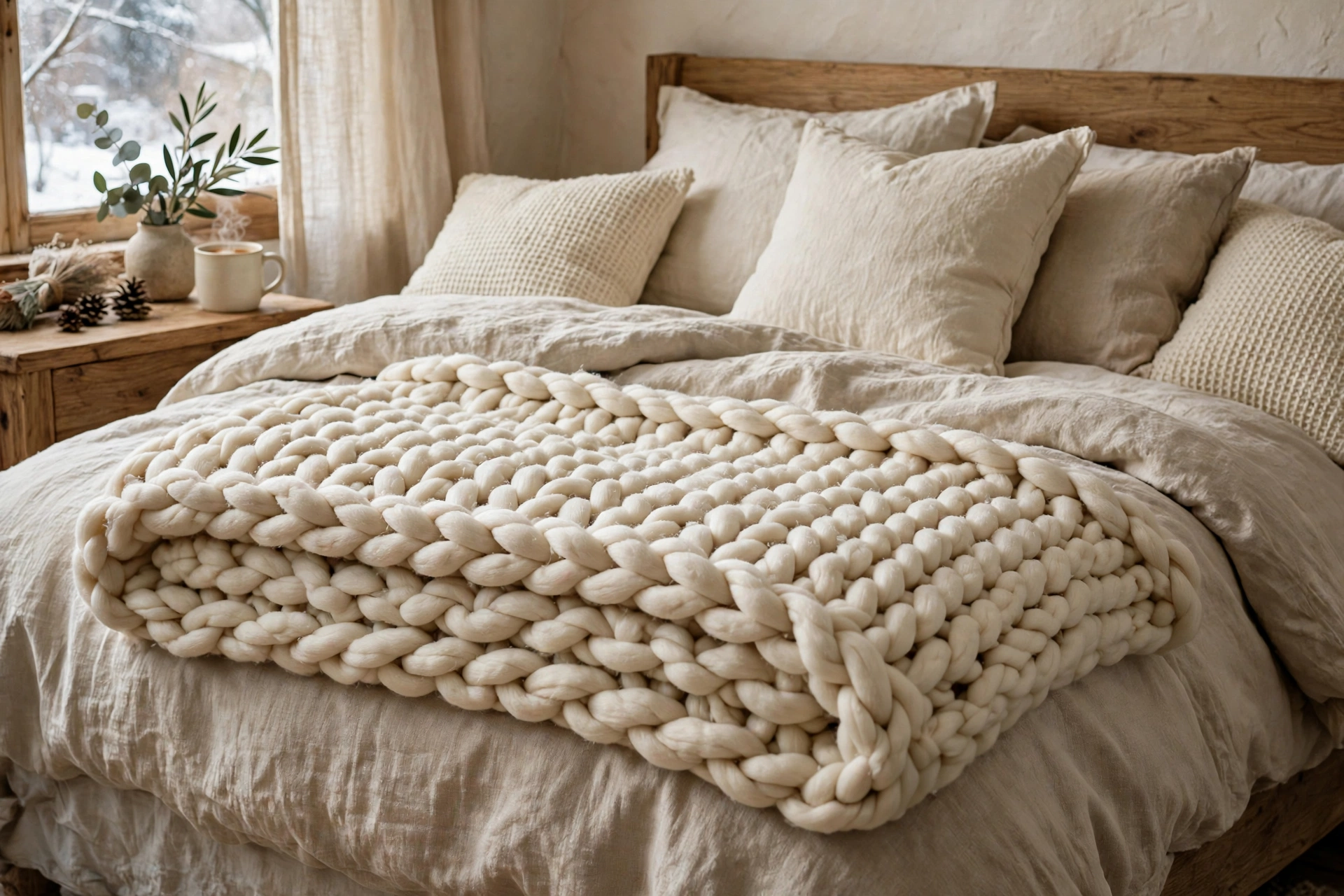
No cozy winter bed is complete without chunky knit blanket bed styling. The oversized stitches add the handmade, hygge texture that photographs beautifully and feels incredible to pull up on a freezing night. Fold it in thirds across the foot of the bed, or drape it diagonally for a more casual stylist look.
I knit mine — badly, over one very long January — but you can buy beautiful ones everywhere now. Cream, oatmeal, or soft gray marled knits go with everything. The trick is scale: the chunkier the knit, the fewer other patterns you need nearby. Let it be the star texture and keep everything else quiet.
4. Pile on Faux Fur Throw Pillows
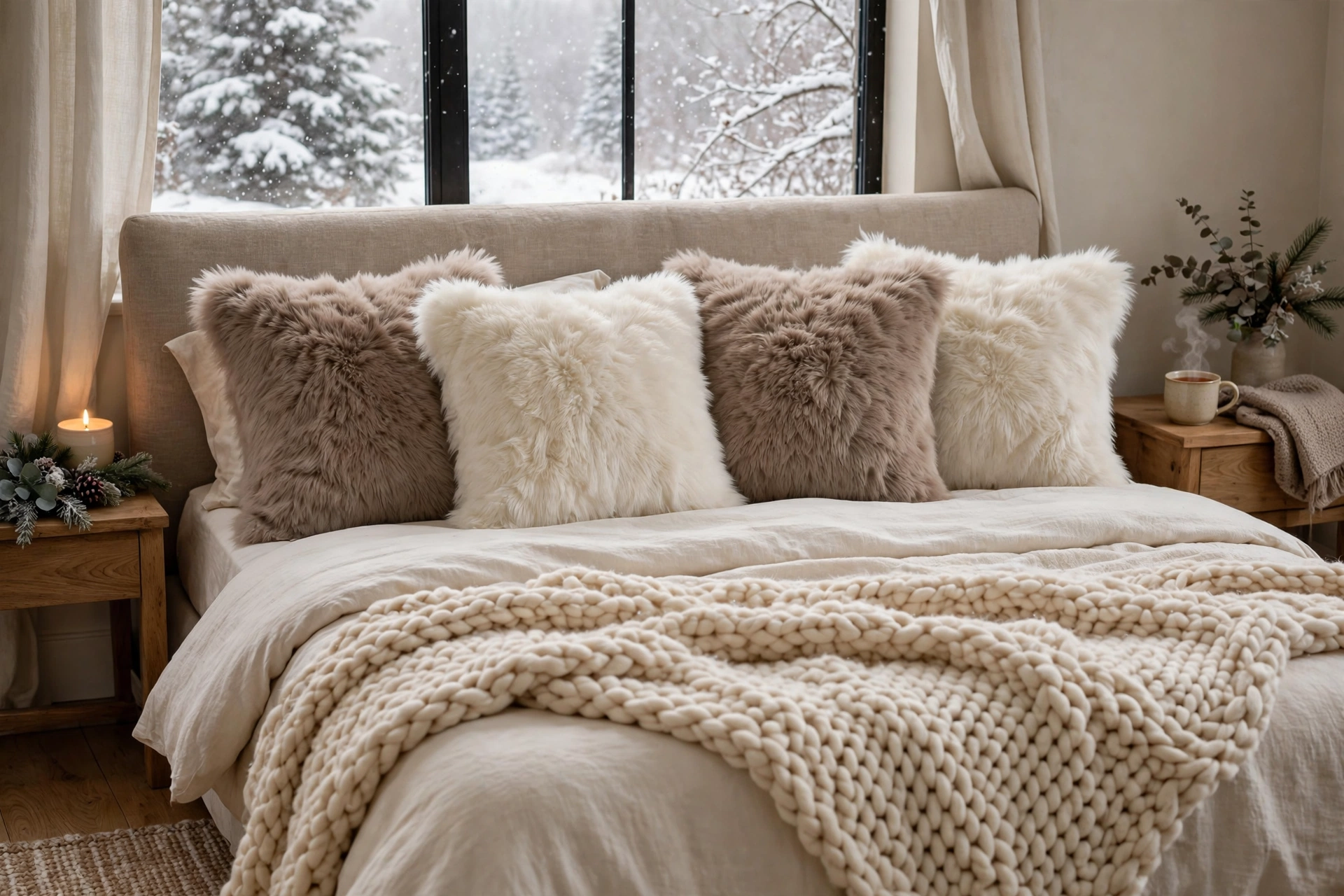
Faux fur throw pillows are pure winter theater — they look decadent, feel amazing against your cheek, and instantly signal "cold weather luxury." Mix two sizes: larger 20-inch squares in back, smaller lumbars in front. Cream, ivory, and warm taupe furs layer best; one caramel or cognac fur adds depth without going wild.
I keep four on my bed all winter and they are the first thing I touch when I get in — that softness tells your body it is time to relax. Shake them outside monthly to keep the pile fluffy, and never put them in a hot dryer. Pro tip: faux fur reads most expensive when everything else on the bed is matte.
5. Try Olive Green and Cream Winter Bedding
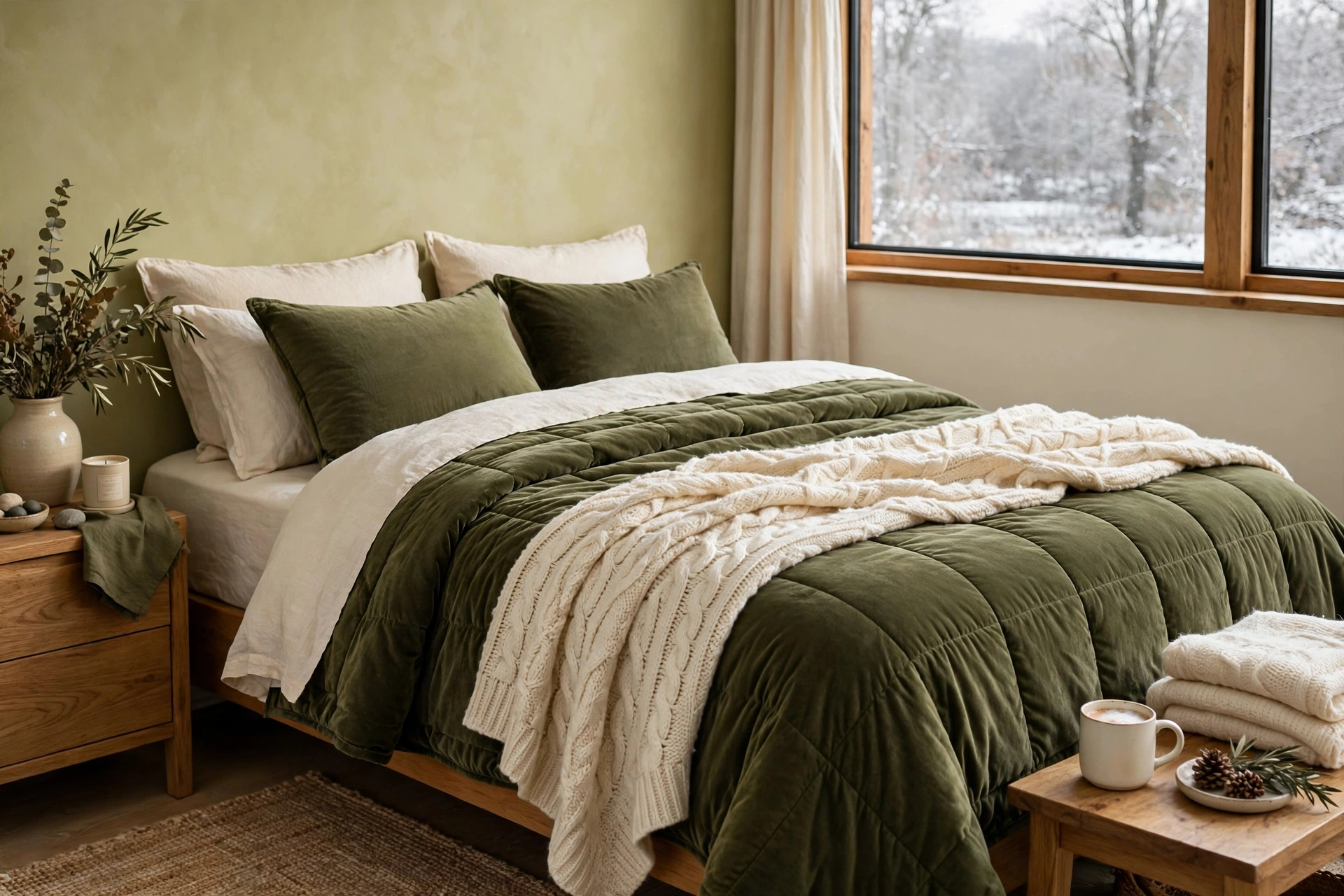
Olive green and cream winter bedding is the color combination I recommend to everyone who finds all-white bedding boring but all-dark bedding too heavy. Olive brings the winter-forest feeling; cream keeps it light and fresh. The ratio that works: roughly two-thirds cream and ivory, one-third olive in the quilt, cushions, or throw.
My current winter bed is exactly this — cream linen base, olive velvet quilt, cream knit throw — and it feels both seasonal and timeless. It also transitions beautifully into spring: just swap the olive quilt for something lighter and you are done. Add one small rust or terracotta cushion and the palette sings.
6. Go Full Fluffy Neutral Winter Bedding Aesthetic
The fluffy neutral winter bedding aesthetic — all cream, ivory, oatmeal, and warm white — is the most saved winter bedroom look on Pinterest for a reason. It glows in low winter light, makes small bedrooms feel bigger, and looks impossibly soft. The secret is mixing five or six close-but-not-identical neutrals so it reads as layered, not flat.
My formula: ivory sheets, oatmeal linen duvet, cream knit throw, two ivory sleeping pillows, two oatmeal euro shams, one small camel lumbar. Every piece a slightly different white. It sounds fussy but it takes two minutes to arrange, and the result looks like a cloud you get to sleep in. Warm-toned neutrals (never blue-white) are what keep it cozy instead of clinical.
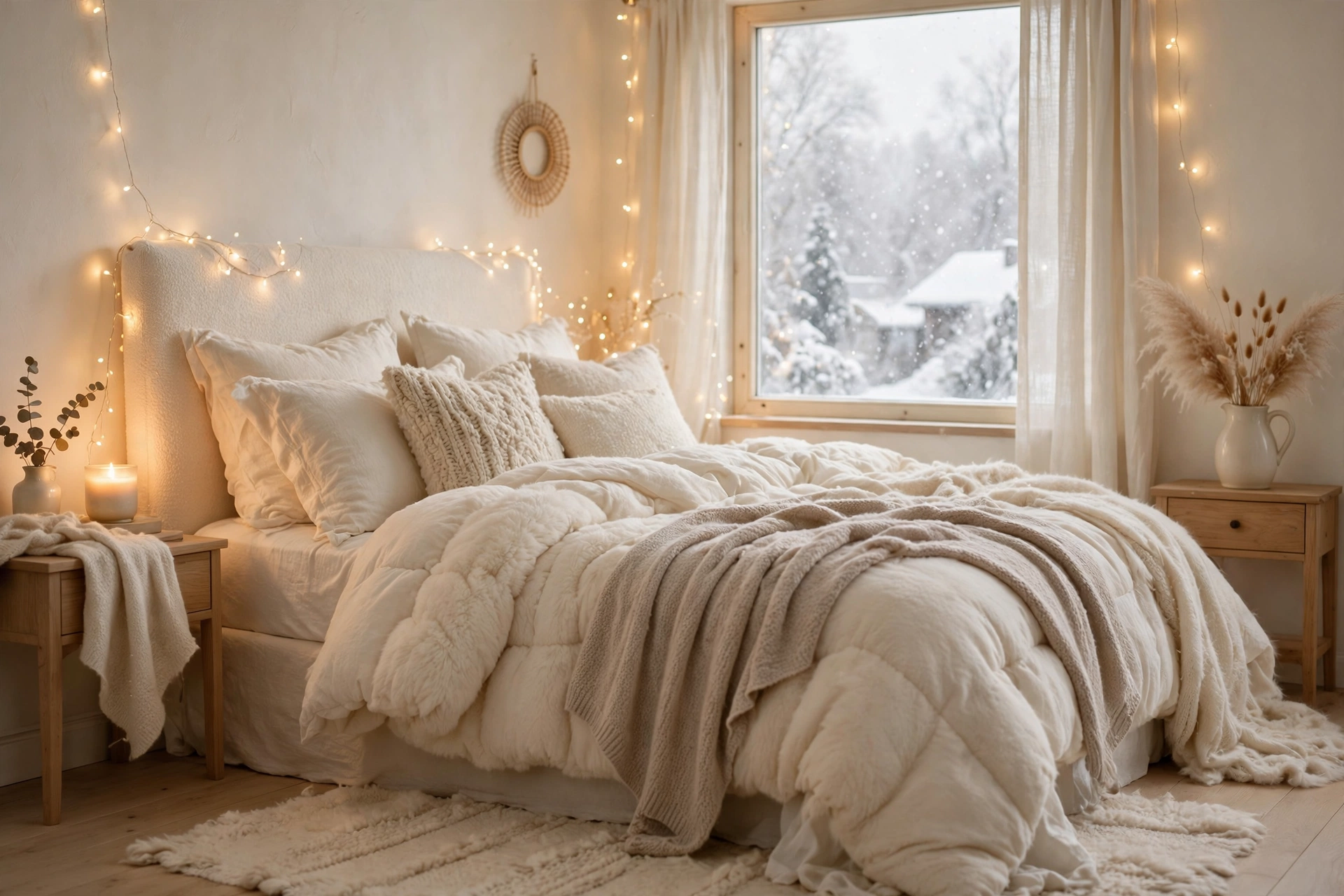
7. Upgrade to a Textured Headboard
A textured headboard — boucle, channel-tufted velvet, or woven rattan — changes the whole architecture of winter coziness. It gives your eyes something soft to land on, insulates the wall behind your pillows (real warmth benefit in old houses), and makes propped-up reading in bed infinitely more comfortable.
I reupholstered my plain wooden headboard with boucle fabric and a staple gun one Saturday — total cost under fifty dollars, total transformation. If DIY is not your thing, slipcovered headboards now come in every size and look custom. In winter, an upholstered headboard in cream or camel is worth more than any throw pillow.
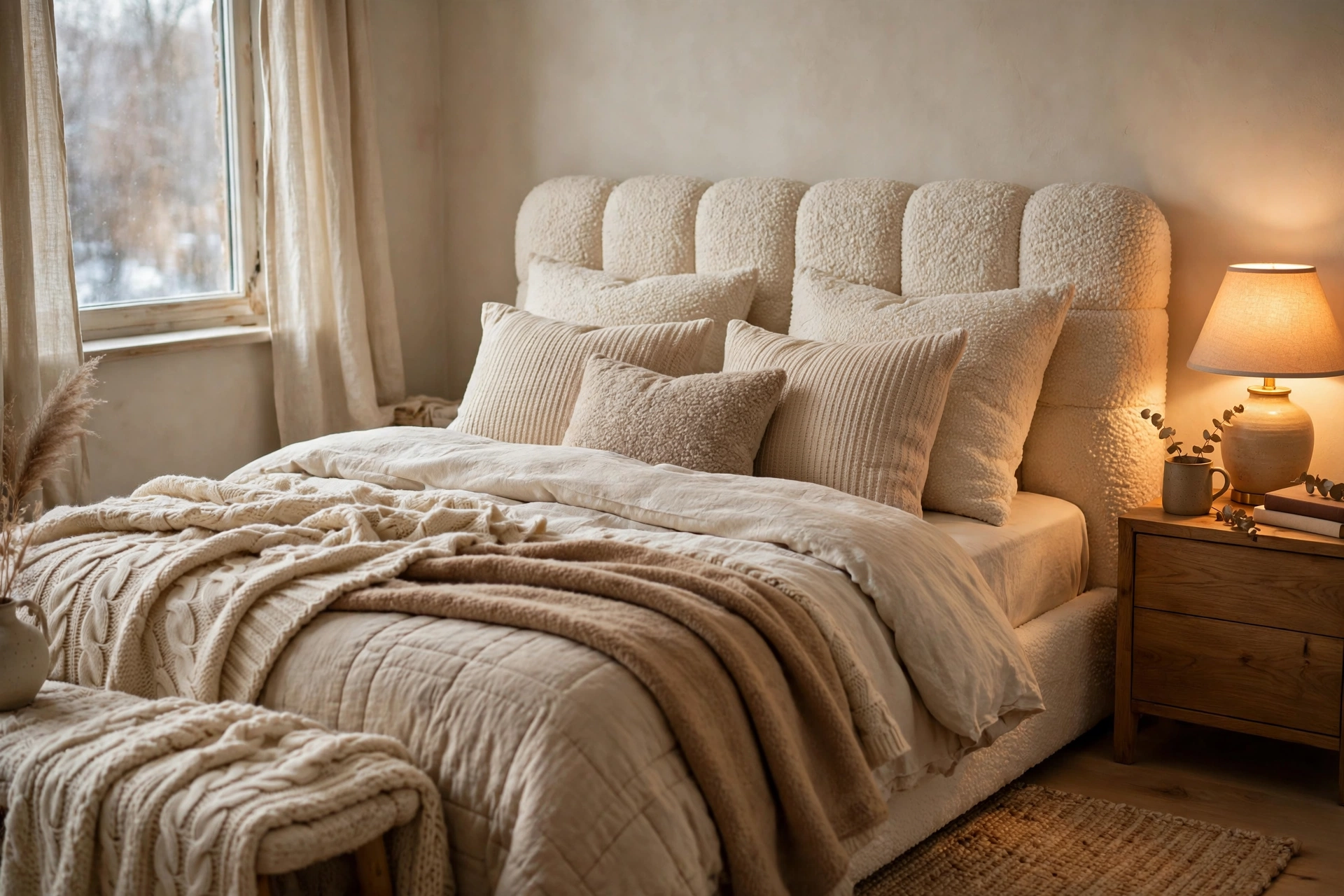
8. Use Warm Sconce Lighting, Never the Big Light
Here is the cozy small bedroom lighting trick that matters most: no big light. Overhead ceiling lights flatten everything and kill coziness instantly. Instead, use warm sconce lighting — wall-mounted, plug-in or battery-operated — on either side of the bed, plus one small lamp. The pools of warm light make the bed the glowing center of the room.
I put battery-operated brass sconces on my bedroom wall last November and the difference was honestly shocking — the same room, the same bed, but suddenly it felt like a cabin. Choose 2700K warm bulbs, dimmable if you can. In deep winter when it is dark by 4:30, this lighting is the difference between a bedroom you endure and one you retreat to.

9. Layer a Plush Area Rug Under the Bed
Cold floors ruin winter mornings, and a plush area rug under the bed fixes it completely. The rug should extend at least two feet beyond the bed on the sides and foot so your feet never touch cold floor. High-pile, shaggy, or thick wool rugs give the most warmth; layer a smaller vintage rug on top for the designer look.
I added a thick cream rug under my bed two winters ago and my morning routine changed — getting up stopped feeling like a punishment. If budget is tight, even a large faux-fur rug just on your side of the bed works. Vacuum weekly in winter; heavy rugs trap the dust that dry heated air stirs up.
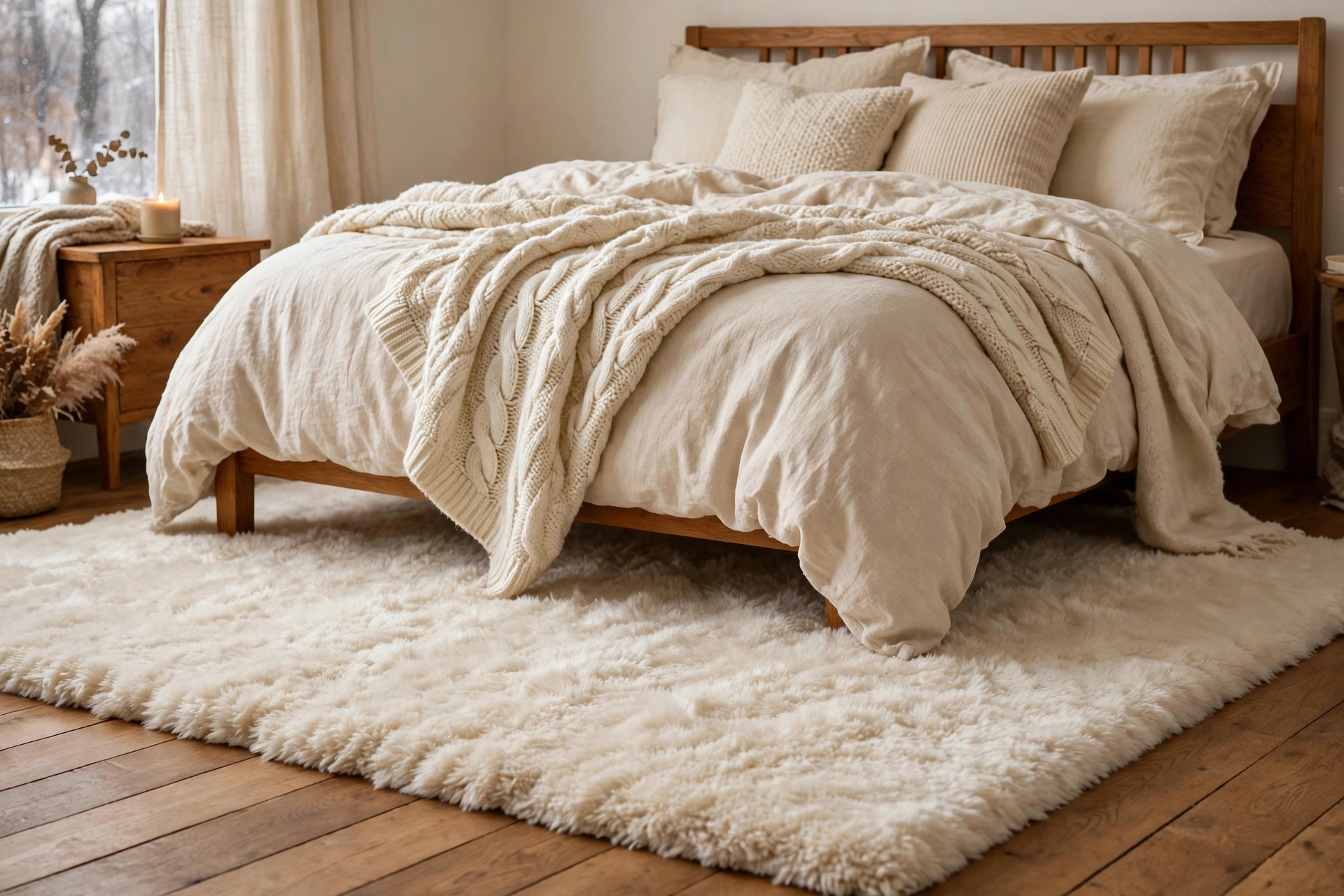
10. Hang Heavy Thermal Curtains
Heavy curtains do double duty in winter: they look sumptuous and they actually insulate. Thermal-lined drapes in velvet, heavy linen, or wool-blend can cut window drafts dramatically — you will feel the difference standing next to the glass. Hang them ceiling-to-floor and as wide as you can; fabric pooling slightly on the floor looks luxurious and seals the bottom draft.
My bedroom has original single-pane windows, and thermal velvet curtains were cheaper than storm windows by about a thousand dollars. Choose a color that echoes your bedding — I matched mine to my olive quilt — and the whole room pulls together. Close them at sunset to trap the day's warmth inside.
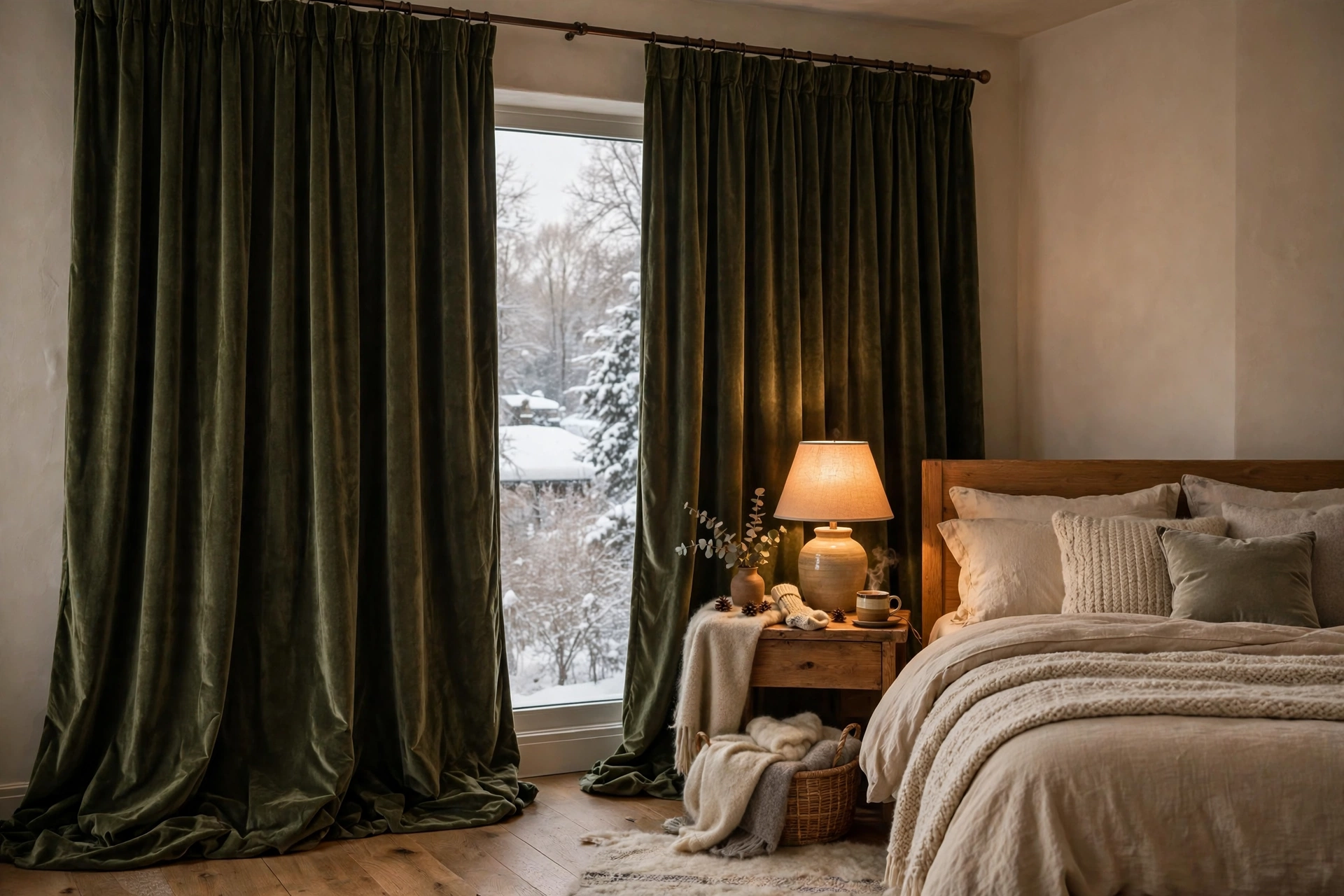
11. Style a Winter Bedside for Slow Mornings
A winter bedside should be a little ritual station: a small tray with a candle, your current book, hand cream, and space for a warm drink. When the bedside is beautiful and functional, staying in bed an extra twenty minutes on a freezing morning feels like self-care instead of laziness. Keep it minimal — three to five items max — so it stays serene.
Mine holds a brass candle, a stack of two books, a tiny vase with dried eucalyptus, and a ceramic mug. That is it. The eucalyptus lasts all winter without water and makes the whole corner smell faintly fresh. This is the cheapest idea on the list and somehow one of the most effective at making winter feel intentional.

12. Switch to Flannel Sheets When Temperatures Drop
Flannel sheets are the unsung hero of winter bedding — brushed cotton that feels warm the instant you slide in, no cold-sheet shock. Good flannel gets softer every wash and lasts for years; cheap flannel pills by February. Look for 100% cotton flannel, at least 170 GSM weight, in a soft plaid, stripe, or solid cream.
I resisted flannel for years thinking it looked old-fashioned, then tried a cream-and-oatmeal set and converted completely. They are the reason I no longer dread getting into bed in January. Wash in cold water and skip the fabric softener — it coats the fibers and reduces that brushed softness over time.
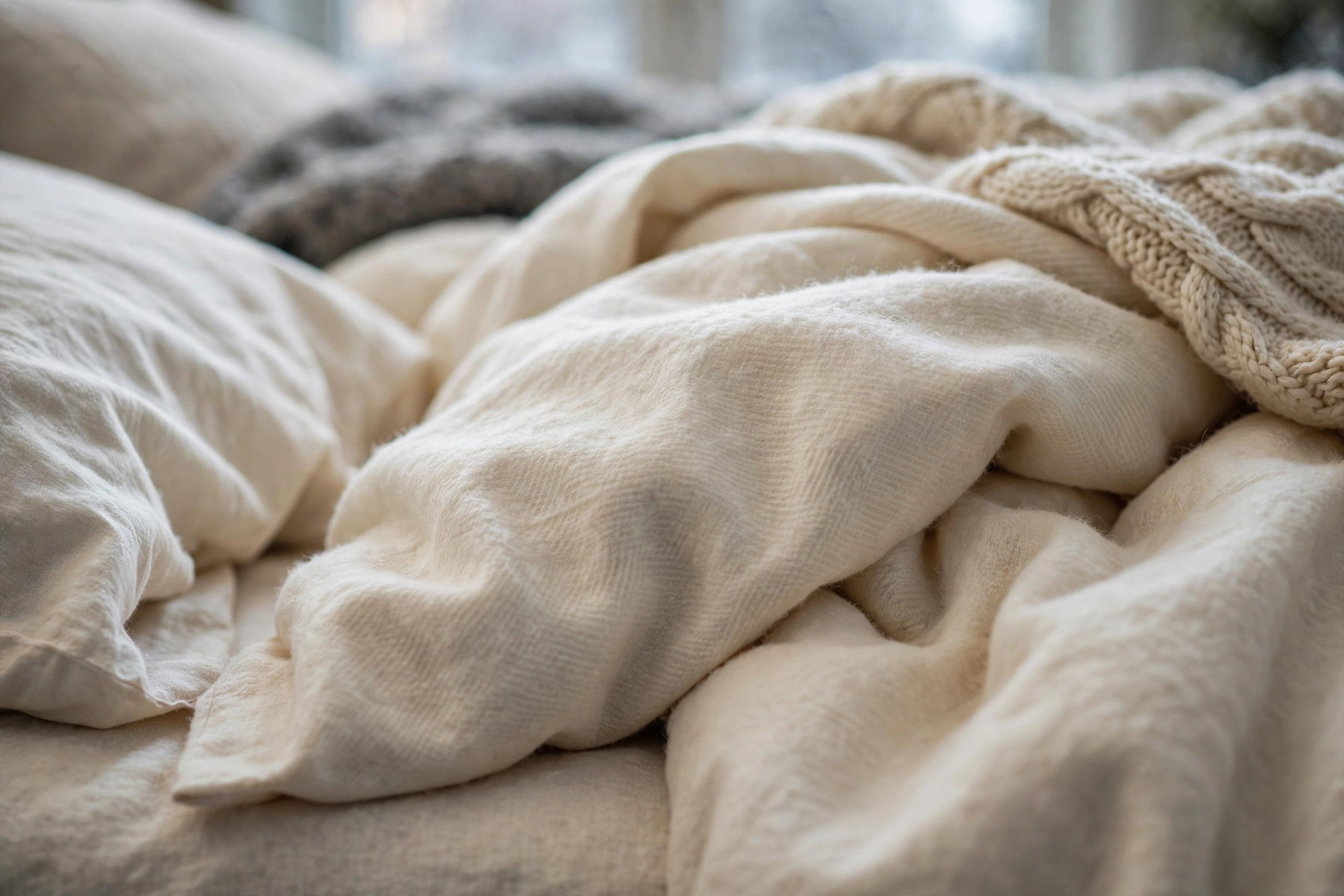
13. Drape Fabric for a Canopy Effect
You do not need a four-poster bed to get canopy coziness. A ceiling-mounted curtain track or even two discreet hooks above the headboard lets you drape gauzy linen or muslin that falls softly behind the bed. It creates a cocoon feeling that makes winter bedrooms feel deeply sheltered — like sleeping in a very chic tent.
I used two brass hooks and three yards of washed linen, total cost about forty dollars, and the effect is pure romance. In winter the draped fabric also breaks up drafts from the wall behind the bed. Keep the fabric light-colored so it glows with the sconce light rather than looming dark.

14. Add Scent: Cedar, Pine, and Vanilla for Winter
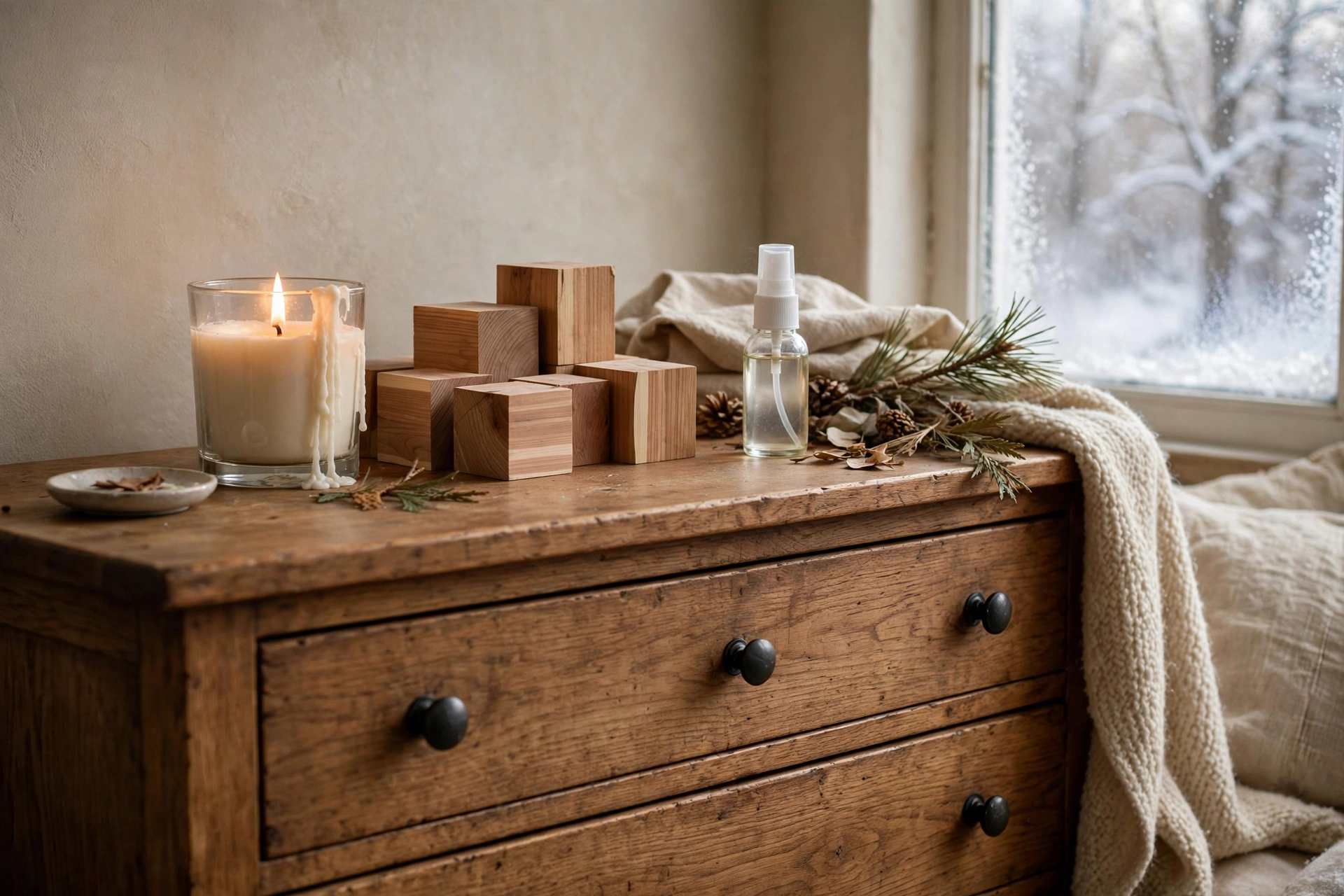
Cozy is a smell as much as a look. Winter bedrooms should carry faint cedar, pine, or vanilla — never overpowering, just a background note that says "it is cold outside and perfect in here." A cedar block in the closet, a pine-scented candle on the dresser, or vanilla linen spray on the pillows does it.
I am careful with scent because strong fragrance gives me headaches, so I stick to one beeswax candle with a hint of pine, lit for an hour before bed. The rule: if you can smell it from the doorway, it is too much. Scent should be discovered, not announced — a whisper that makes the layers feel even warmer.
15. The Exact Order to Layer a Bed for Winter
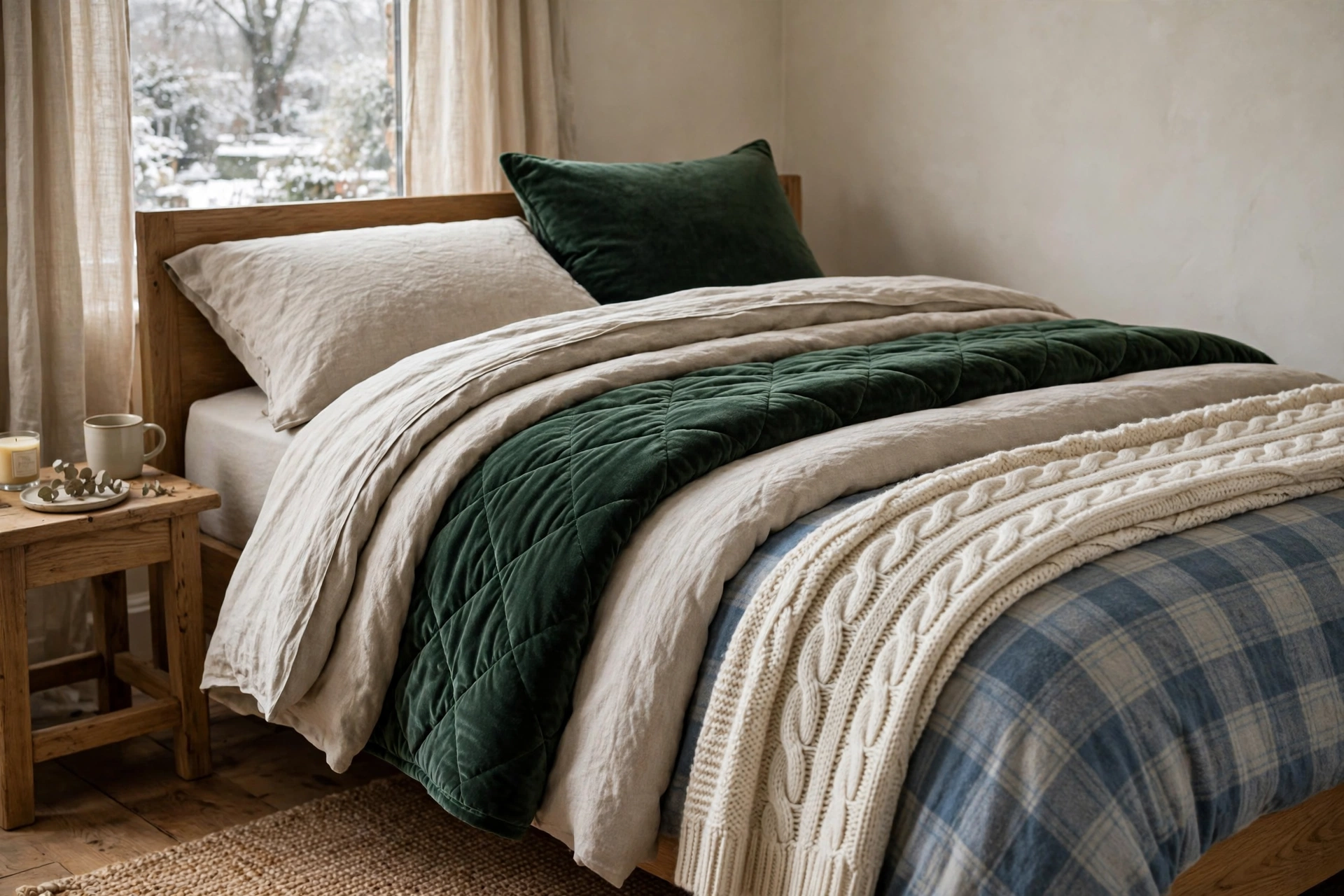
Here is the full how to layer a bed for winter formula, bottom to top: fitted flannel sheet, flat sheet (optional — many winter sleepers skip it), linen duvet cover with a warm insert, velvet quilt folded across the middle, chunky knit throw at the foot, sleeping pillows in shams, two euro squares, faux fur pillows in front. Each layer should be visible by a few inches — that is what creates the styled, abundant look.
I follow this exact order every Sunday when I remake the bed, and it takes under ten minutes once it is habit. The visible-layer rule is the whole secret: if each textile peeks out, the bed looks professionally styled with zero real effort. Photograph it once and you will see — this is the bed from every winter catalog you have ever saved.
Conclusion
Winter is long, and your bedroom should be the reward for enduring it — not another cold room to rush through. Start with the layers: flannel sheets, a linen duvet, a velvet quilt, a chunky knit. Add the warm sconce lighting, the plush rug, the heavy curtains. None of these ideas requires renovating anything, and most of them cost less than a nice dinner out. By the first snowfall, your bedroom will be the warmest, softest place in your house — exactly as it should be.
FAQs
1. How to layer a bed for winter in the right order?
Bottom to top: flannel fitted sheet, duvet in a linen cover, velvet quilt folded mid-bed, chunky knit throw at the foot, then pillows from sleeping shams to euros to faux-fur accents. Let each layer peek out a few inches for the styled look.
2. What is the warmest bedding material for winter?
Layered materials beat any single one — flannel sheets plus a down or down-alternative duvet plus a velvet or wool top layer. Wool and down trap the most heat; velvet and chunky knits add warmth while looking beautiful.
3. How do I make my bedroom cozy without the big overhead light?
Use warm wall sconces on either side of the bed plus one small table lamp, all with 2700K warm bulbs. The pools of low warm light make the bed the glowing center of the room and instantly kill the flat institutional feeling of ceiling lights.
4. What colors make a bedroom feel cozy in winter?
Avoid cool blue-whites in textiles; warm-toned whites reflect lamplight beautifully and feel enveloping instead of stark.
5. Are linen sheets warm enough for winter?
Yes — quality linen breathes, which means it insulates without overheating, and it pairs perfectly under heavier winter layers. In deep winter, layer flannel sheets under your linen duvet for the best of both.
6. How do I keep a layered winter bed from looking messy?
The visible-layer rule: fold each layer back a few inches so every textile shows, smooth only the top surface, and embrace soft wrinkles in linen and knits. A bed that looks touchable always looks better than one pulled drum-tight.








One Comment
Comments are closed.