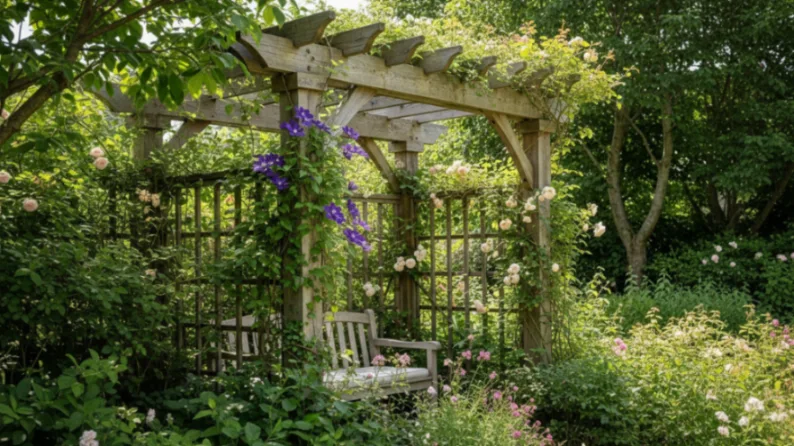
14 DIY Pergola for Your Backyard That Turn an Empty Yard Into a Space You Actually Use
A backyard can be big, green, and full of potential yet still feel unfinished. Most of the time, the missing piece is not furniture or plants, but structure. A pergola gives your backyard shape and purpose without fully closing it in. It creates shade, defines a zone, and instantly makes the space feel designed rather than accidental. That is exactly why so many homeowners start searching for a DIY pergola for your backyard once they realize their outdoor area is underused.
What makes a DIY pergola so appealing is the balance between creativity and practicality. You are not locked into expensive, pre-made designs that may not fit your space. You get to decide the size, the materials, and the overall vibe. Whether you want something rustic, modern, cozy, or minimal, a DIY approach gives you control while keeping costs manageable. It also adds a personal touch that store-bought options often lack.
Another reason DIY pergolas are popular is flexibility. You can start simple and upgrade over time. Add lighting later. Grow plants when you are ready. Install curtains or a canopy when shade becomes a priority. A pergola evolves with how you use your backyard, which makes it feel like a long-term investment rather than a one-time project.
In this guide, we are exploring 14 practical and realistic DIY pergola for your backyard ideas. Each one explains how the idea works, what it looks like in a real backyard, how flexible it is for future changes, and the common mistakes that can turn a great idea into a frustrating build. Some ideas may feel similar, but each serves a different purpose. If you are ready to turn your backyard into a space you actually enjoy spending time in, these ideas will help you start with confidence.
1. Simple Wooden DIY Pergola Using Pressure-Treated Lumber
A simple wooden pergola made from pressure-treated lumber is often the best starting point for beginners. This DIY pergola for your backyard focuses on straightforward construction and readily available materials. Pressure-treated wood is affordable, durable, and designed to withstand outdoor conditions, which makes it ideal for first-time builders.
Imagine a basic rectangular pergola built over a small patio or seating area. Four posts anchored into concrete footings support horizontal beams and evenly spaced rafters. The design feels clean and functional without unnecessary complexity. It provides light shade while keeping the backyard open and airy.
Styling flexibility is one of the biggest advantages of this build. You can leave the wood natural, stain it for warmth, or paint it to match your home. Over time, you can add string lights, fabric panels, or climbing plants without modifying the structure.
A common mistake is skipping proper measurements and leveling. Even small alignment issues can make the pergola feel crooked. Another issue is not sealing the wood, which reduces longevity and leads to cracking or warping.
2. DIY Pergola Attached to the House
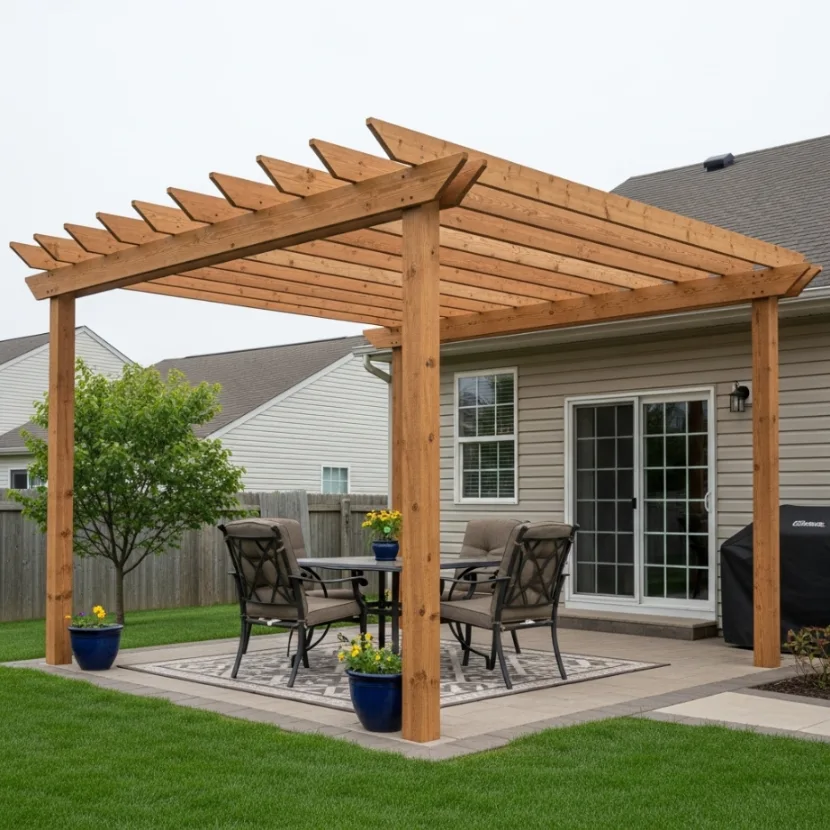
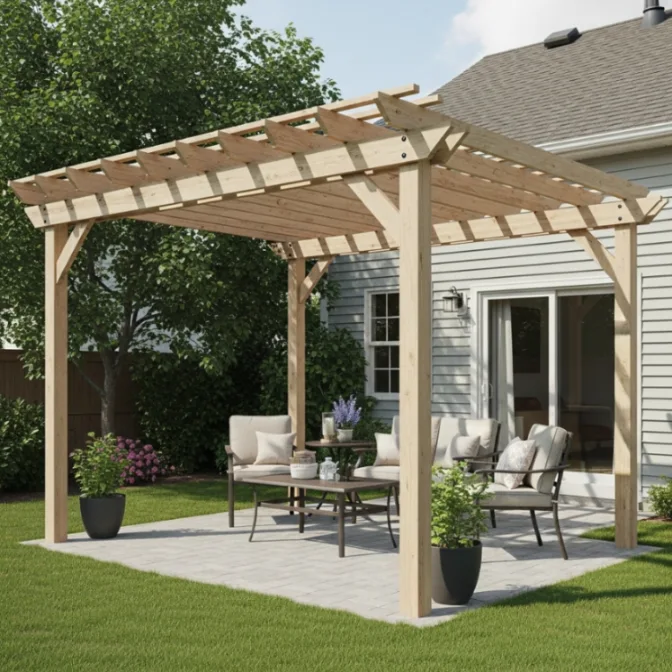
An attached pergola connects directly to your home, creating a seamless transition between indoor and outdoor spaces. This DIY pergola for your backyard works especially well for patios that sit right outside the back door. It feels like an extension of the house rather than a separate structure.
Picture a pergola anchored to the exterior wall, extending outward over a patio dining area. The roofline aligns visually with the home, creating a cohesive look. It offers shade and shelter while keeping access convenient.
Styling flexibility comes from matching materials and colors to the house. You can echo trim colors or use complementary finishes. Lighting and curtains can be added later to enhance comfort and privacy.
A common mistake is improper attachment to the house, which can cause structural issues. Another issue is ignoring drainage and flashing, which can lead to water damage over time.
3. Freestanding DIY Pergola for Open Yards
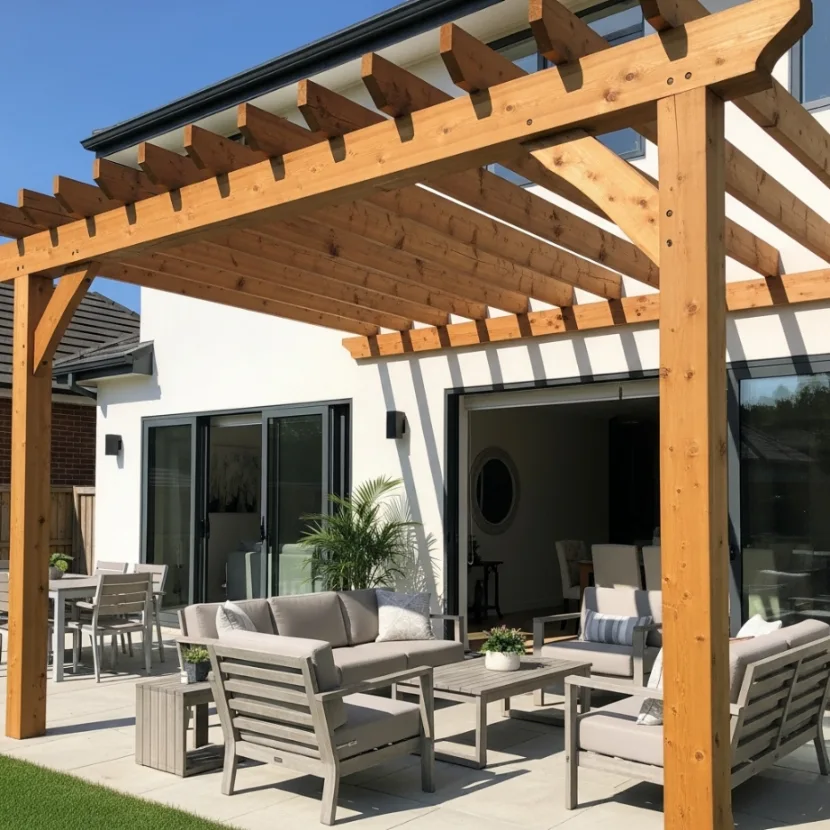
A freestanding pergola gives you complete freedom in placement. This DIY pergola for your backyard works well in large or open yards where you want to define a specific area. It does not rely on existing structures, which makes design more flexible.
Imagine a pergola placed in the center of a lawn, creating a destination for seating or dining. It visually anchors the space and gives purpose to an otherwise empty area. The structure draws people into the yard.
Styling flexibility is high because freestanding pergolas work with many layouts. You can orient them for sun, views, or privacy. Furniture and landscaping can evolve around the structure over time.
A common mistake is choosing a location without considering sun direction. Another issue is underestimating the need for strong footings, which are critical for stability.
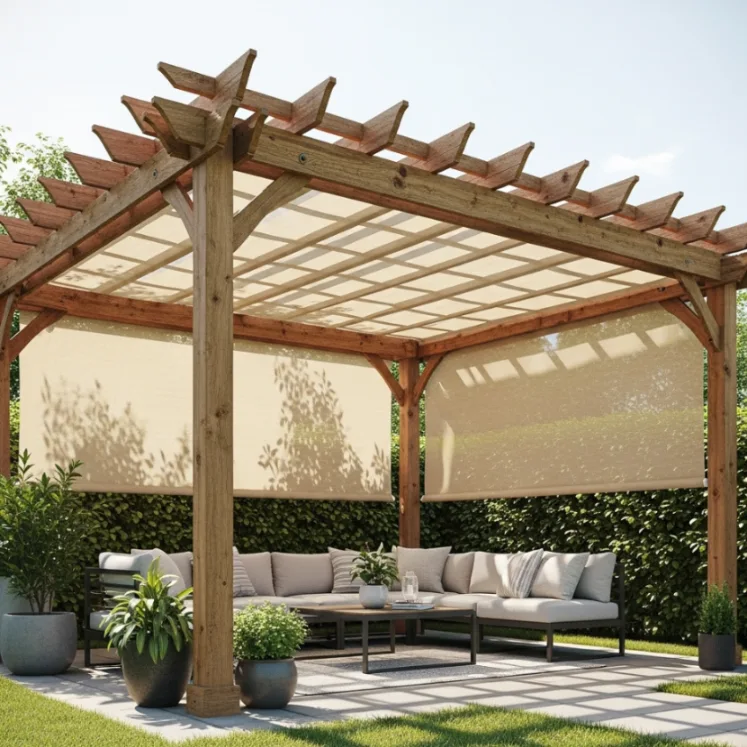
4. DIY Pergola With Shade Cloth or Fabric Canopy
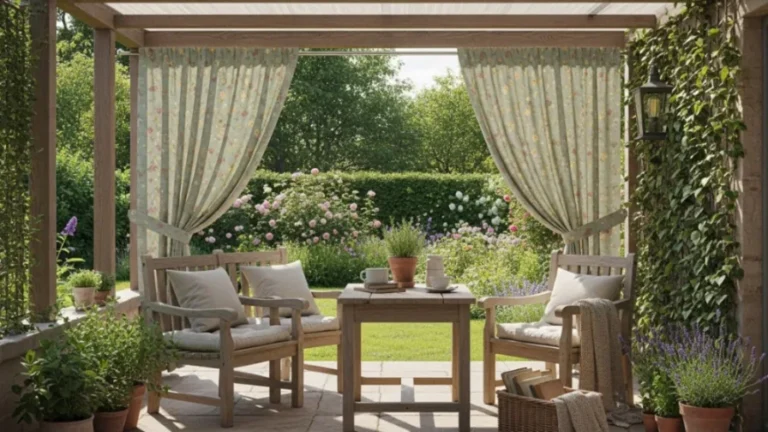
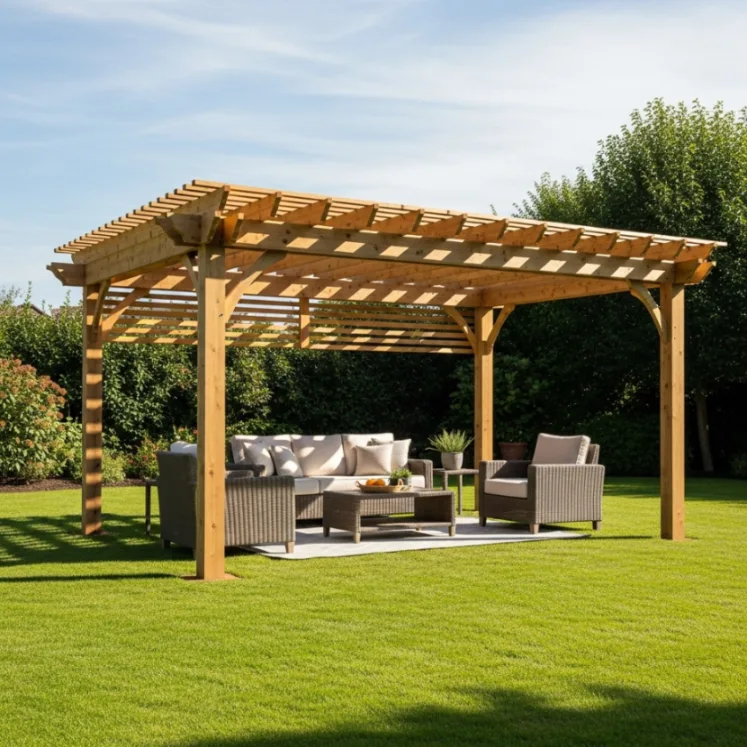
Adding fabric or shade cloth to a pergola increases comfort significantly. This DIY pergola for your backyard is ideal for hot climates or patios with intense sun. It provides adjustable shade without heavy construction.
Picture a simple wooden pergola with a stretched fabric canopy secured across the top. The shade softens sunlight and keeps the area cool. It feels relaxed and functional rather than overly formal.
Styling flexibility comes from fabric choice. Neutral fabrics feel timeless, while patterns add personality. Canopies can be removed or replaced seasonally, making updates easy.
A common mistake is using fabric not designed for outdoor use. Another issue is poor attachment, which causes sagging or damage during wind.
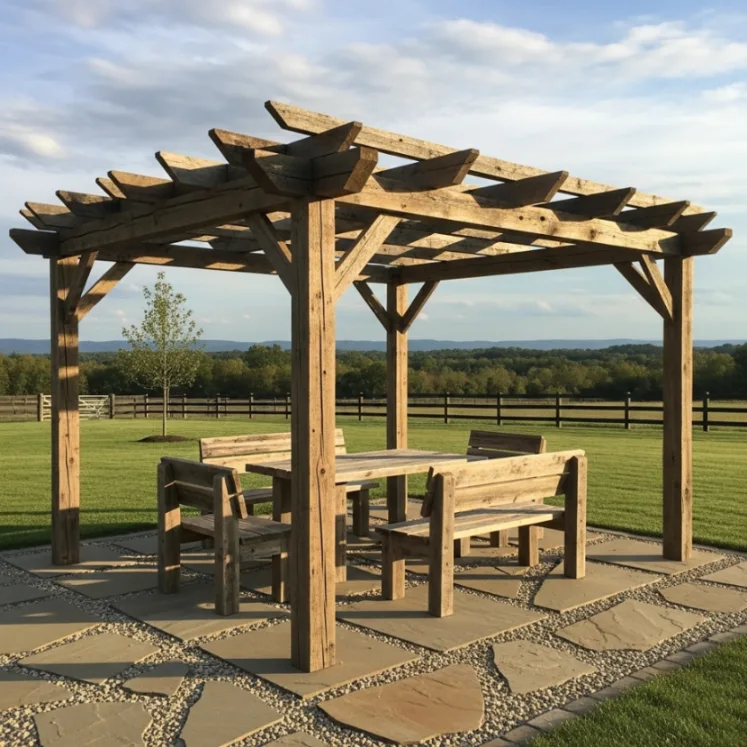
5. Rustic DIY Pergola Using Reclaimed Wood
Reclaimed wood pergolas bring character and charm. This DIY pergola for your backyard is perfect if you love rustic or farmhouse style. Using salvaged wood adds texture and history to the structure.
Imagine rough-hewn beams forming a pergola over a stone patio. The imperfections in the wood add warmth and authenticity. The space feels grounded and inviting.
Styling flexibility comes from mixing rustic wood with modern elements. Simple furniture and neutral textiles keep the look balanced. Over time, lighting and plants enhance the atmosphere.
A common mistake is using reclaimed wood without checking its structural integrity. Another issue is not treating the wood properly for outdoor exposure.
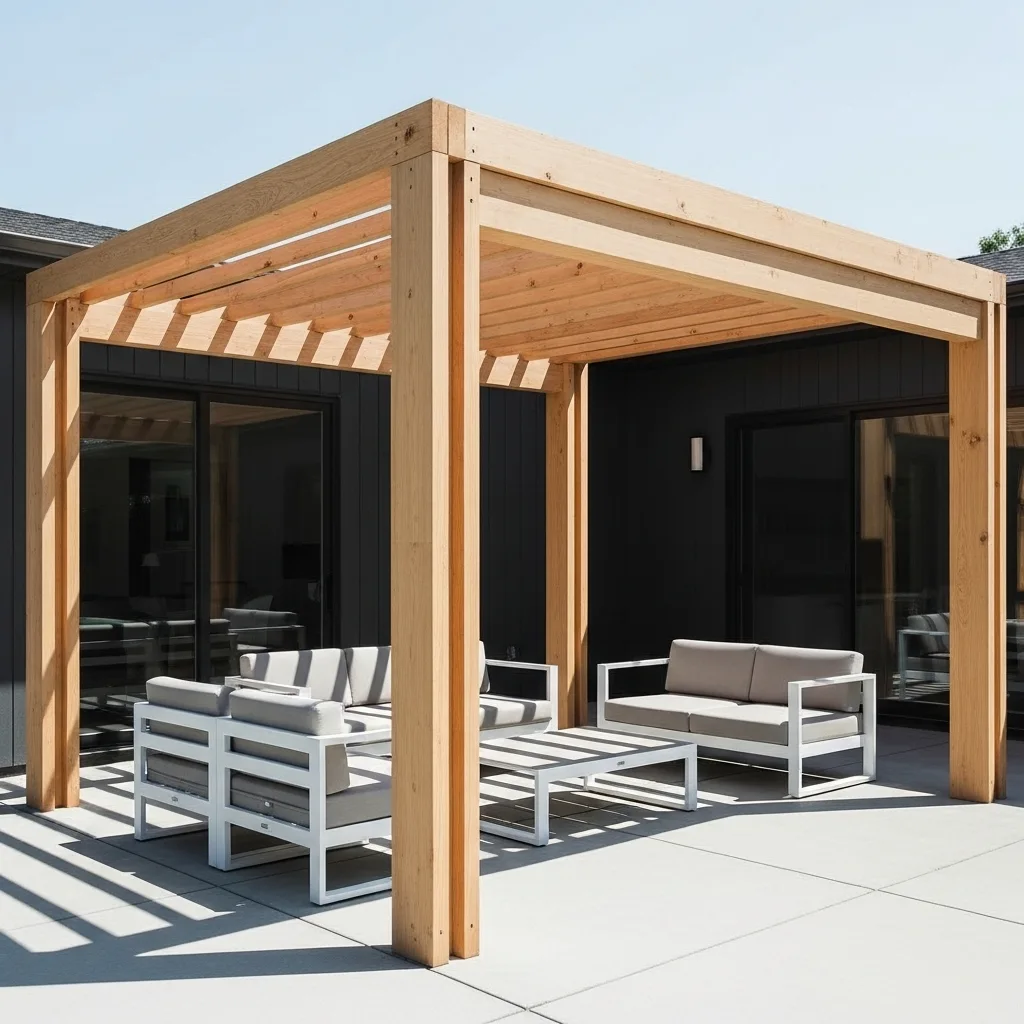
6. Minimalist DIY Pergola With Clean Lines
A minimalist pergola focuses on simplicity and proportion. This DIY pergola for your backyard works well for modern homes. Clean lines and restrained materials create a polished look.
Picture a pergola with straight beams and minimal detailing placed over a concrete patio. The design feels intentional and uncluttered. It frames the space without overwhelming it.
Styling flexibility lies in subtle changes. Furniture, lighting, and accessories can shift the mood without altering the structure. The pergola remains timeless.
A common mistake is overcomplicating the design. Another issue is using materials that do not match the home’s style.
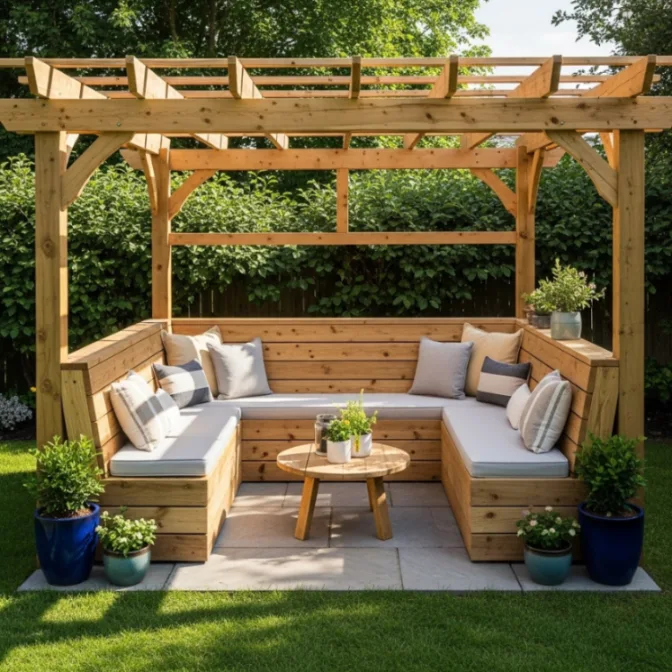
7. DIY Pergola With Built-In Seating
Built-in seating turns a pergola into a complete outdoor room. This DIY pergola for your backyard maximizes space and creates a cozy gathering spot. Seating becomes part of the structure.
Imagine benches built along the pergola posts with cushions for comfort. The layout encourages conversation and keeps furniture from cluttering the space.
Styling flexibility comes from cushions and pillows. Colors and textures can be updated easily. Storage can even be added beneath seating.
A common mistake is prioritizing looks over comfort. Another issue is not planning drainage or airflow around built-in elements.
8. DIY Pergola Over a Backyard Dining Area
A pergola over a dining area makes outdoor meals more enjoyable. This DIY pergola for your backyard creates shade and defines the eating zone clearly. It encourages regular use.
Picture a dining table centered under a pergola with hanging lights above. The space feels intentional and comfortable. Meals feel more relaxed and social.
Styling flexibility comes from table decor and lighting. Casual or formal setups both work well. The pergola supports different moods.
A common mistake is building the pergola too small for the table. Another issue is hanging lights at an uncomfortable height.
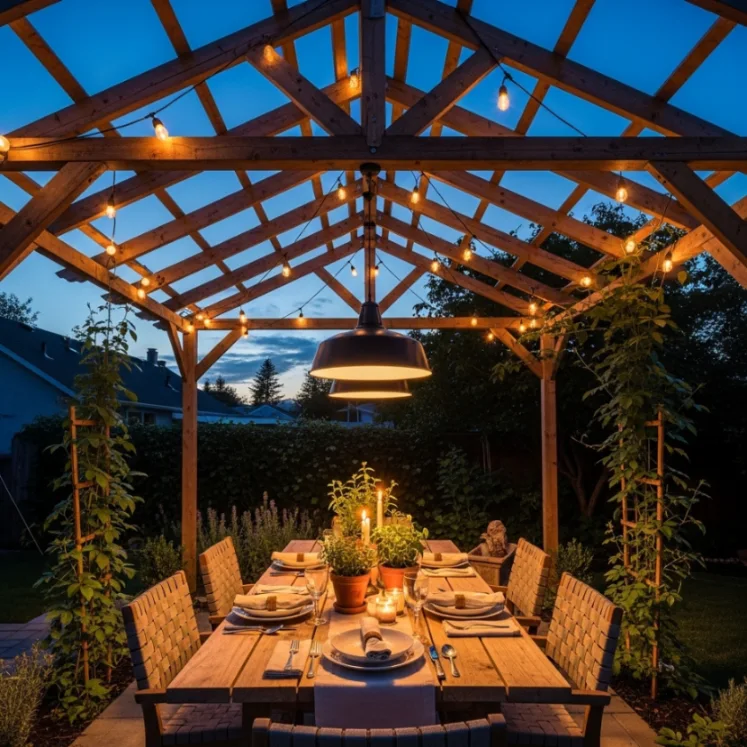
9. DIY Pergola With String Lights
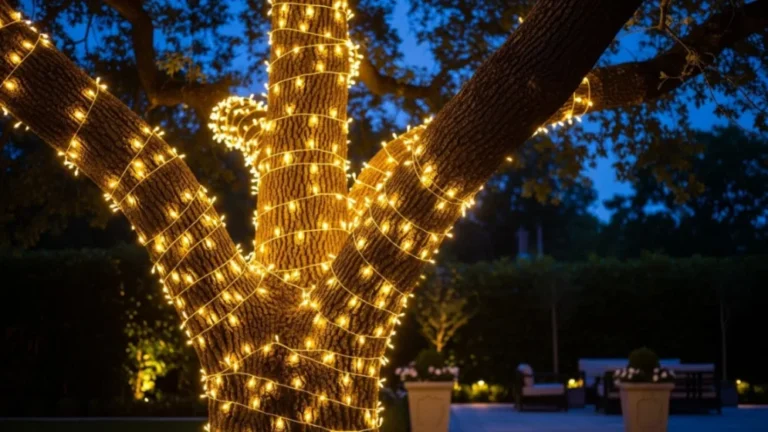
String lights add warmth and atmosphere. This DIY pergola for your backyard focuses on ambiance rather than shade alone. Lighting transforms the space at night.
Imagine warm lights woven through pergola beams, creating a soft glow. The backyard feels cozy and inviting after sunset.
Styling flexibility is high. You can change light styles or brightness. Seasonal updates are simple.
A common mistake is using indoor lights outdoors. Another issue is poor wiring or uneven spacing.
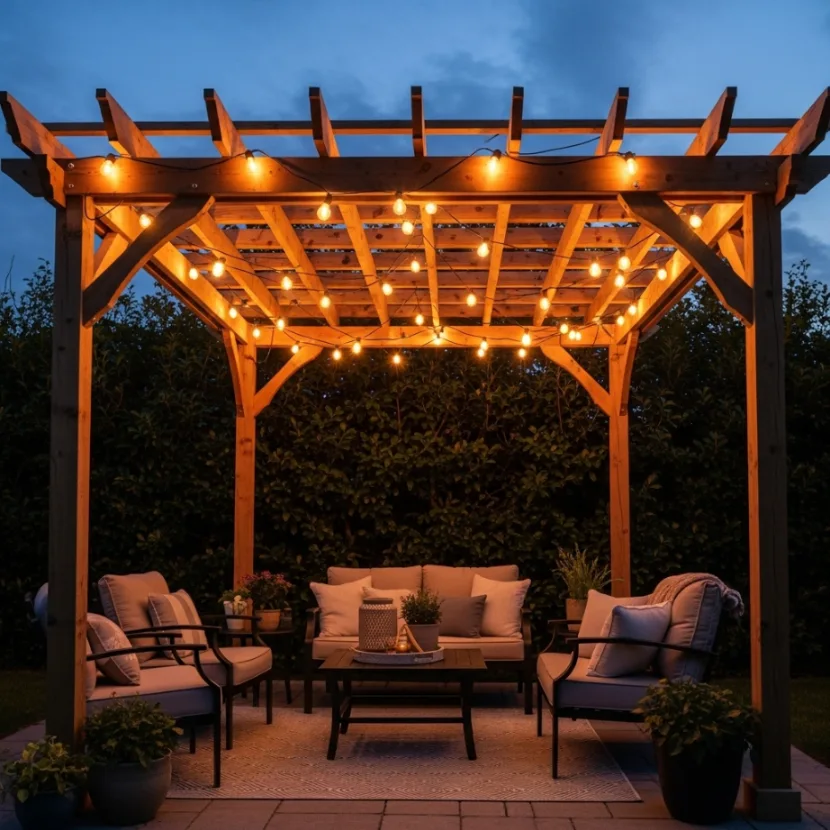
10. Small DIY Pergola for Compact Backyards
Even small yards benefit from pergolas. This DIY pergola for your backyard focuses on scale and efficiency. It proves size does not limit impact.
Picture a small pergola over a bistro set. The structure defines the space without crowding it. The yard feels intentional.
Styling flexibility comes from keeping furniture light and simple. Colors and textures can add personality.
A common mistake is building too large for the space. Another issue is blocking light unnecessarily.
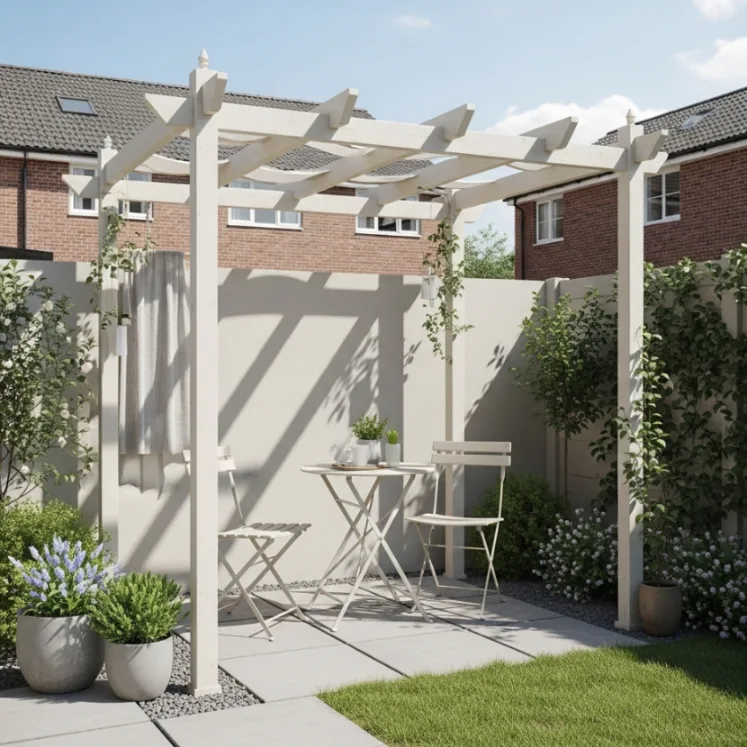
11. DIY Pergola With Slatted Roof Design
Slatted roofs filter light while offering shade. This DIY pergola for your backyard balances openness and comfort. The roof becomes a design feature.
Imagine sunlight creating patterns through evenly spaced slats. The space feels shaded but bright.
Styling flexibility comes from slat spacing and direction. You can add fabric later if needed.
A common mistake is poor spacing that offers little shade. Another issue is ignoring sun angles.
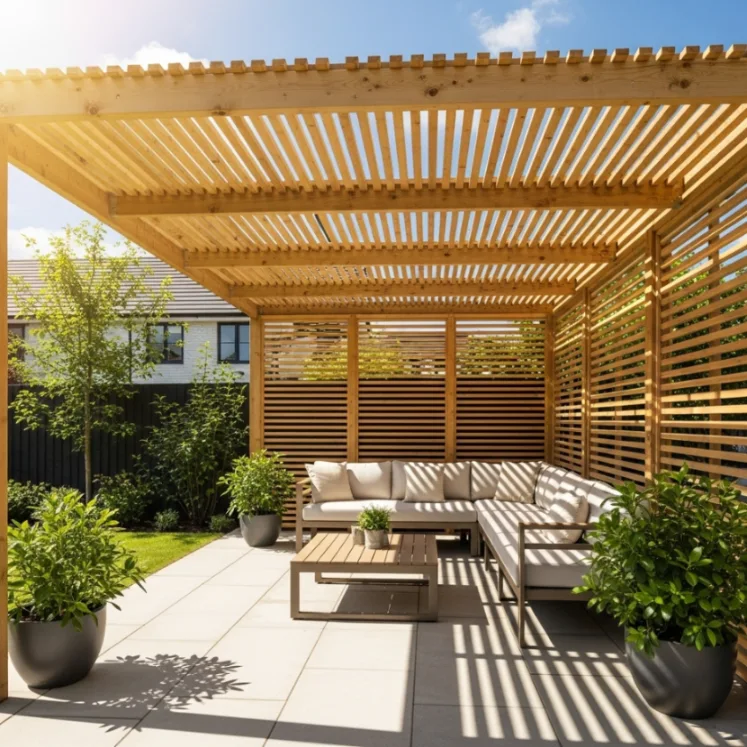
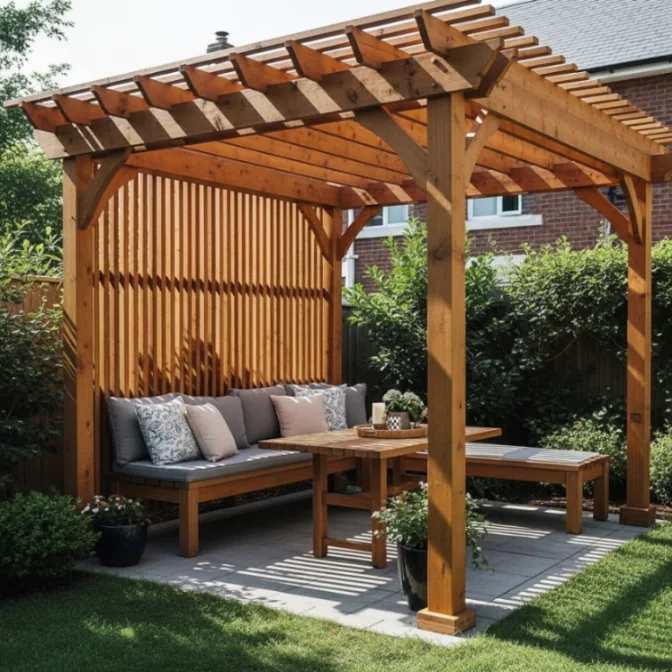
12. DIY Pergola With Privacy Panels
Privacy panels make pergolas feel enclosed without walls. This DIY pergola for your backyard is ideal for close neighbors. Panels add comfort and focus.
Picture wooden slats or lattice on one side of the pergola. The space feels sheltered yet open.
Styling flexibility comes from panel design. You can use wood, metal, or plants.
A common mistake is blocking airflow completely. Another issue is uneven panel placement.
13. DIY Pergola With Climbing Plants
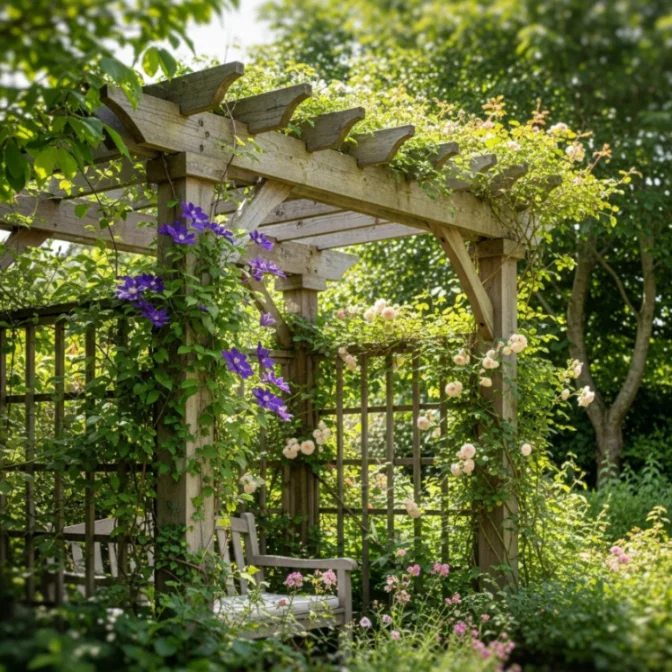
Plants soften pergolas naturally. This DIY pergola for your backyard creates shade that grows over time. It feels organic and alive.
Imagine vines wrapping around beams, creating dappled light. The space feels peaceful and cool.
Styling flexibility depends on plant choice. Flowering or evergreen options change the look.
A common mistake is choosing aggressive plants. Another issue is not planning maintenance.
14. Budget-Friendly DIY Pergola Using Kits or Basic Materials
Budget-friendly pergolas keep projects accessible. This DIY pergola for your backyard focuses on simplicity and cost control. Kits or basic lumber reduce complexity.
Picture a straightforward pergola assembled over a weekend. It adds structure without heavy expense.
Styling flexibility comes later. You can upgrade finishes, lighting, or plants over time. A common mistake is sacrificing quality for price. Another issue is skipping foundational steps.
FAQs
1. How long does a DIY pergola take to build
Most simple pergolas take one to three weekends.
2. Do I need permits for a pergola
Permit requirements vary by location, so check local codes.
3. What wood is best for DIY pergolas
Pressure-treated lumber, cedar, and redwood are popular choices.
4. Can a pergola add value to a home
Yes, it improves outdoor usability and visual appeal.
5. How do I maintain a pergola
Regular cleaning, sealing, and inspections extend its life.